

 Français
Accounting for Craftspeople: Simplify Your Financial Management
Master accounting for craftspeople and optimize your financial management with our tailored solutions. Boost your profitability today.
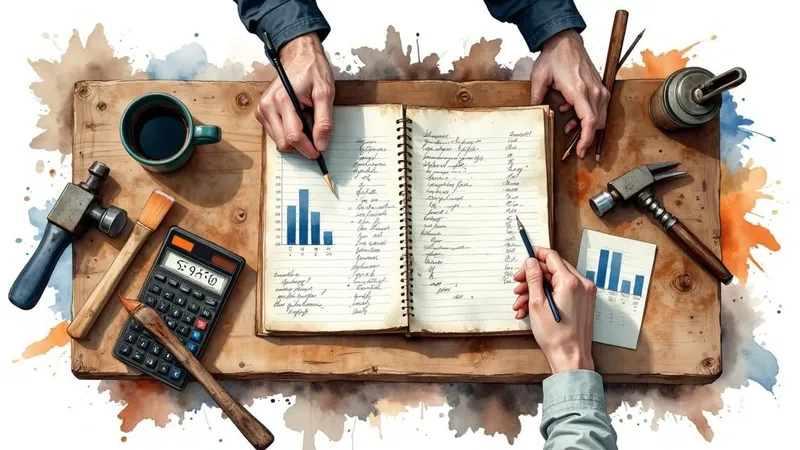
The fundamentals that really make a difference

For a craftsperson, accounting can seem like a complex field. However, mastering its fundamentals turns it into a valuable management tool. Understanding your obligations is essential to optimize your management and focus on your core business. The starting point? Rigorous organization.
Organization: an asset for simplified accounting
Effective accounting relies above all on good organization. This means keeping all supporting documents, both purchase invoices and expense reports. Sorting them chronologically and by category makes the work much easier. Distinguishing between personal and business accounts is also essential. This helps avoid confusion and accurately track your company’s financial health.
The accounting obligations of craftspeople
Like any business, craftspeople have specific accounting obligations. Invoicing must comply with certain rules, such as including the SIRET number and a detailed description of services. Tracking cash inflows and outflows is also fundamental to healthy cash management. Monitoring these flows helps anticipate potential problems. In France, the craft sector plays an important economic role. In 2012, micro-businesses, largely made up of craftspeople, accounted for 9% of gross domestic product and employed 19% of the workforce in the non-agricultural, non-financial market sector. More information on the economic weight of micro-businesses is available on the INSEE website. This highlights the importance of sound accounting management for these key players in the French economy.
Anticipating and managing difficulties
Accounting for craftspeople presents challenges that need to be identified. Inventory management, for example, can be complex depending on the trade. A regular inventory system helps optimize purchases and avoid losses. Calculating margins is also crucial for setting adequate prices and ensuring profitability. Regular analysis helps adjust your pricing strategy. Finally, staying up to date with regulatory changes is essential to remain compliant. Tax and social security rules evolve, and it’s important to adapt. Well-kept accounts offer a clear view of your business and help you make the best decisions for its development.
Choosing the tax regime that truly benefits you
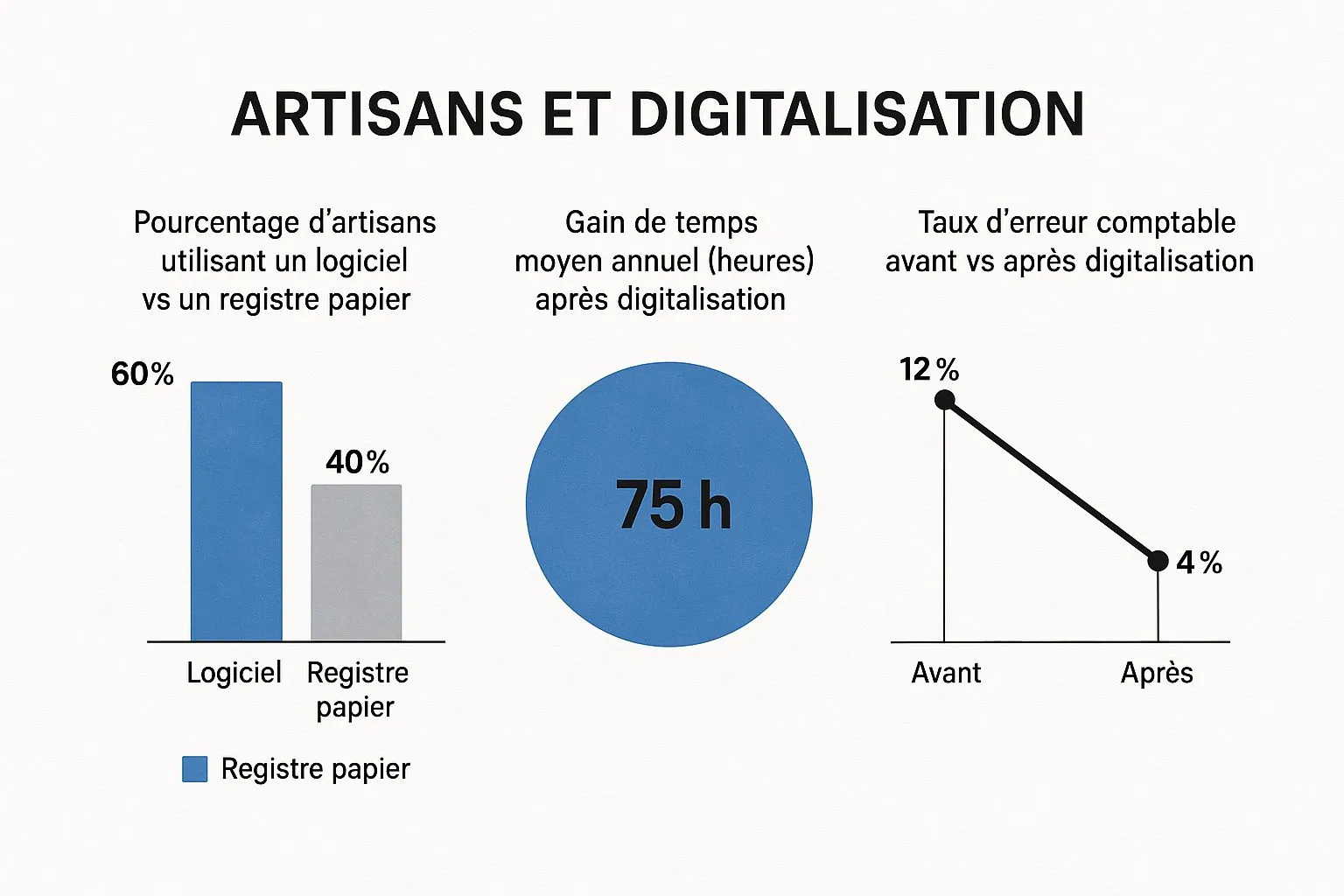
This chart compares the percentage of craftspeople using accounting software versus a paper ledger, the annual time saved after digitalization, and the reduction in error rate. There is a clear improvement in efficiency and accuracy thanks to digital tools. Choosing the right tax regime is just as crucial for optimizing your accounting management.
Indeed, the tax regime directly influences the profitability of your craft business.
Understanding the different tax options
Several tax regimes are available to craftspeople. The micro-entrepreneur regime (formerly auto-entrepreneur) is often chosen for its simplicity.
The simplified real regime (régime réel simplifié) offers more deductions.
The normal real regime (régime réel normal), more complex, is aimed at businesses with significant revenue. The dynamism of the craft sector is reflected in the number of business creations. In 2022, France recorded a record 252,580 craft business creations, or a quarter of all business creations. Discover more information about this record number of craft business creations.
This favorable context underscores the importance of optimized financial management from the outset.
Revenue thresholds: an essential criterion
The choice of regime depends mainly on revenue thresholds. Exceeding these thresholds requires switching to a different regime.
For example, for services, the micro-entrepreneur threshold is €77,700. Exceeding this threshold means moving to the simplified or normal real regime. Anticipating these changes is therefore essential.
To help you compare the different regimes, here is a summary table:
Comparison of tax regimes for craftspeople
Comparison table of the three main tax regimes available to craftspeople, with their key characteristics
| Regime | Revenue thresholds | Accounting obligations | VAT | Advantages | Disadvantages |
|---|---|---|---|---|---|
| Micro-entrepreneur | €77,700 (services) | Simplified | Not applicable (VAT exemption) | Simple and quick to set up | Fewer possible deductions |
| Simplified real regime | €188,700 (services) | More complex | Applicable | Deduction of actual expenses | Heavier accounting management |
| Normal real regime | No limit | The most complex | Applicable | Suited to businesses with significant revenue | Very demanding accounting management |
This table highlights the key differences between the regimes, particularly in terms of accounting obligations and VAT. The choice will depend on your revenue and your management capacity.
Optimizing your taxation: a few tips
Several strategies can help optimize your taxation. Keeping rigorous accounts allows you to deduct all actual expenses.
Investing in professional equipment can also generate deductible depreciation.
In addition, getting support from a chartered accountant can be wise, particularly for managing the real regime.
This support helps ensure your accounting complies with regulations and maximizes tax advantages.
The right regime for your business
In conclusion, the ideal tax regime for a craftsperson depends on their specific situation. Analyzing your business, your revenue, and your growth projections is essential.
An informed choice helps minimize taxes and optimize profitability. Don’t hesitate to use online simulators to compare the different regimes and to check with the relevant authorities.
The digital tools transforming your accounting
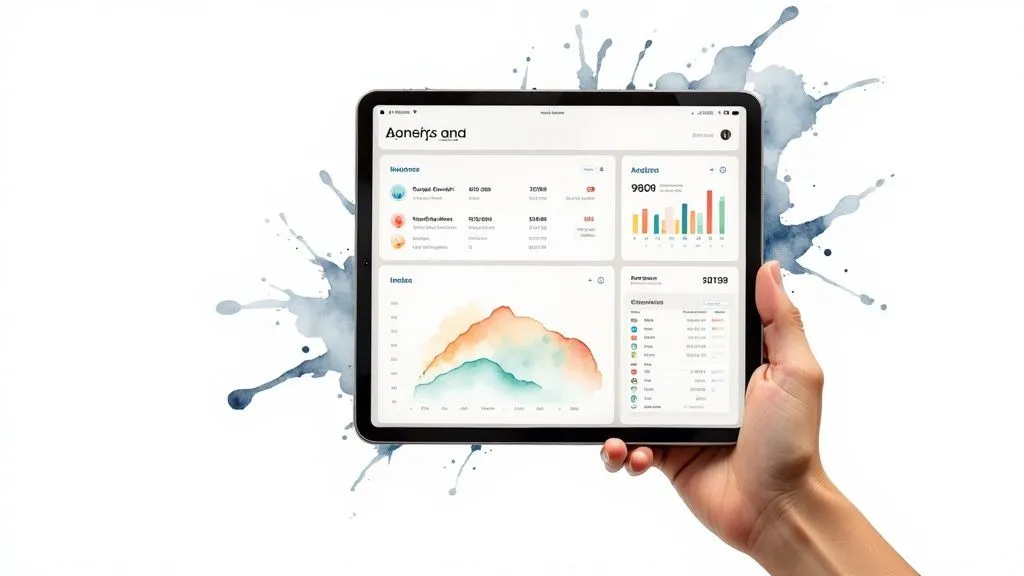
After determining the most advantageous tax regime for your business, it’s time to modernize your management. Forget stacks of invoices and tedious manual calculations! The digital age has simplified accounting for craftspeople, offering them valuable time savings and greater peace of mind.
Accounting software: your new allies
Accounting software is designed to automate repetitive accounting tasks. It makes invoicing, expense tracking, and preparing tax returns easier. Some software, like Bizyness, offers specific features for craftspeople, such as inventory management or project tracking. Creating quotes and invoices becomes child’s play thanks to pre-filled, customizable templates.
Mobile apps: accounting in your pocket
For even more flexible management, mobile apps let you manage your accounting wherever you are. Photograph your receipts directly with your phone, avoiding a buildup of paperwork. Some apps also offer automatic synchronization with your bank accounts, which simplifies tracking your transactions. This real-time tracking gives you better control over your cash flow.
Automation: a considerable time saver
Automating your accounting tasks frees up time to focus on your core business. Chasing unpaid invoices can be automated, limiting payment delays. Report generation lets you analyze your financial performance quickly and efficiently. This time saved translates into greater efficiency and better profitability.
Choosing the right tools
Faced with the multitude of available tools, it’s crucial to choose those that meet your specific needs. For a beginner craftsperson, simple and intuitive software like Bizyness can be ideal. For more complex businesses, more comprehensive solutions may be considered. What matters is favoring tools that offer easy integration with your existing tools, such as your point-of-sale software or your online bank.
Solutions for every level
Whether you’re an IT expert or not, there are solutions suited to every level. Tutorials and support resources are generally available to help you get to grips with the tools. Don’t hesitate to try different solutions to find the one that suits you best. Adopting digital tools for your accounting is a worthwhile investment. It simplifies your management, reduces errors, and frees up time to devote to growing your business.
Managing your cash flow without becoming an accountant
Managing cash flow is a constant challenge for craftspeople. Yet mastering it is essential to the survival and growth of any business. Fortunately, simple and accessible solutions exist to manage your finances effectively without needing an accounting degree.
Forecasting your cash flow
Anticipation is the key to peaceful financial management. A cash flow forecast is a valuable tool for estimating your money coming in and going out. Start by listing your fixed costs, such as rent and insurance, then your variable costs, such as raw material purchases. Then factor in your sales forecasts. This document will help you identify periods when your cash flow might be tight.
To help you with this task, here is a sample table:
| Month | Expected inflows | Expected outflows | Balance |
|---|---|---|---|
| January | €10,000 | €8,000 | €2,000 |
| February | €8,000 | €9,000 | €1,000 |
| March | €12,000 | €7,000 | €6,000 |
Feel free to adapt this template to your situation by adding columns to break down your different types of inflows and outflows.
Optimizing cash collection
Late payments are a scourge for cash flow. To minimize them, offer installment payments with a significant deposit upon ordering. Online invoicing solutions, like Bizyness, automate payment reminders. This type of tool simplifies payment tracking and optimizes collection. With more than 1.1 million craft businesses with 0 or 1 employee recorded in 2017, rigorous cash flow management is vital, especially for these small structures. More information on the structure of the craft sector in France.
Monitoring key indicators
Identifying early warning signs of difficulties is essential. Regular monitoring of your bank accounts is essential. Analyze the trend of your working capital requirement (WCR). A rapid increase in WCR can signal an imbalance. A lengthening customer payment period is also an indicator to watch closely. Being attentive to these signals allows you to anticipate and adjust your strategy.
Choosing the right tools
Simple, accessible tools can help you effectively track your cash flow. An Excel file may be enough to create a dashboard listing your money in and out. Dedicated mobile apps for cash flow management also exist. The key is to choose a tool you master and use regularly.
The table below summarizes the main deadlines for craftspeople:
| Month | Micro-entrepreneur | Real regime | Social security contributions | VAT |
|---|---|---|---|---|
| January | Revenue declaration | Revenue declaration | Contribution payment | Declaration and payment |
| February | ||||
| March | Contribution payment | |||
| April | Revenue declaration | Revenue declaration | Declaration and payment | |
| … | … | … | … | … |
This calendar is an example and must be adapted to your situation and your tax regime. It’s essential to stay informed of the deadlines specific to your business.
Turning your numbers into strategic decisions
Your accounting is much more than a simple legal obligation. It represents a valuable source of information for steering your craft business. By analyzing your figures, you can make informed decisions and optimize your profitability. Let’s look together at how to turn this data into real growth levers.
Determining your actual cost price
Precise knowledge of your cost price is fundamental to setting fair prices and ensuring the profitability of your services. It’s important to consider all costs, both direct and indirect, related to your business.
Take the example of a plumber: the cost price of a job isn’t limited to the price of materials. It also includes travel time, vehicle depreciation, and fixed costs. Once these costs are identified, you can define an appropriate profit margin and ensure the long-term viability of your business.
Identifying your most profitable services
Analyzing your accounts lets you assess the profitability of each service. You can thus distinguish those that generate the most profit from those that, on the contrary, perform less well.
A cabinetmaker, for example, might discover that making custom furniture is more profitable than restoring antique furniture. This information helps you adjust your business strategy and focus your efforts on the most lucrative activities.
Concrete success stories
Many craftspeople have managed to transform their business through in-depth analysis of their accounting data. Some have seen their profitability double by refocusing their offering on more profitable services. Others have optimized their production processes to reduce their cost price.
These examples demonstrate the positive impact of well-managed accounting. It can become a real growth engine for your craft business.
Simplified dashboards for craftspeople
Simplified dashboards are valuable tools for making it easier to analyze your data. They let you quickly visualize the key indicators of your business: revenue, margins, cash flow…
You can use accounting software like Bizyness to create custom dashboards and track your performance in real time. Here is an example:
| Indicator | Target | Actual | Variance |
|---|---|---|---|
| Revenue | €10,000 | €9,500 | -€500 |
| Gross margin | 30% | 28% | -2% |
| Cash flow | €2,000 | €1,500 | -€500 |
This table highlights the gaps between the targets set and the results achieved. It helps you identify areas for improvement and adapt your strategy. Turning your numbers into strategic decisions is essential to the success of your business. Don’t hesitate to train yourself in financial analysis tools and methods to fully harness the potential of your accounting and propel your business toward success.
Working effectively with your accountant
For optimal collaboration, engage in a constructive dialogue with your chartered accountant. The relationship between a craftsperson and their accountant shouldn’t be limited to simply handing over documents and receiving tax returns. A genuine strategic partnership can turn your accounting into a powerful growth lever, optimizing your management and informing your decisions.
Asking the right questions for relevant advice
Your accountant is much more than a simple filer: they are an advisor who can support you in growing your business. Don’t hesitate to question them about your strategy, your profitability, and your investments. For example, discuss optimizing your tax regime or financing options with them. Open and transparent dialogue is the key to a fruitful collaboration.
Structuring information exchanges for greater efficiency
Effective communication with your accountant streamlines your exchanges and can even reduce their fees. Set up a clear, organized system for sharing documents. Using accounting software such as Bizyness makes it easier to share information and automates certain tasks, saving you time and limiting errors. Regularly tracking your key indicators also lets you anticipate potential problems and discuss them with your accountant.
When to consider changing accountants
Sometimes the collaboration with an accountant isn’t satisfactory. Several signs can alert you: a lack of communication, unsuitable advice, or excessive fees. Your accountant should be a trusted partner who understands the challenges of your trade. If this isn’t the case, it’s important to reassess the situation.
The importance of a specialized accountant
Each accountant has their own areas of expertise. Some specialize in supporting craftspeople and know the specifics of the sector inside out. Their advice can be invaluable for optimizing your management. Don’t hesitate to seek recommendations from fellow craftspeople or professional organizations. An accountant specialized in the craft sector is a considerable asset.
Tools for a successful collaboration
Here are a few tools to help you choose the right accountant and structure your collaboration:
- Evaluation guide: List the important criteria (skills, communication, fees…) and assess each accountant against them.
- Specifications document: Clearly define your needs and expectations regarding accounting services to avoid misunderstandings and ensure effective collaboration.
In conclusion, effective collaboration with your accountant is essential to the success of your craft business. Invest time and energy in this relationship. It will bring you much more than simple accounting management: genuine strategic support to grow your business. Simplify your accounting and focus on what matters with Bizyness. Discover our offers and optimize your management today!
