

 Français
Business Management Software: Top 10 in 2025
Discover the ultimate guide to choosing your business management software and boosting your success in 2025.

Looking for the perfect software for your business?
Running a business is complex. This 2025 guide presents 10 business management software solutions to simplify your daily operations. Discover the key features of Bizyness, SAP Business One, Sage 100cloud, Odoo, Microsoft Dynamics 365 Business Central, Cegid, Salesforce, NetSuite ERP, Dassault Systèmes 3DEXPERIENCE and EBP. Find the ideal solution to optimize your management, from finance to human resources, and drive your growth.
1. Bizyness
Bizyness positions itself as the ideal all-in-one solution for small businesses, sole traders and freelancers in France. This business management software simplifies accounting by automating essential tasks such as invoicing, VAT management and financial transaction tracking. Whether you’re a beginner or experienced user, Bizyness’s intuitive interface makes it easy to create tax documents, sync bank transactions and generate comprehensive automatic reports. Its seamless integration with online stores enables faster, smoother sales and accounting management.
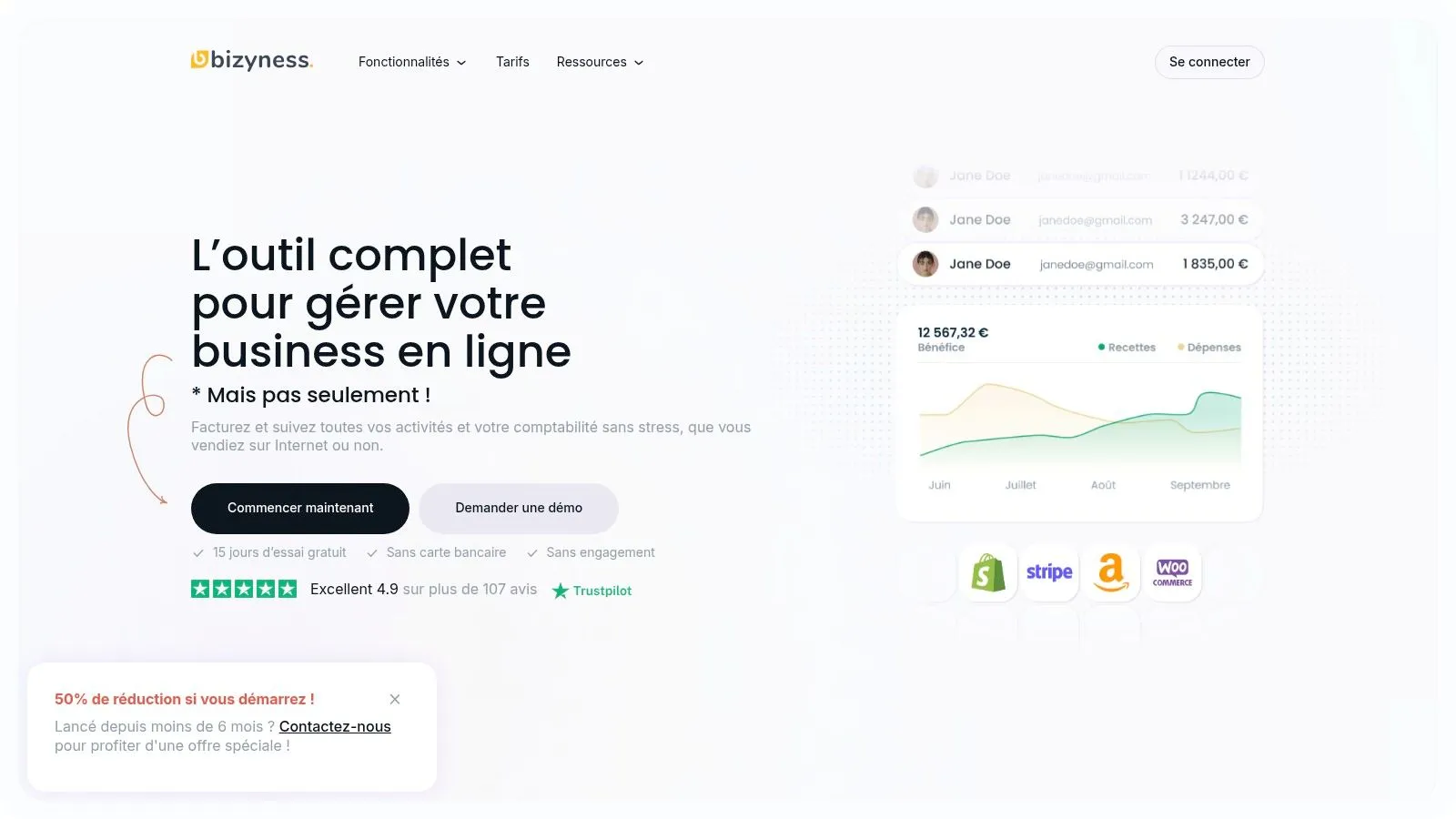
Bizyness earns its place on this list thanks to its versatility and ease of use. It’s aimed particularly at sole traders and freelancers in e-commerce, small businesses looking to automate their accounting management, independent sellers working both online and offline, and even creators and sellers of digital products. Whether you’re a consultant, coach, agency, or sell across multiple platforms, Bizyness offers valuable centralization.
One of Bizyness’s major strengths lies in its pricing flexibility. With a free plan available with no commitment, the software adapts as your business evolves. Paid plans, starting at €9/month, offer more advanced features to support your company’s growth. This modular model lets you choose the option best suited to your needs and budget. For businesses looking to cut their accounting costs, the free basic plan is a considerable advantage.
Key features include:
- Automated invoicing: Create and send professional invoices in a few clicks.
- VAT management: Automatic VAT calculation and filing, simplifying your tax obligations.
- Bank sync: Real-time transaction tracking and easy bank reconciliation.
- E-commerce integration: Direct connection with your online store for streamlined sales management.
- Automatic reports: Generation of accurate financial reports for better tracking of your business.
Pros:
- Automation of accounting tasks, freeing up time for your core business.
- Intuitive interface accessible to beginners and experienced users alike.
- Seamless integration with e-commerce platforms and banking systems.
- Flexible, modular pricing, including a free option.
- Excellent, responsive customer service that users appreciate.
Cons:
- May not offer all the advanced features required by large companies.
- Customization options potentially limited for very specific needs.
Setup: Setting up Bizyness is quick and simple. The intuitive interface guides users step by step, enabling immediate hands-on use.
Link: https://www.bizyness.fr
Bizyness stands out for its ability to simplify business management for French entrepreneurs. Its accessible approach, combined with robust features and attractive pricing, makes it a valuable tool for running your business with peace of mind and in full compliance with French regulations. Whether you’re a beginner or an experienced entrepreneur, Bizyness lets you focus on growing your business while keeping full control of your finances.
2. SAP Business One
SAP Business One is a comprehensive, modular ERP (business management software) solution designed to meet the specific needs of small and medium-sized businesses (SMBs). It offers integrated, real-time management of every key aspect of your business, from finance to sales, purchasing, inventory and operations. Whether you’re a sole trader in e-commerce, a small business looking to automate its accounting, or a multi-platform seller needing centralized management, SAP Business One can help you optimize your processes and make informed decisions thanks to greater visibility into your data. This software lets you automate time-consuming tasks, improve collaboration between departments, and access accurate, up-to-date information to drive your growth.
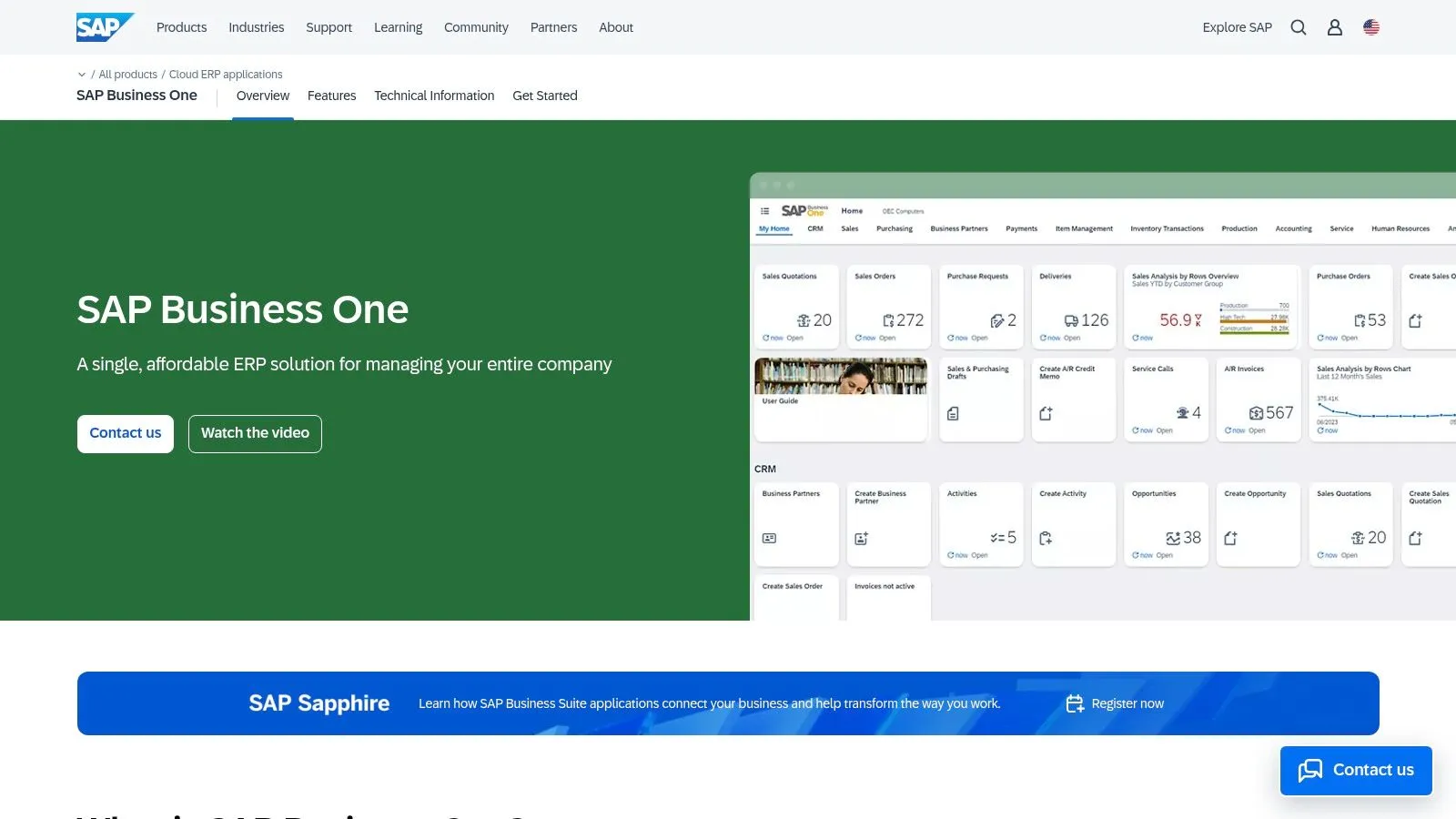
Key features for different user profiles:
- E-commerce: Inventory management, order tracking, integration with online sales platforms, returns management.
- Automated accounting: Automatic invoice generation, bank reconciliation, expense and revenue tracking, financial reporting.
- Multi-platform sales: Centralization of sales data from different channels, unified inventory management.
- Multi-currency and multi-language management: Suited to businesses operating internationally.
- Digital product creators: License management, sales tracking, invoicing automation.
- Service providers: Time tracking, project billing, contract management.
Detailed features:
- Comprehensive financial management: Accounting, general ledger, budget management, financial reports, management control.
- Sales and customer relationship management (CRM): Lead tracking, opportunity management, quote and invoice automation, sales performance analysis.
- Purchasing and operations management: Order management, supplier tracking, procurement management, production planning.
- Inventory and distribution management: Stock level tracking, warehouse management, logistics optimization.
- Advanced business intelligence and reporting: Customizable dashboards, real-time data analysis, forecasting.
Pros:
- Complete, modular solution covering every aspect of business management.
- Highly customizable thanks to numerous add-on modules.
- Quality technical support and SAP’s international presence.
- Easy integration with other SAP products, ensuring future scalability.
Cons:
- High acquisition and implementation cost, especially for small businesses.
- Potentially complex configuration that sometimes requires outside expertise.
- Relatively long implementation time, requiring rigorous planning.
Implementation tips:
- Clearly define your needs and objectives before starting implementation.
- Involve key users in the process to ensure optimal adoption.
- Plan for adequate training for your teams.
- Choose a certified SAP partner to support you through implementation and configuration.
Pricing and technical requirements:
SAP Business One pricing is based on the number of users and the modules chosen. Contact SAP directly for a personalized quote. Technical requirements vary depending on the deployment mode (cloud or on-premise). Consult the official documentation for more information.
SAP Business One earns its place on this list because it offers a robust, comprehensive ERP solution specifically designed for SMBs. While the initial investment can be significant, the gains in efficiency, visibility and strategic decision-making can justify the cost for growing companies.
Website: https://www.sap.com/products/business-one.html
3. Sage 100cloud
Sage 100cloud stands out as a top choice for French SMBs seeking powerful, comprehensive business management software. This software offers an integrated suite of applications covering a wide range of needs, from accounting to human resources, as well as sales management and production. Its major strength lies in its perfect fit with the French market and its legal and tax specifics, an essential criterion for businesses focused on compliance.
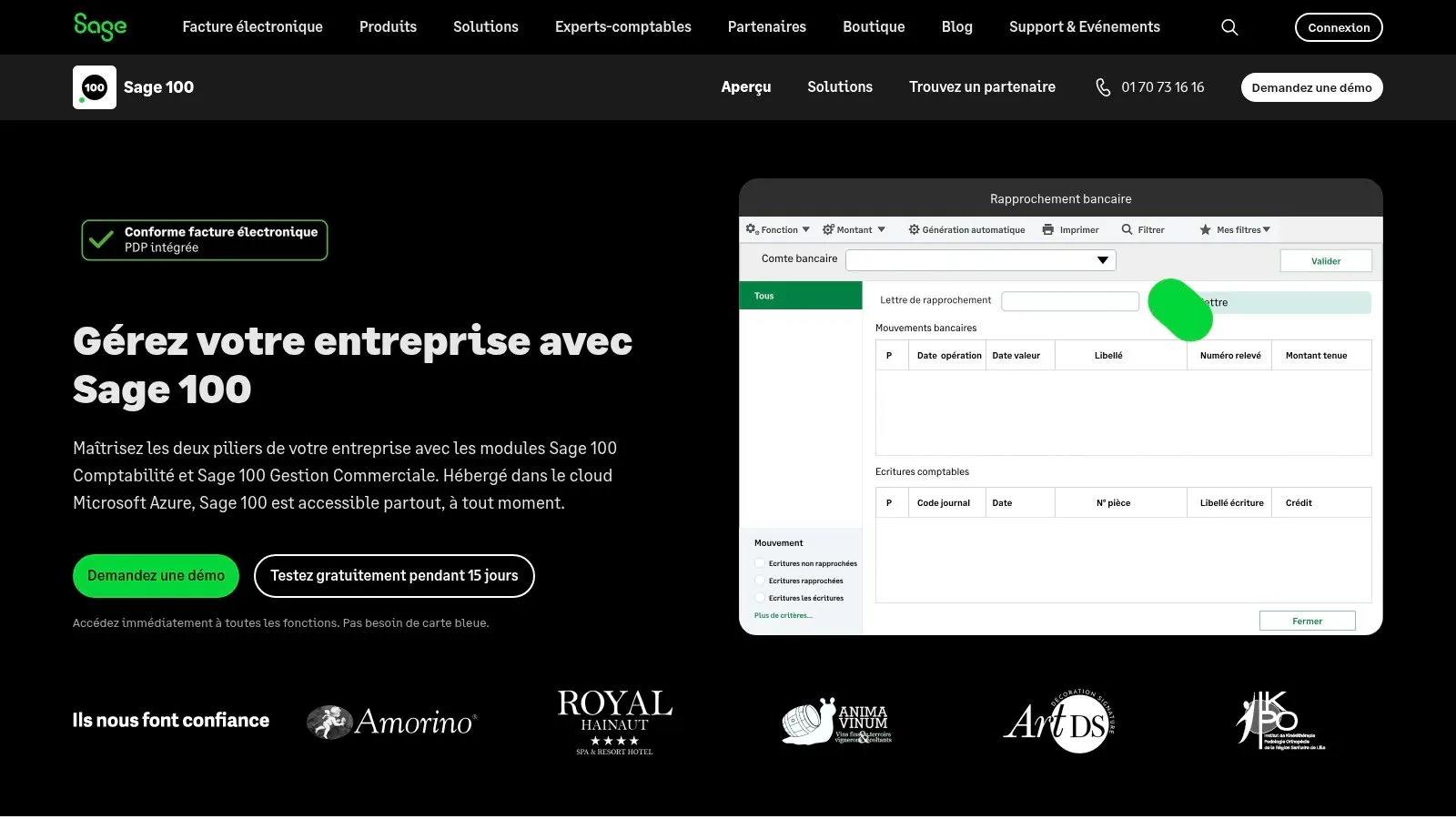
For sole traders and freelancers in e-commerce, the integrated sales management (quotes, orders, invoicing) simplifies sales tracking and invoicing, while the accounting features automate bookkeeping and the generation of tax filings. Independent sellers working both online and offline, as well as creators and sellers of digital products, will appreciate the data centralization and the ability to manage multiple currencies and languages. Service providers (consultants, coaches, agencies) will benefit from tools to track their projects and bill their services accurately.
Small businesses looking to automate their accounting management will find Sage 100cloud a robust, reliable solution. Customizable dashboards and precise reporting provide a clear view of financial performance, allowing both beginner and experienced entrepreneurs to make informed decisions. For growing companies, Sage 100cloud’s modularity allows features to be added as needed, avoiding unnecessary investment and exorbitant costs. Integrated production and inventory management is a major asset for manufacturing companies. Finally, multi-platform sellers will appreciate the centralized management of their sales, simplifying their day-to-day operations.
Key features:
- Accounting and financial management compliant with French standards
- Sales management (quotes, orders, invoicing)
- Payroll and human resources management
- Production and inventory management
- Customizable reporting and dashboards
Pros:
- Perfectly suited to the French market and its legislation
- Intuitive user interface that’s easy to learn
- Well-developed ecosystem of partners and integrators
- Modular solutions allowing features to be added as needed
Cons:
- High price for small businesses. It’s important to carefully assess the return on investment before committing.
- Some advanced features require costly add-on modules. A precise needs analysis is therefore essential.
- Performance sometimes limited with large data volumes. This can be a drawback for businesses with high activity levels.
Implementation tips:
- Working with a Sage partner for installation and initial configuration is recommended for optimal setup.
- Clearly define the company’s needs and processes before implementation to optimize the software’s use.
- Train users on the various features to maximize the software’s effectiveness.
Additional information:
Unfortunately, precise pricing and technical requirement information is not publicly available. It’s advisable to contact Sage directly for a personalized quote and detailed information.
Website: https://www.sage.com/fr-fr/produits/sage-100cloud/
Sage 100cloud earns its place on this list because it offers a comprehensive, high-performing solution for business management, specifically tailored to the needs of French SMBs. Despite its potentially high cost, its robust features and compliance with French standards make it a smart investment for companies looking to optimize their management and focus on growth.
4. Odoo: A Complete, Modular Business Management Software
Odoo stands out as an extremely versatile suite of open-source applications for business management. Suited to businesses of all sizes, from sole traders to large corporations, it offers a complete solution for managing all business processes. Its modular approach is a major strength, allowing users to select only the applications they need, optimizing both cost and complexity. Whether you’re an e-commerce seller, a consultant, an agency, or a fast-growing company, Odoo can adapt to your specific needs.
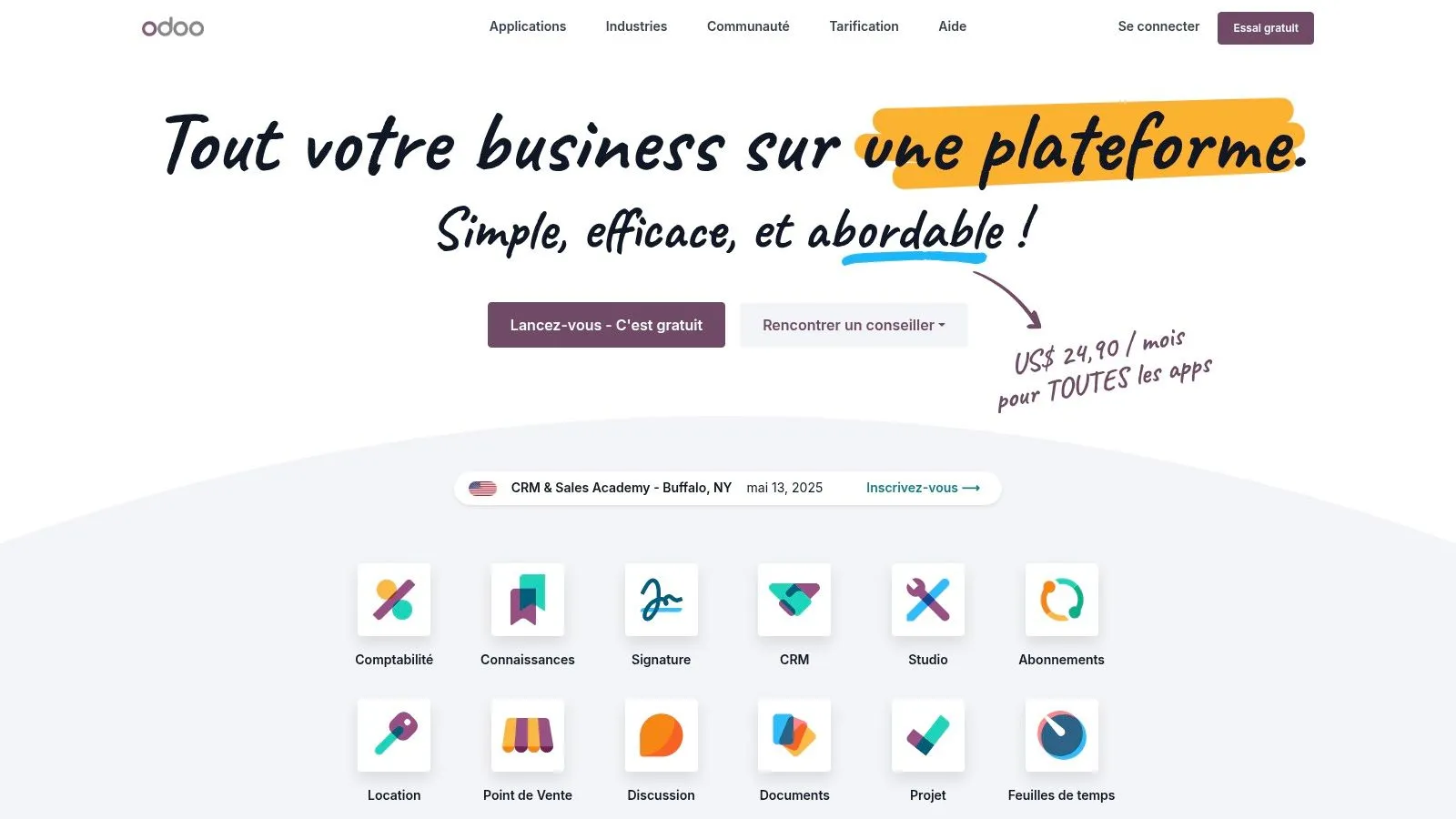
For sole traders and freelancers in e-commerce, Odoo’s sales, e-commerce and point-of-sale modules make it possible to manage orders, inventory and payments in a centralized way. Independent sellers working both online and offline benefit from an integrated solution to track their sales regardless of distribution channel. Automated accounting management simplifies life for small businesses and entrepreneurs, reducing errors and freeing up time to focus on their core business. Creators and sellers of digital products, as well as service providers, can use Odoo to manage their projects, clients and invoicing.
Odoo is particularly relevant for users who need multi-currency and multi-language management, facilitating international expansion. Multi-platform sellers benefit from centralized management of their inventory and orders. Finally, growing companies benefit from accurate financial reports and a scalable solution to support their development.
Key features:
- CRM and sales management: Lead tracking, opportunity management, quote and invoice automation.
- Accounting and invoicing: General accounting, tax management, financial report generation.
- Project management and human resources: Task planning, time tracking, leave management.
- Marketing, e-commerce and point of sale: Marketing campaigns, online store creation, physical point-of-sale management.
- Manufacturing, inventory and purchasing: Production management, stock tracking, procurement management.
Pros:
- Modularity: Pay only for the features you use, ideal for sole traders and small businesses.
- Free, open-source Community version: Lets you test and use Odoo for free, with basic features.
- Modern, intuitive interface: Makes daily use and onboarding easy.
- Highly customizable and extensible: Adapts to each company’s specific needs.
Cons:
- Limited features in the Community version: Some advanced features are reserved for the Enterprise version.
- Specific integrations may require development: Integration with certain tools may require technical skills.
- Paid technical support (Enterprise version): Access to technical support is reserved for paying users.
Pricing: Odoo offers a free, open-source Community version. The Enterprise version is paid, with pricing based on the number of users and applications chosen. Check the website for more details.
Implementation tips:
- Start with the Community version to get familiar with the interface and basic features.
- Clearly identify your needs and choose the applications you require.
- Don’t hesitate to consult the documentation and tutorials available online.
- For more complex needs, work with a certified Odoo partner.
Website: https://www.odoo.com/fr_FR/
Odoo earns its place on this list thanks to its flexibility, modularity and ability to adapt to companies of all sizes. Its free Community version is an excellent entry point for entrepreneurs and small businesses looking for high-performing, scalable business management software. The Enterprise version offers advanced features for companies with more complex needs.
5. Microsoft Dynamics 365 Business Central: A Complete ERP Solution for Optimized Business Management
Microsoft Dynamics 365 Business Central earns its place on this list because it offers an all-in-one ERP (Enterprise Resource Planning) solution particularly well suited to SMBs looking to optimize their business management software. It’s a powerful tool that centralizes and automates many essential functions, allowing businesses of all sizes, from sole traders to more established companies, to gain efficiency and steer their operations with precision.
This business management software connects sales, customer service, finance and operations, streamlining business processes. Whether you’re an e-commerce seller, a consultant, an agency, or a multi-platform seller, Business Central gives you a complete overview of your business. It’s particularly relevant for beginner or experienced entrepreneurs looking to lighten their administrative workload, as well as for growing companies that need accurate financial reports.
Key features for simplified business management:
- Comprehensive financial and accounting management: General ledger, cost accounting, budget management, fixed assets, cash flow, and detailed financial reporting. Especially useful for businesses looking to cut accounting costs and get a clear view of their financial situation.
- Supply chain and inventory management: Real-time stock tracking, purchasing, procurement and logistics management. Essential for online and offline sellers, especially those operating on multiple platforms.
- Sales and customer service management: Quote, order, delivery and invoicing management, plus customer relationship tracking (CRM). A major asset for creators and sellers of digital products, as well as service providers looking to improve their customer relationships.
- Project and resource management: Planning, project tracking, resource and time management. Ideal for agencies and consultants who need to manage multiple projects simultaneously.
- Native integration with Microsoft 365, Power BI and Power Platform: A considerable advantage for users of the Microsoft ecosystem, enabling smooth digital transformation and optimal use of data. Integration with Power BI in particular makes it possible to create custom dashboards and analyze business performance.
Pros:
- Familiar interface for users of Microsoft products: Makes onboarding easier and reduces learning time.
- Flexible deployment (cloud, on-premise or hybrid): Adapts to each company’s needs and infrastructure.
- Strong integration capability with the Microsoft ecosystem: Enables optimal interoperability with tools already in use.
- Advanced AI and analytics features: Provide valuable insights for decision-making.
Cons:
- Relatively high license cost for small businesses: It’s important to carefully assess the return on investment.
- Customization complexity for very specific needs: May require specialized consultants.
- May require specialized consultants for implementation: Adds extra costs to factor in.
Implementation tips:
- Clearly define the company’s needs and objectives before implementation.
- Involve teams from the start of the project to ensure optimal adoption.
- Plan for adequate user training.
Pricing and technical requirements: For precise pricing and technical requirement information, it’s recommended to contact Microsoft directly or a certified partner. Pricing is generally based on the number of users and the features chosen.
Comparison with similar tools: Business Central positions itself as an alternative to solutions like SAP Business One or Sage X3, offering a more accessible solution for SMBs.
Website: https://dynamics.microsoft.com/fr-fr/business-central/overview/
In conclusion, Microsoft Dynamics 365 Business Central is a powerful, comprehensive business management software that can help SMBs optimize their operations and drive growth. Despite its potentially high cost, its advanced features and integration with the Microsoft ecosystem make it a relevant choice for businesses seeking a scalable, high-performing solution.
6. Cegid: A Complete Solution, But at What Price?
Cegid is a major player in the French business management software market. Its offering targets a wide range of businesses, from micro-businesses to large groups, with specialized solutions by industry. Whether you’re a sole trader, an e-commerce freelancer, an SMB or a large corporation, Cegid offers a solution tailored to your needs, covering accounting, finance, tax, human resources, sales management and point of sale. Cegid’s main appeal lies in its deep expertise in the French market and its flawless compliance with current legislation.
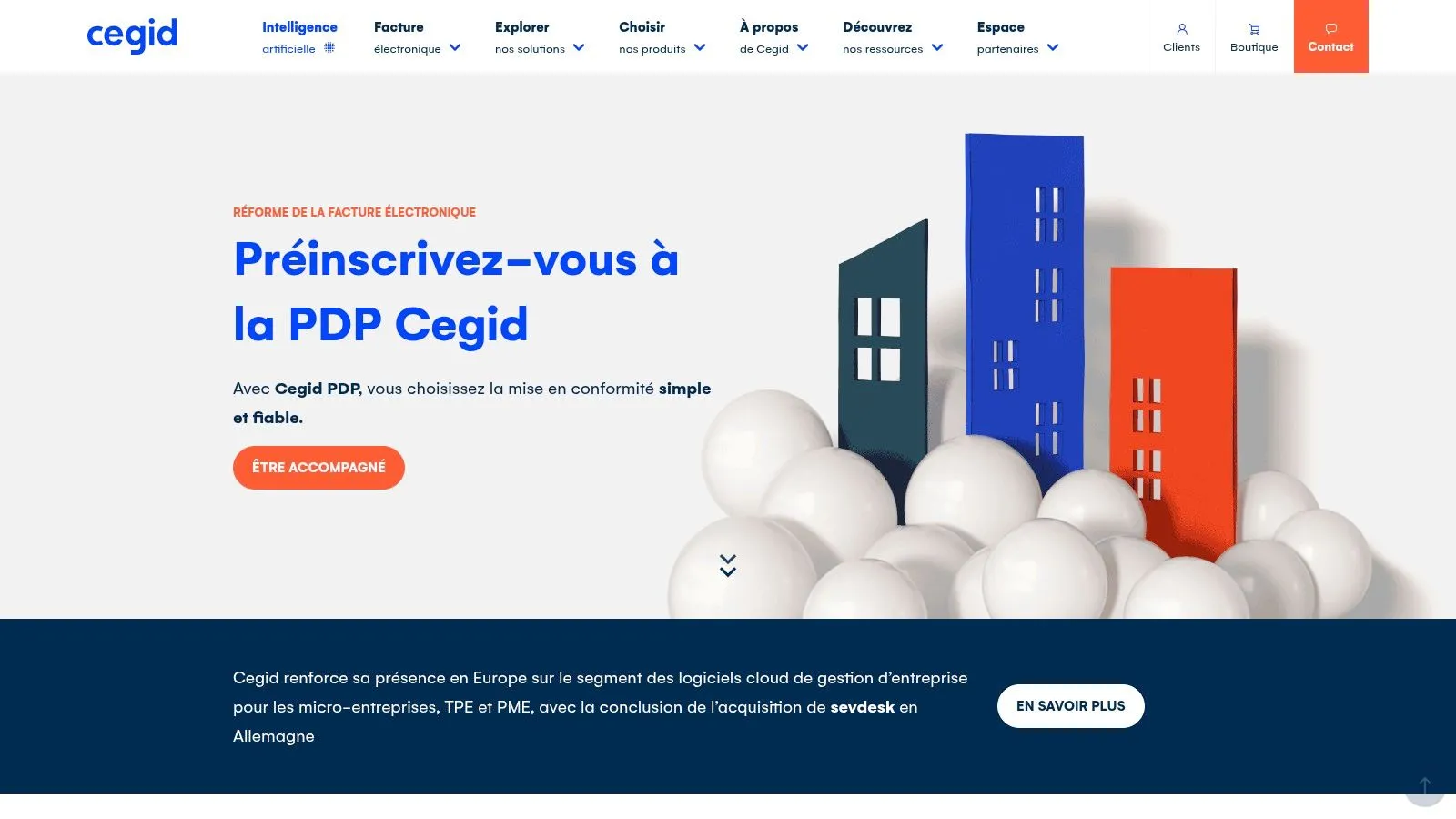
For sole traders and freelancers in e-commerce, the simplified accounting and tax filing management offered by Cegid represents a valuable time saving. Independent sellers working both online and offline will appreciate the centralization of sales data and inventory management. Creators and sellers of digital products, as well as service providers, will find Cegid a high-performing tool for managing their invoicing and tracking their performance. Growing companies, meanwhile, will benefit from accurate financial reports and a clear view of their business. Multi-currency and multi-language management is a considerable asset for businesses operating internationally.
Key features:
- Specialized business solutions: Cegid offers solutions tailored to the specific needs of many industries, such as retail, accounting professionals, or human resources.
- Legal compliance: One of Cegid’s strengths is its full compliance with French legislation, particularly in accounting and tax matters. Regular updates guarantee ongoing adaptation to legal changes.
- Complete HR and payroll solutions: Contract management, payroll, leave, and more.
- Sales and point-of-sale management: Sales tracking, inventory management, checkout, and more.
- Secure cloud solutions: Access to data anytime, anywhere.
Pros:
- Industry expertise: Dedicated solutions to meet the specific needs of each business sector.
- French legal compliance: Peace of mind thanks to a solution that’s always up to date.
- France-based customer support: An advantage for fast, effective assistance.
Cons:
- High pricing: Cegid is often considered a more expensive solution than its competitors. Price varies depending on the modules and features chosen. It’s important to request a personalized quote to assess the actual cost for your business.
- Sometimes dated user interfaces: Despite improvement efforts, some interfaces may seem less modern than those of more recent solutions.
- Complex integration with third-party tools: Integration with certain third-party software can sometimes prove complex and require specific development.
Implementation tips:
- Precisely define your needs: Before you start, it’s crucial to clearly identify your needs and the essential features for your business.
- Request a demo: Don’t hesitate to ask for a personalized demo to get familiar with the solution’s interface and features.
- Plan an adequate budget: Factor in the cost of licensing, maintenance and any integration services.
Comparison with similar tools: Alternatives such as Sage, EBP or QuickBooks exist on the market. The choice will depend on your specific needs, your budget, and the size of your company.
Website: https://www.cegid.com/fr/
Cegid earns its place on this list thanks to its robustness, legal compliance and adaptation to the specifics of the French market. However, its cost can be a barrier for small businesses. It’s therefore essential to carefully weigh the pros and cons before making your choice.
7. Salesforce
Salesforce is far more than a simple CRM. While it’s known as a leader in customer relationship management, it’s actually a true business management software platform, notably through its Salesforce 360 offering. It centralizes and optimizes a wide range of processes, from marketing to sales, customer service, e-commerce and even IT management. Its strength lies in its flexibility and ability to adapt to varied needs, making it relevant for virtually every industry, from sole traders to large corporations. Whether you’re an e-commerce freelancer, a small business looking to automate its accounting, an independent consultant, or a fast-growing company, Salesforce can support you.
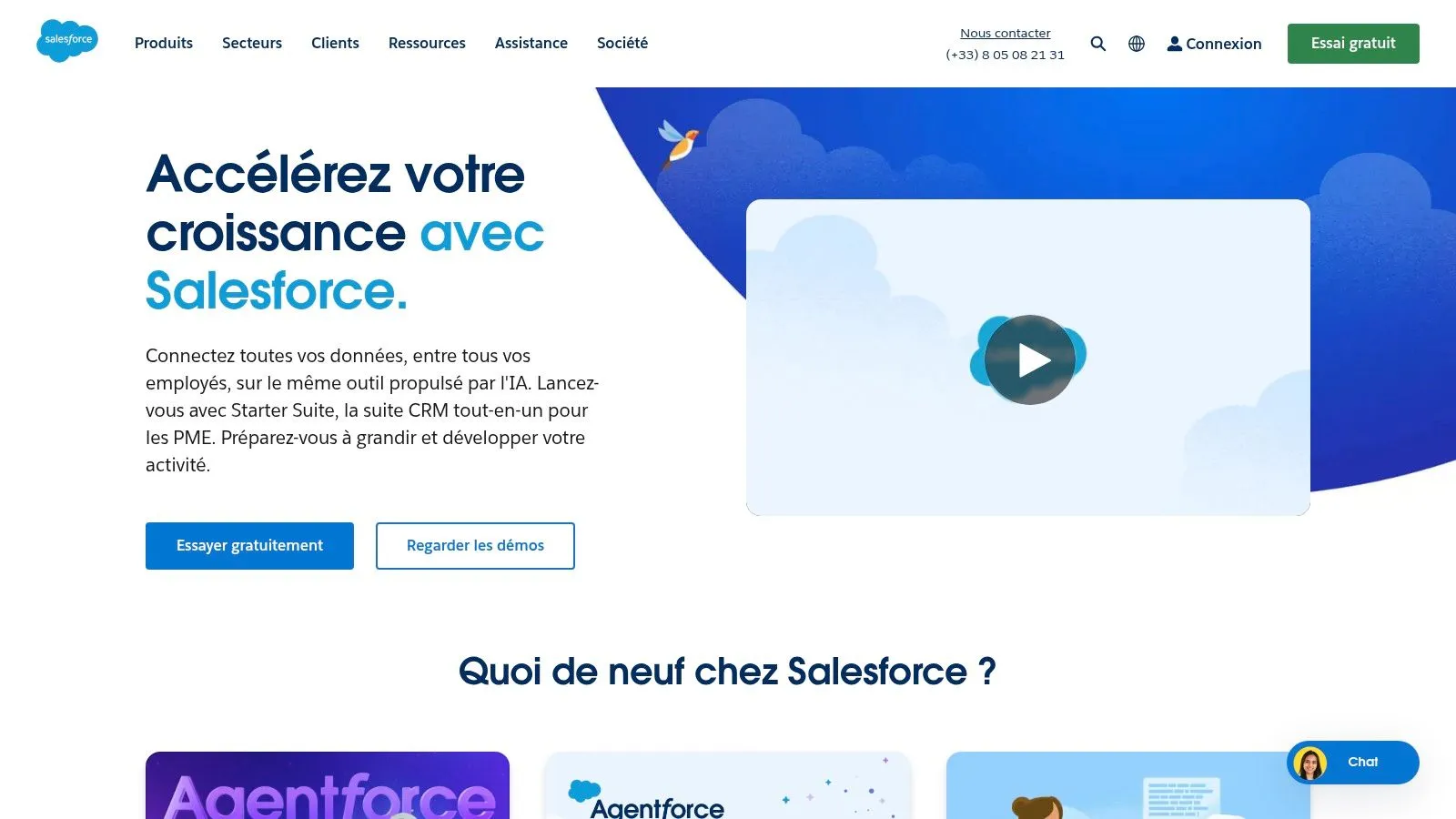
In concrete terms, Salesforce offers dedicated modules for every aspect of business management. Sales Cloud optimizes the sales cycle, from prospecting to closing deals. Service Cloud improves customer satisfaction with powerful support tools. Marketing Cloud automates marketing campaigns and personalizes the customer experience. It’s all built on a single cloud platform, making it easier for teams to collaborate and access data in real time. Multi-currency and multi-language management features are also available, a major asset for international businesses or multi-platform sellers. For creators and sellers of digital products, Salesforce offers solutions for managing subscriptions, payments and customer tracking.
Key features:
- Complete CRM (Sales Cloud, Service Cloud, Marketing Cloud)
- Automation of sales and marketing processes
- Low-code development platform (Lightning Platform): allows Salesforce’s features to be customized and extended without extensive coding. Ideal for tailoring the platform to specific needs.
- Analytics and artificial intelligence (Einstein AI): provides predictive analytics and recommendations to optimize sales and marketing performance.
- AppExchange: a marketplace of add-on applications to extend Salesforce’s features and integrate it with other software. Particularly useful for users needing automated accounting management, connections with e-commerce platforms, or other business tools.
Pros:
- Intuitive, modern user interface, making onboarding easy, even for beginner entrepreneurs.
- Extremely customizable, without requiring advanced technical skills.
- Automatic updates three times a year, ensuring access to the latest features and improvements.
- Highly developed partner and application ecosystem, offering great flexibility and integration with many other software tools.
Cons:
- Relatively high price, especially with add-on modules. It’s important to carefully assess your needs to choose the right modules and avoid unnecessary costs.
- Can become complex to manage with extensive customization. Expert support may be needed for complex configurations.
- Possible hidden costs (extra storage, API calls, etc.). It’s important to research the full pricing to avoid surprises.
Implementation and configuration:
While Salesforce offers an intuitive interface, setup and configuration require careful planning. Clearly defining your objectives and needs is essential. For complex configurations, working with a certified Salesforce partner can be worthwhile.
Pricing: Salesforce offers different pricing plans depending on the modules and features chosen. It’s advisable to check the website for precise pricing information.
Website: https://www.salesforce.com/fr/
Salesforce earns its place on this list because it offers a complete, scalable business management software solution. Its flexibility, rich ecosystem and advanced features make it a powerful tool for entrepreneurs and businesses of all sizes looking to optimize their processes and improve performance. Despite its cost, the investment can quickly pay for itself thanks to productivity gains and improved operational efficiency.
8. NetSuite ERP
Oracle NetSuite ERP stands out as a complete cloud business management software solution, enabling all essential operations to be managed from a single platform. Its 100% cloud architecture eliminates the need for on-site infrastructure, simplifying IT management and reducing associated costs. This software is particularly relevant for fast-growing companies, multi-platform e-commerce sellers, digital product sellers, service providers, and any company with international ambitions, thanks to its multi-currency, multi-language and multi-subsidiary features. Whether you’re a sole trader, an SMB, or a more established company, NetSuite offers a scalable solution to support your growth.
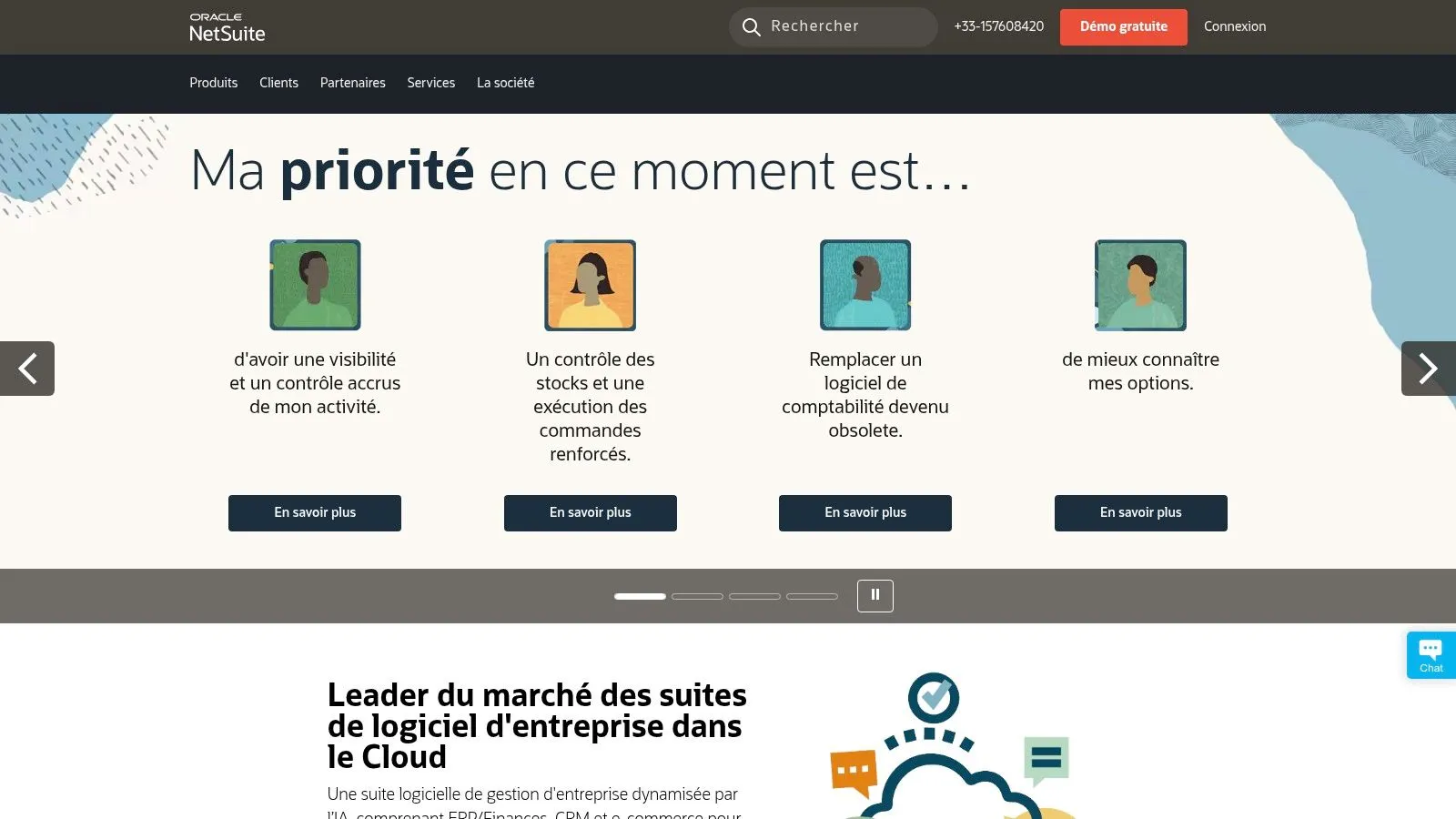
NetSuite ERP offers a complete suite of tools to optimize your business management. Comprehensive financial and accounting management enables precise tracking of revenue, expenses and profitability. Supply chain and inventory management makes it easy to control stock and optimize logistics flows. Integrated CRM and sales force automation improve customer relationship management and boost sales performance. For e-commerce sellers, order and e-commerce management is simplified through seamless integration. Finally, real-time dashboards and business intelligence tools provide a clear view of company performance, enabling informed decision-making. These features are particularly useful for entrepreneurs looking to lighten their administrative load and get an overview of their business.
Key features:
- Comprehensive financial and accounting management
- Supply chain and inventory management
- CRM and sales force automation
- E-commerce and order management
- Real-time business intelligence and dashboards
Pros:
- 100% cloud solution, accessible anywhere, anytime
- Ideal for multi-entity and international businesses
- Automatic updates twice a year, ensuring access to the latest features
- Highly scalable to adapt to company growth
Cons:
- High acquisition cost and complex pricing model, potentially a barrier for small businesses
- Advanced customization may require technical experts
- User interface sometimes perceived as less intuitive than some more recent competitors, requiring an adjustment period
Implementation tips:
Plan an adequate training phase to fully master NetSuite’s features. Support from a specialized consultant can be worthwhile, especially for complex configurations and integrations with other systems. A thorough analysis of your company’s needs is essential to fully leverage NetSuite’s capabilities and optimize its return on investment.
Comparison with similar tools: NetSuite positions itself as a complete ERP solution, competing with software like SAP Business One or Microsoft Dynamics 365. However, unlike these, NetSuite is exclusively cloud-based, simplifying its deployment and maintenance.
Pricing and technical requirements: NetSuite pricing is based on a monthly subscription and varies according to the number of users, modules used and specific features. Contact NetSuite directly for a personalized quote. The platform is accessed via a web browser, with no software installation required.
Website: https://www.netsuite.com/portal/fr/home.shtml
In conclusion, NetSuite ERP earns its place on this list thanks to its ability to effectively manage the complexity of modern businesses, especially those operating internationally or in e-commerce. Despite its higher acquisition cost, it represents a smart investment for growing companies seeking high-performing, scalable business management software accessible anywhere in the world.
9. Dassault Systèmes 3DEXPERIENCE
For industrial and manufacturing companies looking for business management software that goes well beyond traditional ERP features, Dassault Systèmes 3DEXPERIENCE stands out as a complete, innovative solution. More than a simple management software, 3DEXPERIENCE is a collaborative platform that integrates design, simulation, manufacturing and product lifecycle management, connecting every aspect of development and commercialization in a single environment. This software lets companies manage their entire process, from initial idea to final product delivery, including design, production and supply chain management.
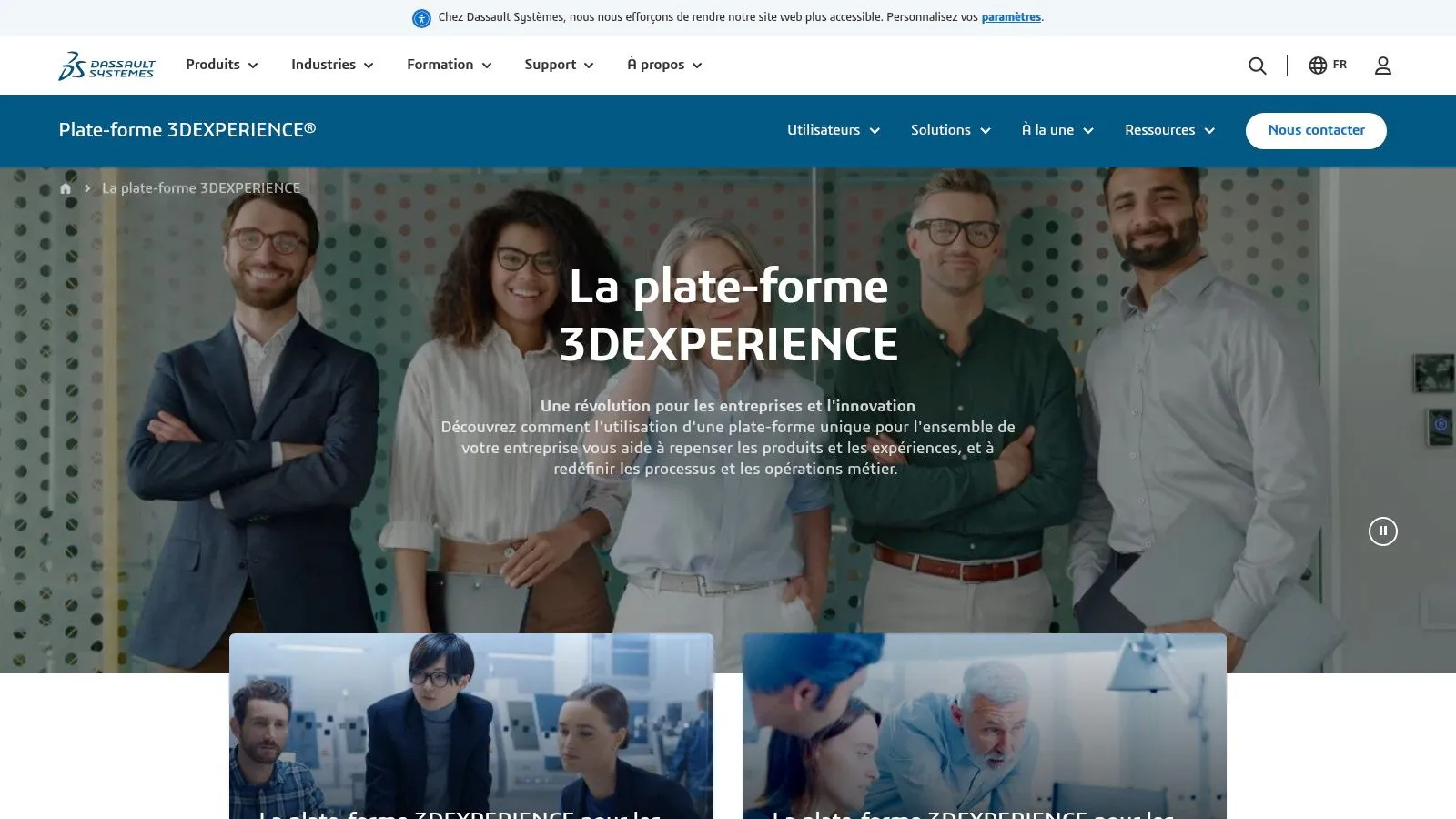
Key features include complete product lifecycle management (PLM), integrated 3D design and simulation tools, supply chain and production management, as well as data analysis and artificial intelligence capabilities. The platform also fosters real-time collaboration across all departments, streamlining exchanges and optimizing decision-making. For creators and sellers of digital products, particularly software, the 3DEXPERIENCE platform offers a powerful environment for managing the entire development cycle, from design to commercialization.
Benefits for businesses:
- Power and integration: An extremely powerful solution for industrial companies, offering unique integration of design and business management processes.
- Innovation and simulation: Advanced simulation and innovation capabilities, allowing products to be tested and optimized virtually before production.
- Cloud accessibility: A cloud platform accessible from anywhere, facilitating collaboration and remote work.
Drawbacks to consider:
- High cost: Its very high cost can limit access for SMBs, sole traders and freelancers. More affordable alternative solutions might be better suited to these profiles.
- Implementation complexity: The implementation complexity and steep learning curve require an investment of time and resources.
- Process overhaul: Adopting 3DEXPERIENCE often requires overhauling existing processes to fully benefit from its features.
Implementation and configuration: Implementing 3DEXPERIENCE is a large-scale project that requires rigorous planning and support from Dassault Systèmes experts. It’s crucial to analyze existing processes, define the company’s specific needs and train teams to use the platform.
Comparison with other tools: While 3DEXPERIENCE is a complete solution for large industrial companies, alternatives such as Autodesk Fusion 360 or PTC Windchill offer similar features, potentially at a more accessible cost. For simpler business management needs, ERP software such as SAP Business One or Odoo may be better suited for SMBs, sole traders and freelancers.
Pricing and technical requirements: 3DEXPERIENCE pricing is based on a subscription model and varies according to the modules and features chosen. Technical requirements are relatively high and require a robust IT infrastructure. Contact Dassault Systèmes directly for precise pricing information and configuration requirements.
Conclusion: Dassault Systèmes 3DEXPERIENCE earns its place on this list for its ability to transform the way industrial companies manage their design, production and commercialization processes. Visit the Dassault Systèmes website for more information. However, its cost and complexity make it better suited to large companies than small businesses. It’s therefore essential to carefully assess your needs and resources before considering adopting this platform.
10. EBP: Accessible Business Management Software Tailored to French Needs
EBP positions itself as a top choice for micro-businesses, SMBs, sole traders and freelancers in France looking for high-performing, affordable business management software. Its popularity among small businesses is explained by its ease of use, compliance with French legislation and modularity. Whether you’re a sole trader in e-commerce, a small business looking to automate its accounting, an independent seller working both online and offline, or a service provider, EBP offers a range of solutions tailored to your needs.
EBP offers a range of software covering the essential aspects of business management, including:
- Simplified accounting and financial management: Ideal for beginner or experienced entrepreneurs looking to lighten their administrative load and cut accounting costs. Easily manage your quotes, invoices, payments and expenses, and get a clear view of your financial situation.
- Sales management (quotes, invoices, inventory): Particularly useful for creators and sellers of digital products, multi-platform sellers looking for centralized management, or growing companies that need accurate financial reports. Track your sales, manage your inventory, and optimize your sales process.
- Payroll and human resources management: Simplify payroll and HR management, even without specific expertise.
- CRM and customer relationship management: Improve your customer relationships and build loyalty with an integrated CRM. A major asset for service providers (consultants, coaches, agencies), for example.
- Point of sale and cash register: A powerful solution for retail businesses and independent sellers working offline.
Benefits of EBP:
- Affordable pricing suited to micro-businesses and small SMBs: EBP offers subscription plans suited to tight budgets, making it an attractive solution for sole traders and small businesses.
- Quick onboarding and intuitive interface: The user interface is designed to be accessible, even without advanced technical skills.
- Compliance with French legislation: A crucial point for all businesses operating in France. EBP regularly updates its software to comply with legal changes.
- Modularity, so you only pay for the features you need: Choose the modules that match your needs and avoid paying for unnecessary features.
Drawbacks of EBP:
- More limited features than premium solutions: If you have very specific or complex needs, EBP’s features may prove insufficient.
- Less developed analysis and reporting capabilities: The analysis and reporting tools are less advanced than those offered by more comprehensive solutions.
- Limited scalability for fast-growing companies: If your company is experiencing rapid growth, you may eventually need to migrate to a more robust solution.
Implementation and tips:
Implementing EBP is generally simple and quick. The EBP website offers resources and tutorials to help you get started with the software. Don’t hesitate to contact their customer support for personalized assistance.
Comparison with similar tools:
EBP positions itself as a more accessible alternative to solutions like Sage or Cegid, which are often more expensive and complex. If you’re looking for simple, effective, affordable business management software, EBP is an excellent choice.
Pricing and technical requirements:
EBP pricing varies depending on the modules chosen and the type of subscription (on-premise or cloud). Check the EBP website for precise pricing information and required technical configurations.
Website: https://www.ebp.com/fr-fr/
EBP earns its place on this list because it offers a complete, accessible solution for business management, specifically designed for the French market. Its ease of use, legal compliance and modularity make it an ideal choice for micro-businesses, SMBs, sole traders and freelancers.
Comparison of the Top 10 Business Management Software Solutions
| Solution | Features (★) | Experience & Support (💎) | Unique (✨) | Pricing (💰) | Target (👥) |
|---|---|---|---|---|---|
| 🏆 Bizyness | Invoice, VAT, transaction automation, e-commerce integration | Intuitive interface, responsive support | Designed specifically for sole traders | Free, plans from €9/month | SMBs, sole traders |
| SAP Business One | Financial management, CRM, purchasing, advanced reporting | Very comprehensive, customizable | International presence, extensive modules | High investment | SMBs seeking an integrated solution |
| Sage 100cloud | Accounting, payroll, HR, production, reporting | Easy to learn, compliant with the French market | Suited to French legislation | High pricing, add-on modules | French SMBs |
| Odoo | Modularity (CRM, invoicing, HR, e-commerce) | Modern interface, highly customizable | Free Community version | Pay only for the features you use | Businesses of all sizes |
| Microsoft Dynamics 365 Business Central | Finance, supply chain, sales, Microsoft 365 integration | Familiar interface, flexible deployment | Native integration with the Microsoft ecosystem | High licensing and consulting costs | SMBs integrated with Microsoft |
| Cegid | Business solutions, accounting, HR, secure cloud | Regular updates, French support | Industry expertise | Often high pricing | Specialized sectors, accounting professionals |
| Salesforce | Complete CRM, automation, AI, analytics | Modern interface, highly customizable | Extensive ecosystem and Lightning Platform | Expensive with add-on modules | Businesses of all sizes |
| NetSuite ERP | Cloud ERP, multi-company, inventory management, real-time BI | Suited to international businesses | 100% cloud and scalable | Complex model with high cost | Growing international companies |
| Dassault Systèmes 3DEXPERIENCE | PLM, 3D design, simulation, product lifecycle management | Collaborative, powerful approach | Integration of design and business management | Very expensive | Industrial, manufacturing companies |
| EBP | Accounting, sales management, CRM, payroll management | Intuitive interface, quick onboarding | Accessible and modular, compliant with French standards | Affordable for micro-businesses & SMBs | Micro-businesses, SMBs, sole traders |
Ready to propel your business forward?
Choosing the right business management software is a decisive step in optimizing your operations and driving growth. Solutions such as Bizyness, SAP Business One, Sage 100cloud, Odoo, Microsoft Dynamics 365 Business Central, Cegid, Salesforce, NetSuite ERP, Dassault Systèmes 3DEXPERIENCE and EBP offer a variety of features to meet the specific needs of businesses, from sole traders to large organizations. This guide has presented the strengths of each of these business management software solutions, helping you identify the ones best suited to your profile: whether you’re an e-commerce seller, a consultant, an agency, or a fast-expanding company, there’s a tool to help you effectively manage your finances, sales, inventory and much more.
Key points to remember include the software’s scalability, its integration with your existing tools, ease of use and, of course, cost. Don’t forget to consider criteria such as multi-currency management, customer support and customization options for business management software that’s perfectly aligned with your goals. Implementing new software requires rigorous planning: identify your precise needs, train your teams, and ensure regular follow-up to maximize the benefits of your investment.
High-performing business management software will not only let you automate time-consuming tasks, but also give you a clear view of your performance and help you make informed decisions for the future. Ready to take the leap? Discover Bizyness, intuitive, comprehensive business management software specially designed to simplify running your business. Visit Bizyness today and explore the features that will help propel your business toward success.
