

 Français
Business financial management: key strategies for executives
Optimize your business financial management with our practical advice. Discover how to improve your company's financial performance starting today.

Mastering the fundamentals without getting lost in complexity
Business financial management can seem complex. Yet it rests on relatively simple fundamental principles. This section explains how experienced executives approach these basics: budget planning, cost control and performance analysis.
Budget planning: an essential tool
A well-structured budget is indispensable for sound financial management. It forecasts revenue and expenses, anticipates funding needs and sets realistic goals. It serves as a guide for decisions and helps stay on course. Effective planning requires clear, measurable objectives, reliable data and the involvement of every team.
Cost control: optimizing spending
Controlling costs does not mean cutting every expense. It means optimizing spending to maximize profitability. This involves identifying major expense items, negotiating with suppliers and implementing rigorous controls. Automated management tools can make it easier to track spending and spot potential savings.
Performance analysis: measuring and improving
Performance analysis evaluates the effectiveness of actions taken and identifies areas for improvement. It relies on key performance indicators (KPIs) such as profitability, solvency and liquidity. These indicators help track a company’s progress, compare it with competitors and adjust strategy. The economic context also plays a role. At the end of December 2024, outstanding credit to the French economy stood at €2,081 billion, according to the French Banking Federation, up 1.4% year-on-year. Outstanding credit to non-financial companies reached €1,376 billion, an annual increase of 2.1% compared to December 2023. This context highlights the importance of rigorous financial management for accessing funding.
Digital tools: valuable allies
Many digital tools simplify business financial management today. From accounting software to cash management platforms, these solutions automate tasks, centralize data and produce accurate real-time reports. They are valuable allies for executives who want to focus on their core business and optimize their financial performance.
Overcoming obstacles and persevering
Financial management can be intimidating, especially for young entrepreneurs. Fear of the unknown, lack of experience and perceived complexity can all be obstacles. It is essential to overcome them. Ongoing training, working with experts and exchanging ideas with other entrepreneurs help build confidence and skills.
In conclusion, mastering the fundamentals of financial management is within everyone’s reach. A structured approach, the use of suitable tools and sustained motivation turn financial management into a genuine growth lever.
Navigating financing like an expert
Securing financing is crucial for a company’s growth and success. But beyond traditional bank loans, what options are available to executives? This section explores financing strategies to optimize your company’s financial structure.
Identifying financing opportunities
Financing is not limited to banks. Consider business angels, investment funds, crowdfunding or public grants. Each source has its advantages and drawbacks. It is important to choose the one that matches your needs and your stage of development.
Diversifying your financing sources reduces risk and optimizes costs. It gives you greater flexibility and keeps you from depending on a single financial institution.
Understanding credit trends
The credit market is constantly evolving. Interest rates, credit access conditions and bank requirements all vary. Staying informed about these trends is crucial for adapting your strategy.
For example, outstanding financing to non-financial corporations (NFCs) in France reached €1,372.2 billion in January 2025, up 1.8% year-on-year compared to January 2024. SMEs held outstanding financing of €565.9 billion, with an average interest rate of 3.95%. More information is available on business financing.
To better understand the market, here is a comparison of interest rates:
Comparison of interest rates by company size
A comparative analysis of financing costs by company category
| Company size | Outstanding (billion €) | Average rate | Market share |
|---|---|---|---|
| SMEs | 565.9 | 3.95% | |
| Large enterprises | |||
| Mid-caps |
This table is an example and requires additional data to be complete. Analyzing this data helps understand disparities in interest rates by company size and adapt strategy accordingly.
The art of negotiating with banks
Building a solid relationship with your banker is an asset. Present a clear, precise and convincing file. Highlight the viability of your project and your growth prospects.
Do not hesitate to negotiate loan terms, such as the interest rate, guarantees and repayment terms. A good negotiation can save you money in the long run.
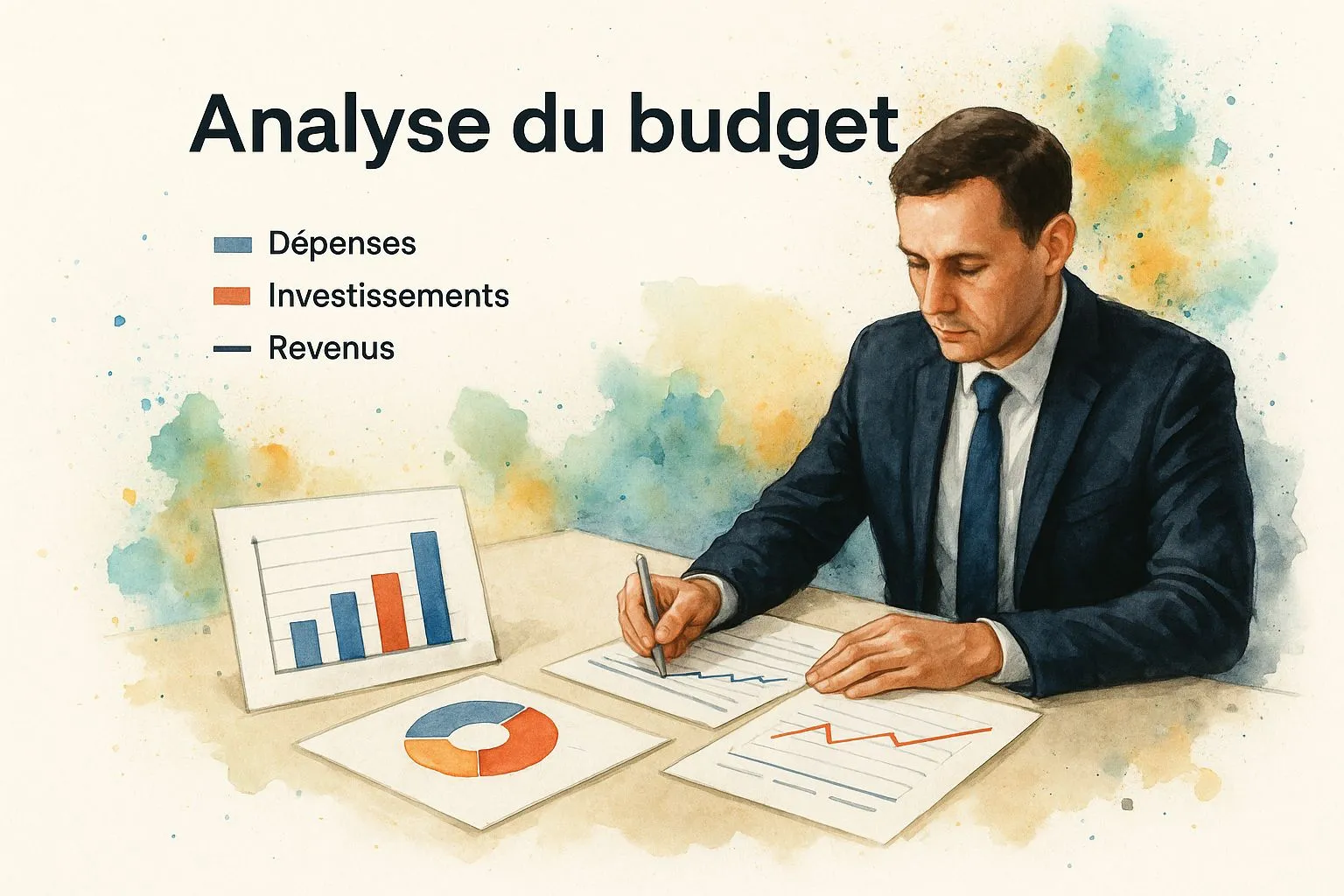
The infographic above illustrates the importance of financial data analysis. Visualizing data enables effective management and informed decision-making.
Anticipating financing needs
Anticipate your needs by drawing up regular cash-flow forecasts. Identify the periods when you will need liquidity and start the process early. This lets you negotiate from a position of strength.
Failing to anticipate your needs can lead to financial difficulties and limit your financing options.
Diversifying your financing sources
Diversifying your financing sources protects you from market fluctuations. By exploring alternative options, you increase your chances of obtaining the funds needed for your projects.
It also lets you spread risk and avoid depending on a single source of financing.
Building a solid file
A well-prepared financing file is essential for convincing investors. Present a clear business plan, realistic financial forecasts and a competent team.
Highlight your strengths to stand out. A convincing file demonstrates your seriousness.
Optimizing your financial structure
Regularly analyze your financial ratios, your debt level and your profitability. Identify weaknesses and put corrective actions in place.
An optimized financial structure is essential for your company’s health and attracts investors.
Turning your cash flow into a growth lever
A company’s cash flow is far more than just a sum of money to manage. It is a genuine growth engine, a strategic asset that, when optimized, can propel a company toward success. This section details how to turn your liquidity management into a competitive advantage.
Forecasting to manage better: anticipation, the key to performance
Effective cash management relies above all on accurate forecasts. It is crucial not only to know your current balance, but above all to anticipate future financial flows. Reliable forecasting methods, based on the company’s history and market analysis, help identify potential shortfalls and make informed decisions. For example, anticipating a seasonal activity peak makes it possible to forecast working-capital needs and negotiate suitable solutions with your bank.
Cash management tools: simplifying and gaining efficiency
Many cash management tools are now available to simplify and optimize cash-flow management. From treasury management software (Agicap) to online payment platforms, these solutions automate time-consuming tasks, centralize data and offer real-time visibility over financial flows. This time and accuracy saved frees up time to focus on strategic decisions, such as investing in new projects or optimizing accounts-receivable collection. On this topic, you might be interested in this article: How to master customer receivables collection.
Negotiating and arbitrating: optimizing the banking relationship and investments
The bank is an essential partner in cash-flow management. Negotiate favorable banking terms, including competitive interest rates on loans and reduced fees on transactions. Also consider balancing security and return for your cash investments. Part of your cash should remain available for day-to-day needs, while another part can be invested longer term to generate additional income.
Building a relevant dashboard: steering your cash flow with precision
A clear, concise cash-flow dashboard is essential for effective steering. It should provide a quick view of key information: current balance, short- and medium-term forecasts, and key financial ratios. A well-designed dashboard helps anticipate cash-flow difficulties, identify optimization levers and make decisions quickly.
Moving from defensive management to a proactive approach: cash flow as a competitive advantage
Cash-flow management is often seen as a constraint, a mere obligation. Adopting a proactive approach, however, can turn it into a genuine asset. Optimizing your financial flows frees up resources to invest in growth, innovate and adapt to market changes. Effective cash management also strengthens credibility with investors and financial partners. Turning your cash flow into a growth lever is an achievable goal for companies of any size.
Optimizing your investments and asset management

Excellence in business financial management goes beyond simply controlling costs and accessing financing. It also encompasses optimizing investment and asset management. This section explores the allocation strategies used by experienced executives to maximize their portfolio returns.
Evaluating investment opportunities: a methodical process
Before any investment, a rigorous analysis of opportunities is required. Several factors must be taken into account: the market’s growth potential, the expected profitability, the associated level of risk and the investment horizon. For an SME, investing in new, high-performance machinery may, in the long run, prove wiser than keeping aging, less productive equipment.
Investment diversification is also essential to minimize risk. Spreading investments across different vehicles allows potential losses on one to be offset by gains on another.
Integrating ESG criteria: a present-day imperative
ESG (Environmental, Social and Governance) criteria play a growing role in investment decisions. Companies that integrate these criteria into their investment strategy benefit from an improved image and attract more responsible investors. Favoring local suppliers committed to sustainable development, for example, can strengthen a company’s reputation and create long-term value.
The evolution of the asset management market reflects this trend. The French sector crossed the €5,000 billion mark in assets under management in 2025, reaching €5,033 billion. This 8.7% year-on-year growth illustrates the sector’s dynamism and investor confidence. More information on the overview of asset management in France.
The balance between liquidity, security and profitability: an ongoing challenge
Finding the right balance between liquidity, security and profitability is a permanent challenge for executives. Liquidity covers day-to-day expenses, security preserves invested capital, and profitability ensures the company’s growth. This balance depends on the company’s objectives and risk appetite. A young startup will favor growth and accept higher risk, while an established company will aim for security and stability.
Making the most of cash surpluses: growth levers
Cash surpluses should not sit idle. They can fund development projects, research and innovation investments, or acquisitions of competitors. Distributing part of the surplus to shareholders as dividends is also an option. The strategy adopted depends on the company’s objectives and growth prospects.
Diversifying investments: managing risk and optimizing performance
An effective diversification strategy involves investing in different asset classes: equities, bonds, real estate, commodities, and so on. Each asset class carries a specific risk/return profile. Diversifying investments reduces risk exposure and optimizes return prospects.
A company might, for example, invest part of its cash in equities to benefit from the stock market’s growth potential, and another part in bonds for safer fixed income. Real estate can also be a relevant investment to diversify the portfolio and hedge against inflation. The key is to adapt your diversification strategy to your risk profile and financial objectives.
Building financial steering that delivers results
Effective financial steering is essential for high-performing business management. It is not just about monitoring the numbers, but about analyzing them to anticipate challenges and seize opportunities. This article explores how to build a steering system that turns financial information into concrete action.
Identifying relevant KPIs: beyond classic metrics
Choosing the right key performance indicators (KPIs) is fundamental. Beyond classic indicators like revenue and gross margin, it is important to choose KPIs suited to your industry and strategic objectives.
For example, for an e-commerce business, conversion rate and customer acquisition cost are paramount. For a manufacturing business, overall equipment effectiveness and production lead time are more relevant. A well-chosen set of KPIs enables precise tracking and better responsiveness to market changes.
Building effective dashboards: visualization in service of decision-making
An effective financial dashboard is a powerful tool. It summarizes key data into easy-to-understand charts and tables. It provides a quick view of business performance and helps identify trends.
A relevant dashboard focuses on essential information and highlights deviations from set objectives. Software such as Microsoft Power BI can automate the creation of these dashboards, simplifying data tracking and analysis.
Analyzing variances and making decisions: turning information into action
Analyzing the variance between results achieved and forecasts is a key step in financial steering. It helps understand the reasons behind deviations and put corrective actions in place.
For example, a customer acquisition cost above forecast requires an analysis of marketing campaigns and optimization of advertising spend. Studies show that using customized financial dashboards and sector-specific KPIs improves financial performance by an average of 34% and reduces decision-making time by 57%. More information on the impact of customized dashboards is available here.
Communicating effectively about performance: transparency and collaboration
Communicating financial results is essential for engaging teams and stakeholders. Clear, transparent reporting facilitates information sharing, unites efforts and improves collective performance.
Communication must be tailored to its audience, whether management, investors or employees. Regular, transparent communication builds trust and supports the achievement of shared objectives.
Continuously improving management control: an iterative process
Financial steering is a continuous improvement process. KPIs, dashboards and management control processes need to be regularly reassessed to ensure they remain relevant and effective. Changes in the market, competition and company objectives require constant adaptation of the steering system. To learn more about cash-flow management, see this article: How to master your company’s cash flow.
To illustrate the key indicators, here is a sample dashboard:
Dashboard of essential financial indicators
The key ratios and metrics for steering financial performance
| Indicator | Calculation formula | Target | Tracking frequency |
|---|---|---|---|
| Gross margin | (Revenue - Cost of goods sold) / Revenue | 25% | Monthly |
| Working capital requirement (WCR) | Inventory + Accounts receivable - Accounts payable | Under 30 days | Quarterly |
| Return on investment (ROI) | (Investment gain - Investment cost) / Investment cost | 15% | Annual |
| Debt ratio | Total debt / Total assets | Under 50% | Annual |
This table is an example, and target objectives vary depending on each company’s activity and strategy.
Effective financial steering is a dynamic process based on relevant indicators, efficient tools and transparent communication. It turns financial data into levers for growth and performance for the company.
Leveraging technology to transform your management

Digitalization offers considerable opportunities to optimize financial management for businesses. But with so many tools available, choosing solutions suited to your needs is essential. This article explores the technologies that let companies automate their processes and improve their forecasts.
Financial ERPs: a foundation for modern management
Financial Enterprise Resource Planning (ERP) systems form the foundation of modern financial management. These platforms centralize all financial data, from accounting to cash-flow management. A powerful ERP, such as SAP, offers a global, real-time view of the financial situation, making decision-making easier.
Artificial intelligence: the power of predictive analysis
Artificial intelligence (AI) is revolutionizing financial analysis. Thanks to machine learning, AI can identify trends, anticipate risks and optimize forecasts.
For example, AI can analyze sales data to predict working-capital needs and anticipate potential cash-flow difficulties. AI is particularly useful for predictive analysis, helping companies better understand future trends. This is made possible by algorithms that process huge amounts of data and identify correlations imperceptible to humans. This helps optimize investment decisions and asset management.
Integrated management platforms: the key to performance
Integrated management platforms connect all the tools used by a company, from accounting software to CRM platforms like Salesforce. This integration enables process automation, fewer errors and considerable time savings. Imagine, for example, the automatic synchronization of invoices between your online sales platform and your accounting software.
Choosing the right tools and succeeding with migration
The choice of technology tools must align with each company’s strategy and specific needs. A small business will not have the same needs as a multinational. An audit of existing processes and an analysis of future needs are essential for choosing the most relevant solutions.
Migrating to new tools can be complex. It is essential to plan the migration carefully, train teams and ensure system compatibility. Support from experts can greatly ease this transition.
Measuring productivity gains: the impact of technology
Technology has a direct impact on the productivity of finance teams. Automating tasks frees up time for higher value-added work, such as financial analysis and strategic advice. These productivity gains translate into better overall company performance.
Change management: essential for success
Digital transformation involves a change in working methods. It is crucial to support finance teams through this transition. Training, communication and employee involvement are essential to ensure the adoption of new tools and the success of digital transformation. Some companies have seen a significant increase in efficiency after implementing change-management programs when rolling out new management software.
In conclusion, technology is an essential lever for transforming business financial management. Choosing the right tools, orchestrating a successful migration and supporting change deliver significant productivity gains and improve the company’s overall performance.
Key takeaways
Having explored the various aspects of business financial management, let’s summarize the essential points for effective implementation. This practical guide will help you excel in this area with concrete advice and important reminders.
Planning, the foundation of success
Rigorous planning is essential. Draw up a precise, realistic budget, forecasting revenue and expenses. Track its execution and adjust it regularly.
Set clear, measurable objectives, in the short, medium and long term. Quantify these objectives to track your progress and stay motivated.
Regularly analyze your performance. Use relevant key performance indicators (KPIs) to assess the effectiveness of your management and identify areas for improvement.
Financing, a lever for growth
Diversify your financing sources. Explore different options such as banks, crowdfunding and business angels to reduce your dependence and optimize your costs.
Prepare a solid, polished financing file. A convincing presentation is essential for attracting investors and obtaining favorable terms.
Anticipate your financing needs. Planning ahead lets you negotiate from a position of strength and avoid emergency situations.
Cash flow, a strategic asset
Carry out regular cash-flow forecasts. Anticipating cash-flow variations lets you avoid difficulties and optimize your investments.
Use suitable cash management tools. Automate tasks, centralize data and gain efficiency.
Negotiate banking terms. Optimize your banking relationships to secure favorable terms on your transactions and investments.
Investments, engines of sustainable growth
Rigorously analyze investment opportunities. Evaluate the potential of each investment by weighing risk, profitability and investment horizon.
Diversify your investments. Spread your investments across different asset classes to minimize risk and optimize returns.
Integrate ESG criteria (environmental, social and governance) into your investment decisions for responsible growth.
Financial steering, your compass
Create relevant dashboards. Quickly visualize key information and steer your performance with clear, concise dashboards.
Analyze variances and put corrective actions in place. Identify gaps between forecasts and results, analyze their causes and act accordingly.
Communicate transparently about financial performance to your teams and stakeholders. Regular communication is essential.
Technology, a valuable ally
Choose digital solutions suited to your needs and your budget. Explore ERP systems, cash-management software and artificial intelligence.
Automate processes. Save time and reduce errors by automating repetitive tasks.
Support your teams through change. Train them and guide them in adopting new tools for a successful transition. Discover tax optimization tips for sole traders on Bizyness.
By applying these key points, your financial management will become a genuine performance lever. Adapt your strategies and tools as your business and the economic context evolve. Simplify your management and focus on your core business with Bizyness, the all-in-one solution for sole traders and small businesses.
