

 Français
 Micro-entrepreneur reform: the new €25,000 threshold explained
Discover what the micro-entrepreneur reform at €25,000 means for your business: stakes, benefits, risks, and tips to anticipate the changes.
The micro-entrepreneur scheme, formerly known as auto-entrepreneur, is a very popular simplified status in France. It allows thousands of people to launch into the entrepreneurial adventure in a more flexible and less costly way than a “classic” company. In recent years, the scheme has undergone numerous changes: higher revenue ceilings, simplified procedures, tax adjustments, and more.
Today, a new measure is making headlines: the micro-entrepreneur reform, which plans to set a new threshold at €25,000. What does this concretely mean for project holders, active sole traders and the French entrepreneurial ecosystem? This article offers a comprehensive analysis to help you better understand this reform, its stakes and its potential impact on your business.
What is the micro-entrepreneur scheme?
Definition
The micro-entrepreneur scheme (or auto-entrepreneur status) is an ultra-simplified regime designed for sole traders. Its goal is to encourage business creation by reducing administrative, accounting and tax formalities.
- Reduced formalities: a simplified registration process and social contributions calculated on the basis of revenue actually collected.
- Light accounting obligations: keeping a revenue ledger and, in some cases, a purchase register.
- Simplified taxation: the option of the final withholding tax payment, or the standard micro-entrepreneur tax regime.
Who is affected?
The micro-entrepreneur scheme is aimed at sole traders who wish to carry out:
- A commercial activity,
- A craft activity,
- Or a liberal profession falling under CIPAV or URSSAF.
Until now, the main eligibility condition has been compliance with annual revenue thresholds set by law.
The current thresholds
Before addressing the €25,000 reform, let’s recall the revenue thresholds currently in force (amounts subject to change each year):
Sale of goods, items, supplies and food for takeaway or on-site consumption, or accommodation services (BIC):
- Current threshold of around €176,200 (over 12 months).
Service activities (BIC and BNC), liberal professions:
- Current threshold of around €72,600 (over 12 months).
VAT exemption threshold:
- For sales activities, the revenue threshold allowing businesses to benefit from the VAT exemption scheme is generally aligned with that of the micro-entrepreneur scheme, with some variations.
- For service activities, it also revolves around similar levels.
These ceilings have been raised over time to allow more entrepreneurs to benefit from the simplicity of the scheme. However, the announced reform would bring a significant change: a new threshold around €25,000.
What does the €25,000 reform involve?

A new eligibility threshold?
According to initial reports (to be taken with caution, as a bill can still be amended before final adoption), the government is considering introducing a new €25,000 ceiling. However, there is some uncertainty around this measure, as it would need to be clarified:
- Whether it is a single ceiling: a general threshold applied to all activities, without distinction between sales and services.
- Whether it is a specific threshold: for example, a threshold below which revenue declaration and contribution payments would be simplified, or a threshold granting certain exemptions.
The government’s motivations
Why introduce a €25,000 threshold when current revenue ceilings are much higher?
- Fighting fraud or abuse: some professionals believe the current thresholds (€72,600 / €176,200) can encourage abuse or competitive distortion.
- Clarifying procedures: a lower threshold could redefine the boundary between the “occasional” micro-entrepreneur and a more structured business.
- Encouraging the shift to standard sole-trader status: pushing micro-entrepreneurs who exceed €25,000 to consider another status (EI, EURL, SASU…) to better support their growth.
Reform timeline
At this stage, discussions suggest a possible rollout within the next year or within the next two years. The exact legislative timeline will depend on the complexity of the bill, parliamentary debates and feedback from various economic stakeholders (chambers of commerce, craftspeople, professional unions…).
The potential benefits of this reform
Greater clarity
With a lower, clearly identified threshold (€25,000), people wishing to pursue a side activity or test a business idea could gain more clarity.
- Security: they would know that with revenue below €25,000, they remain within a very simplified, low-cost framework.
- Predictability: administrative and tax management would potentially be more stable.
A status (re)focused on small incomes
The micro-entrepreneur scheme was originally designed to supplement a main income or start a low-revenue activity. Some believe that a ceiling of €72,600 (or €176,200 for sales) is too high to justify such a simplified regime.
- A €25,000 threshold would refocus the scheme on its original purpose: “small-scale” or supplementary entrepreneurship.
Simplification of tax and social obligations
If the government pairs this €25,000 threshold with further simplification (less frequent filings, reduced contribution rates below a certain revenue level, etc.), this could encourage even more people to get started.
The drawbacks and criticisms
A drastic drop in current ceilings
For many micro-entrepreneurs, going from €72,600 to €25,000 would be a shock, or even a brake on growth. Some see it as:
- A risk that founders will voluntarily limit their growth to stay within the scheme,
- A rollback of the flexibility gained in recent years.
Less attractive compared to other business forms
With such a low ceiling, many self-employed workers would quickly exceed this threshold and would then have to switch to another status (EI, EURL, SASU…). Yet these “heavier” forms involve:
- More costly setup formalities,
- Stricter accounting and legal obligations,
- Higher social charges in the event of significant profits.
Uncertainty for existing micro-entrepreneurs
Micro-entrepreneurs already established could find themselves in a tricky situation:
- Uncertainty over the reform’s effective date,
- Potential need to change their regime, accounting or invoicing method,
- Risk of having to switch to a more complex status if their revenue exceeds €25,000.
How to prepare as a micro-entrepreneur
Anticipating your revenue growth
If you are already a micro-entrepreneur, realistically assess:
- Your revenue forecast for the short and medium term,
- Your customer base and growth potential.
Based on these factors, ask yourself: “Will I exceed €25,000 annually?” If so, it may be worth considering a different, more suitable legal status for your growth.
Learning about the different business statuses
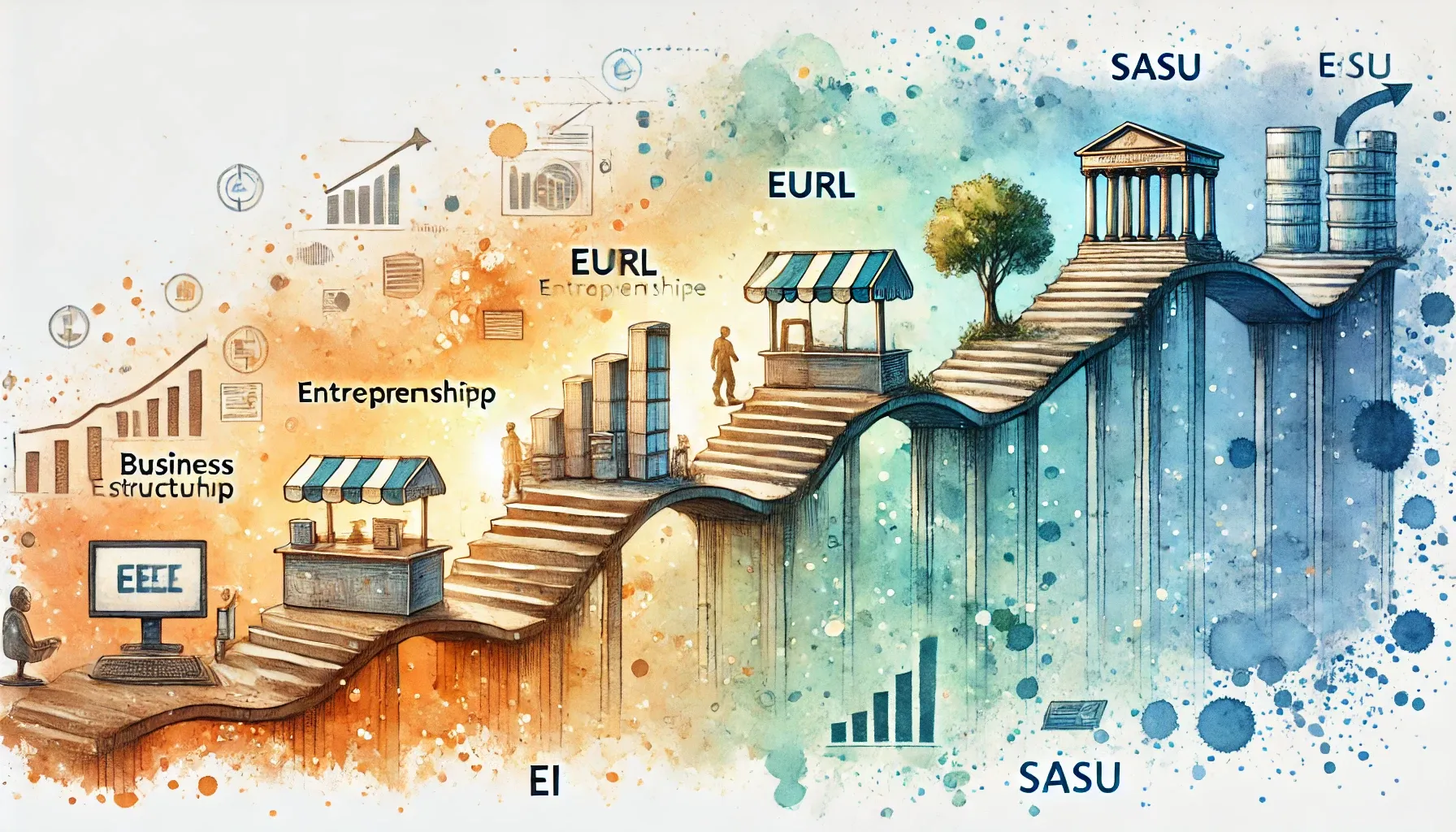
In anticipation of the reform, or if you are already flirting with the current ceilings, look into alternative statuses:
- Sole Proprietorship (EI),
- EURL (Single-Member Limited Liability Company),
- SASU (Single-Member Simplified Joint-Stock Company).
Each has its advantages (limited liability, the manager’s social security regime, tax regime…) and drawbacks (formalities, costs, filing obligations). Better to know all the options before having to react in an emergency!
Consulting an expert
It can be particularly useful to make an appointment with:
- An accountant or a chartered accountant: to assess the reform’s impact on your margins, costs and profitability.
- A lawyer or specialized legal advisor: to fully understand the legal, tax and social obligations tied to your status.
Conclusion
The prospect of a reform setting a new revenue threshold for micro-entrepreneurs at €25,000 raises as many questions as debates. On one hand, some see a return to the very essence of the micro-entrepreneur scheme: supporting small business owners, supplementary activities or fledgling projects. On the other, this measure risks restricting the growth of thousands of self-employed workers who, without this simplified regime, could find it harder to grow.
If you are affected by this proposed reform, the key is to stay informed and plan ahead. Watch for government announcements and feedback from trade chambers, and reach out to accounting professionals (chartered accountants) and legal professionals (lawyers) to explore alternative solutions. Entrepreneurship is a dynamic journey, and this reform is another example of it: you need to know how to adapt to keep growing your project in a smooth and sustainable way.
In summary:
- The micro-entrepreneur scheme is a regime that allows for simplified business creation.
- The current thresholds (€72,600 / €176,200) could be changed by a reform introducing a new €25,000 ceiling.
- This reduction could refocus the scheme on small-scale activities and curb certain abuses.
- However, it raises questions about the growth of self-employed workers, the attractiveness of the scheme and, for some, the need to migrate to more complex statuses.
- It is best to closely follow the legislative developments, anticipate the impact on your revenue and, if needed, get support to choose the business status best suited to your activity.
More to come, then, on the precise terms and effective date of this potential reform!
