

 Français
 Quotes and Invoices: The Complete Guide for Entrepreneurs
Master the art of quotes and invoices with our proven strategies. Discover how to turn your administrative management into a competitive advantage.

The fundamentals of quotes and invoices for success

Clear, accurate quotes and invoices are the foundation of efficient business management. Beyond their mandatory administrative role, they are valuable tools for a smooth client relationship and solid financial health. They guarantee transparent, effective communication.
The importance of a well-structured quote
A quote is far more than a simple price estimate. It is often the first official contact with a prospective client, and as such, it is essential for building trust. A quote must be clear, detailed and precise about the scope of the services offered. A professional quote reassures the client and maximises your chances of converting them. Think of it as a compelling promise that highlights the added value of your offer.
The invoice: a reflection of your professionalism
The invoice formalises the transaction and serves as an indispensable accounting record. It must strictly comply with current regulations and include all the mandatory information. A well-crafted invoice reflects your professionalism and simplifies the tracking of your operations. To optimise your quote-to-invoice workflow, using no-code tools can prove very useful. These tools simplify administrative management and save you valuable time.
Complying with regulations: a guarantee of security
French legislation governing quotes and invoices is strict. Firm rules exist, particularly regarding mandatory information, with penalties for non-compliance. An invoice must include precise information, such as the nature, quantity and price of the goods or services sold. Failing to meet these obligations can result in substantial fines, reaching up to €75,000 for a sole trader and €375,000 for a company. Quotes are also subject to rules, notably the obligation to provide them for certain services, such as in the construction or medical optics sectors. For more information on the regulations, you can consult this link. Complying with these rules protects you from disputes and gives you peace of mind.
Quotes and invoices: assets for your growth
Mastering the fundamentals of quotes and invoices optimises your management, strengthens your credibility and improves your client relationships. Used effectively, these documents contribute to the growth and longevity of your business. They enable precise performance tracking, relevant sales analysis and informed decision-making for the future.
Mastering quote regulations without getting lost
A well-built quote is essential for building a trusting relationship with your clients and maximising your chances of conversion. In France, quote regulations are a crucial aspect for any entrepreneur. Understanding this legal framework not only allows you to avoid penalties, but also to turn these obligations into a genuine commercial asset.
When is a quote mandatory?
The obligation to provide a quote depends on several factors, notably the business sector and the amount of the service. For example, for services such as removals or the purchase of medical optical products, a quote is mandatory and must be free of charge. This allows consumers to compare different offers and make an informed decision. In other sectors, such as construction, the quote obligation kicks in once the cost of the work exceeds a certain threshold. Knowing the specifics of your sector is therefore essential.
To help you see things more clearly, here is a summary table of the sectors where a quote is mandatory in France:
Sectors where a quote is mandatory in France
This table presents the various business sectors where issuing a quote is mandatory under French legislation, specifying the particularities for each sector.
| Business sector | Quote obligation | Particularities | Specific information required |
|---|---|---|---|
| Removals | Mandatory | Free of charge | Volume to be moved, distance, access |
| Medical optics | Mandatory | Free of charge | Vision correction, type of lenses and frame |
| Car repair | Mandatory above €150 | May be chargeable below this threshold | Description of the fault, parts to be replaced |
| Construction work | Mandatory above a certain threshold (variable) | May be chargeable | Nature of the work, surface area, materials |
| Dental prosthetics | Mandatory | Type of prosthesis, materials |
This table is not exhaustive, but it illustrates the variety of situations where a quote is mandatory. Feel free to consult official resources for more information. Learn more about mandatory quotes
Mandatory information: a guarantee of transparency
A valid quote must include certain mandatory information. This includes the issue date, your company’s identity (legal name, address, SIRET number), a detailed description of the service, the breakdown of unit prices and the total price. For complex services, where the final price is not known upfront, the quote is an essential document.
Presenting your quote strategically: the art of persuasion
The presentation of your quote is just as important as its legal content. A clear, concise and well-organised quote reflects your professionalism and inspires trust. Using tables to detail services and highlighting your strengths are recommended practices. Pay attention to the layout and visual appearance for maximum impact. A well-presented quote can strongly influence the client’s decision.
Protect yourself legally
Once accepted by the client, the quote has contractual value. It is therefore essential that it be complete and accurate to avoid any dispute. Clearly state your terms and conditions of sale, payment terms and delivery timelines. A rigorous quote is your best legal safeguard. By mastering quote regulations and adopting a strategic approach, you turn an administrative obligation into a genuine sales lever.
The perfect invoice: between legal obligation and strategy

Having mastered the creation of effective quotes, let’s turn to the next step: invoicing. More than a legal obligation, the invoice is a strategic tool for your business. It plays an essential role in client retention, cash flow optimisation and brand image.
Mandatory information: the basis of a compliant invoice
French invoicing regulations are strict. The absence of certain mandatory information can result in penalties. Your identity and that of your client, the SIRET number, the issue date, a unique invoice number, a detailed description of the services, the quantities, the unit price excluding VAT, the applicable VAT rates and the total amount including VAT must appear on every invoice. This essential formality should not compromise the clarity of the document.
Structuring your invoice for faster payments
A well-structured invoice makes it easier to understand and speeds up payment processing. Using tables to detail services, grouping logical information together and highlighting totals are all recommended practices. A clear, professional layout encourages prompt payment. This time saving and smoother process benefits both you and your client. Solutions like Bizyness make it possible to generate clear, professional invoices quickly.
Communicating through the invoice: building loyalty and enhancing your image
The invoice is also a communication channel. Include your logo, your colours and a polished layout to reinforce your brand image. A personalised message to thank your client or inform them of your news is a nice touch. It’s an opportunity to build connection and foster client loyalty. Don’t forget to include your terms and conditions of sale for full transparency.
Archiving your invoices: an obligation and a safeguard
Archiving quotes and invoices is a legal obligation. The retention period is generally 10 years, though it can vary. Rigorous archiving protects you in the event of a dispute and simplifies your administrative processes. Opt for a secure, accessible digital archiving system. This way you’ll quickly find the documents you need.
The subtleties of VAT: a point of vigilance
VAT is a complex aspect of invoicing. Apply the correct rate based on your business activity and your client’s status. When in doubt, consult an accountant. Invoicing software like Bizyness automates VAT calculations, simplifying your accounting management. Mastering VAT is essential for your business’s financial health.
Electronic invoicing: turn the constraint into an opportunity
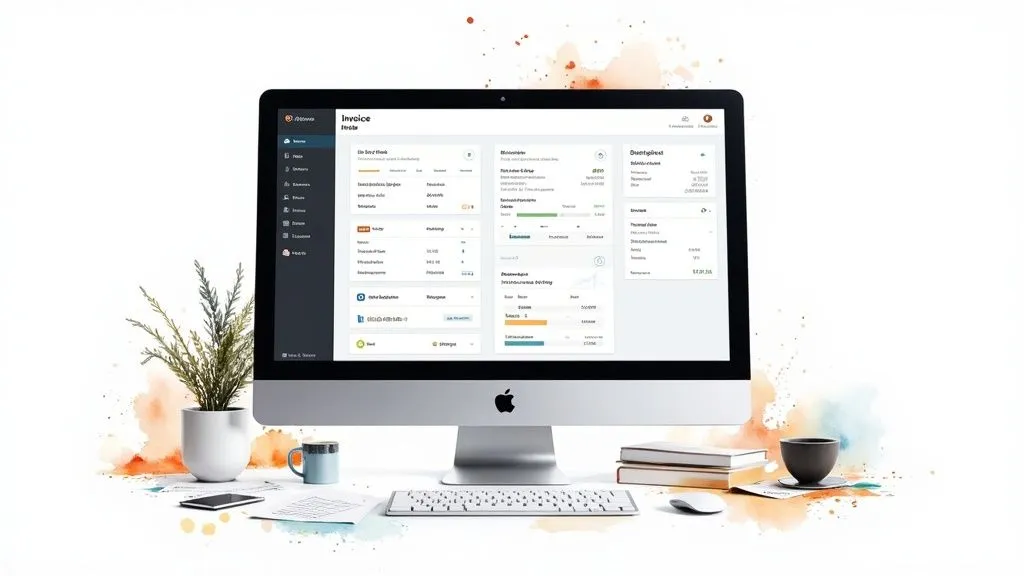
Electronic invoicing is much more than a simple obligation. It represents a genuine opportunity for French businesses to optimise their processes, reduce costs and strengthen client relationships. Adopting electronic invoicing means committing to a more efficient, higher-performing way of managing your business.
The benefits of digitisation
Digitising your quotes and invoices offers multiple benefits.
Cost reduction is significant. Printing, mailing and archiving paper documents generate substantial expenses. Digitisation can reduce these considerably, with savings of up to 60% of administrative costs for some organisations.
Process automation speeds up processing and payment times, positively impacting your cash flow. It also minimises the risk of errors and disputes.
The adoption of electronic invoicing in France
The adoption of electronic invoicing is a rapidly growing phenomenon in France. In 2022, 31% of French businesses used structured electronic invoicing. This rate rises to 54% for businesses with more than 250 employees.
Adoption is more limited among businesses with fewer than 20 employees, at a rate of 28%. Business modernisation and the electronic invoicing reform are actively driving this trend. For more details, see this study.
The table below illustrates the disparities in adoption according to company size. It also presents the main obstacles encountered during the transition.
Electronic invoicing adoption rate by company sizeThis table presents the percentage adoption of structured electronic invoicing in France by company size, illustrating the disparities in the digital transition.
| Company size | Adoption rate | Annual growth | Main obstacles |
|---|---|---|---|
| Fewer than 20 employees | 28% | +5% | Lack of resources, perceived complexity |
| 20 to 250 employees | 35% | +8% | System adaptation, staff training |
| More than 250 employees | 54% | +12% | Integration with existing systems, change management |
This table highlights the correlation between company size and electronic invoicing adoption rate. Larger businesses are further along in this process, while smaller organisations face difficulties related to resources and perceived complexity.
Choosing the right solution
Choosing a suitable technology solution is essential. Platforms like Bizyness offer complete solutions for managing electronic quotes and invoices. Creating, sending and tracking your documents becomes simple, all while complying with standards. Task automation frees up time to focus on growing your business.
Preparing the transition
The transition to electronic invoicing requires careful preparation. Training your teams, adapting your internal processes and choosing a reliable technology partner are key steps. Anticipating changes and supporting your clients will make implementation easier. Don’t hesitate to seek expert help for an optimal transition.
A competitive advantage
Electronic invoicing is a genuine performance lever. By optimising your processes and reducing your costs, you strengthen your competitiveness and can focus on your core business. Electronic invoicing turns an obligation into a competitive advantage.
Creating quotes that convert: beyond price
A quote is much more than a simple price list. It represents the first concrete contact with a prospective client and is an essential sales tool. So how do you turn a simple quote into an irresistible proposal? The key lies in an approach that goes beyond price, focusing on persuasion and trust.
Structure: clarity and persuasion
A clear, well-structured quote is the foundation of trust. Detail your services with precision, using tables to make reading easier. Break down each step of the project and quantify the unit costs. This transparency reassures the client and justifies your rates. Don’t forget to highlight the benefits of each service offered.
In addition to a clear structure, remember to:
- Describe each service precisely.
- Quantify the unit costs for each step.
- Highlight the benefits for the client.
Presentation: polishing the appearance
The visual appearance of your quote is crucial. A professional design, incorporating your logo and colours, reinforces your brand image. An uncluttered layout makes reading easier and highlights essential information. The goal is to create a document that is pleasant to review, reflecting your seriousness and professionalism.
Here are a few key points:
- Incorporate your logo and brand guidelines.
- Keep the layout uncluttered for smooth reading.
- Highlight important information.
Minimising price sensitivity: showcasing the value of your offer
To minimise the impact of price, focus on the added value of your offer. Highlight the concrete benefits the client will get from your services. Use precise, impactful language, avoiding technical jargon. Clearly explain how you will address their needs and solve their problems.
A few tips:
- Focus on results and client benefits.
- Use clear, accessible language.
- Show how you address the client’s specific needs.
Social proof: reassuring and convincing
Including elements of social proof, such as client testimonials or case studies, strengthens your credibility. Mentioning prestigious collaborations or key figures, such as your client satisfaction rate or the number of projects completed, reassures the prospect. For example, if you helped a business increase its revenue by 15%, highlight it.
Examples of social proof:
- Satisfied client testimonials.
- Concrete case studies.
- Key success figures.
Strategic follow-up: closing the deal
Follow-up is essential to turn a quote into a contract. Contact your prospect a few days after sending it to answer their questions and address any doubts. Favour a personalised, non-intrusive approach. Offer a phone call or video conference to further discuss their needs. Effective follow-up can double your conversion rate. Tools like Bizyness help you manage your quotes and invoices and track your follow-ups.
Tips for effective follow-up:
- Contact the prospect a few days after sending it.
- Personalise your approach.
- Offer a direct exchange (call, video conference).
By applying these techniques, your quotes will become genuine persuasion tools, maximising your chances of closing deals and growing your business.
Optimising your invoicing cycle for healthy cash flow
Efficient invoicing is essential to the financial health and growth of your business. It speeds up collections, reduces late payments and improves overall financial management. Let’s look at how to optimise this crucial process.
Automating intelligently with the right tools
Automation is the key to efficient invoicing. Tools like Bizyness allow you to generate quotes and invoices quickly, send them automatically and track payments in real time. This time saving also minimises the risk of errors. Whether you’re a large company or a sole trader, there’s a solution suited to your invoicing volume and budget.
Preserving the client relationship despite automation
Automating doesn’t mean dehumanising. Smooth, transparent invoicing, on the contrary, strengthens trust with your clients. Personalise your communications, include a thank-you message in your invoices and offer personalised payment tracking. Automation should free up your time to focus on what matters most: your clients.
Following up effectively with diplomacy and firmness
Late payments can affect your cash flow. Set up a clear, progressive follow-up system, starting with a friendly reminder, then a firmer follow-up if necessary. Offering instalment payment options can make settlements easier. The goal is to recover your payments while preserving the client relationship. Software like Bizyness allows you to automate these follow-ups with a human touch.
Integrating accounting and CRM for a full overview
Integrating your invoicing system with your accounting software and your CRM (Customer Relationship Management) gives you a comprehensive view of your finances and your clients. This simplifies payment tracking, data analysis and decision-making. Bizyness makes it easy to connect these different systems and centralise your information.
Managing difficult clients with tailored strategies
Some clients are harder to manage. Anticipate problems by clearly defining your payment terms right from your quotes and invoices. Favour communication and negotiation in the event of a dispute. Don’t hesitate to call on a debt collection professional if necessary.
Choosing the invoicing solution suited to your needs
Choosing the right invoicing solution is crucial. Take into account your invoicing volume, your specific needs and your budget. Bizyness offers solutions for sole traders, freelancers and small businesses. Test different solutions to find the one that will optimise your invoicing cycle and ensure healthy cash flow, a major asset for the longevity and growth of your business.
Building a quote-to-invoice system that grows your business

Having examined the technical and legal aspects of quotes and invoices, let’s look at how to integrate them into a growth strategy. Savvy entrepreneurs view these documents as essential tools for managing and growing their business.
Identifying key metrics
Optimising your system starts with identifying the right performance indicators. Analyse your quote-to-invoice conversion rate. What is your average payment time? How much time do you spend each month on administrative tasks related to invoicing? This data will give you a precise picture and help you identify areas for improvement.
Building a relevant dashboard
A clear, concise dashboard, based on your key metrics, is essential. It will let you track how your performance is evolving and quickly spot weaknesses in your system. A lengthening payment time, for example, may indicate a follow-up problem or a lack of clarity on your invoices.
Setting up a scalable system
Your quote-to-invoice system should support the growth of your business. Favour flexible, scalable solutions. Online invoicing software, for example, handles a growing volume of documents without adding complexity. Automating repetitive tasks, such as follow-ups, frees up your time to focus on growing your business.
A personalised action plan
Here’s an example action plan for optimising your system:
- Step 1: Assess your current situation using your key metrics.
- Step 2: Set SMART goals (Specific, Measurable, Achievable, Realistic, Time-bound). Example: reduce the average payment time by 15 days in 3 months.
- Step 3: Implement concrete actions. Examples: automate follow-ups, offer discounts for early payment, use invoicing software like Bizyness.
- Step 4: Regularly track your progress and adjust your actions as needed.
By integrating your administrative management into your growth strategy, you give your business every chance to succeed. Optimise your quote-to-invoice system today with Bizyness and unlock your growth potential.
