

 Français
Sales enablement tools for your e-commerce business
Which sales enablement tools should you choose? Discover how a CRM, automation and financial tools can transform your online store.
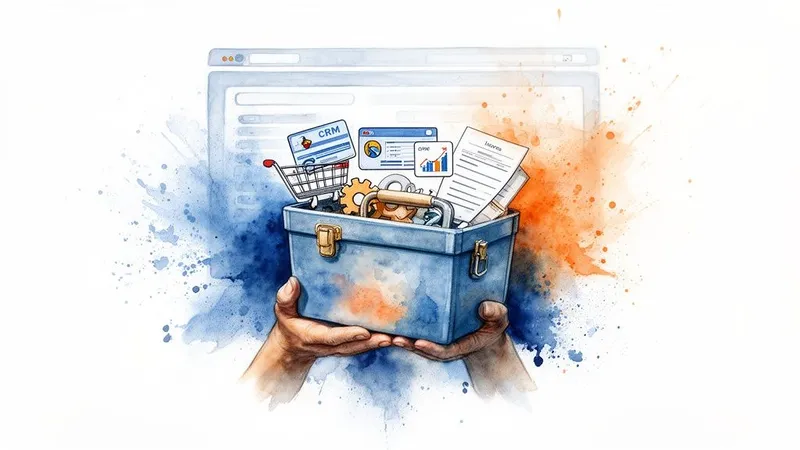
Sales enablement tools are far more than simple software. For an online seller, they are true strategic copilots. They help you decode your data to make the right decisions, sell more and, above all, sell better.
Why sales enablement tools have become essential

Try to imagine running your e-commerce business in 2026 blindfolded, with no dashboard at all. That’s roughly what those who don’t yet use sales enablement tools experience. These aren’t gadgets — they are the bedrock of healthy growth for any online store, whether it runs on Shopify, WooCommerce or a marketplace like Amazon.
Their mission is both simple and crucial: bring order to the apparent chaos of your data so every decision is the right one. In practice, they centralize your information, automate low-value tasks and give you a 360-degree view of your business.
Unlocking the real potential of your e-commerce business
Think of all the hours lost on repetitive tasks that keep you from focusing on growth: manual order management, tracking leads in never-ending spreadsheets, or analyzing your performance without the right indicators. Sales enablement tools exist to eliminate these friction points.
They give you back the control to focus on what matters:
- Refining your marketing by precisely identifying the channels that bring in your most profitable customers.
- Improving the shopping experience by personalizing every interaction with your customers.
- Optimizing your catalog by knowing which products are your best-sellers and which ones are eating into your margins.
Put simply, these tools don’t just save you time. They give you the keys to building a smarter, more agile and ultimately more profitable business.
This guide won’t just be a list of software. Our goal is to teach you how to build your own tool ecosystem, one that’s perfectly suited to your reality. We’ll look at how each major family of tools can fit into your daily routine to help you master your growth from A to Z.
A structured approach to selling smarter
Throughout this article, we’ll review the different categories of tools that no modern online seller can do without. From customer relationship management (CRM) to sales automation, through performance analysis, each section will give you concrete pointers.
We’ll also see how a financial automation platform like Bizyness acts as the backbone of this ecosystem. Its role is to make sure every sale is not only properly recorded, but above all financially viable and correctly processed for your accounting. Get ready to change the way you sell online.
Put the customer at the heart of your strategy with a CRM

If all the tools we’ve covered so far make up your sales arsenal, the CRM (Customer Relationship Management) is unquestionably the command center. For an online seller, a good CRM is far more than a simple address book. It’s the central nervous system that connects all your information and turns a simple transaction into a solid, profitable customer relationship.
Think about it for a moment. Every interaction — a purchase on your Shopify store, a question asked via chat, a click on your latest newsletter — generates valuable data. The CRM’s job is to gather all these puzzle pieces. It centralizes, organizes and makes this information actionable, giving you a complete, 360-degree view of each customer.
With that kind of visibility, your approach changes entirely. No more flying blind. You can start anticipating needs, personalizing your messages and, ultimately, multiplying the long-term value of every customer (the famous Customer Lifetime Value).
From raw data to personalized relationships
In concrete terms, the goal of a CRM in e-commerce is to help you understand who your customers are and how they interact with your brand. This fine-grained knowledge is the secret to segmenting your audience with near-surgical precision.
Let’s look at a few practical cases where a CRM makes all the difference:
- The Shopify seller preparing for Valentine’s Day: Rather than blasting the same offer to the entire database, they isolate a segment of customers who bought jewelry the year before. They can then send them an exclusive offer designed just for them. The conversion rate soars.
- The Amazon merchant: By importing order data into their CRM, they identify their most loyal buyers. They can then invite them, through other channels, to join a loyalty program that rewards their engagement.
- The WooCommerce store: A customer abandons a cart with a pair of shoes. Two hours later, the CRM triggers an automatic follow-up email. But not just any email: it might include a sizing guide or a glowing customer review to overcome any final hesitation.
A well-configured CRM turns data into conversation. Every touchpoint becomes an opportunity to serve customers better and build loyalty. It’s the foundation of healthy, sustainable growth. To go further, discover the best practices in customer tracking in our dedicated guide.
How to choose the right CRM for your e-commerce business
The CRM market is huge, and not all of them are suited to the specifics of online selling. The key is to find the tool that fits perfectly into your technical and commercial ecosystem.
Here are the criteria you can’t afford to overlook:
- Native integrations: Your CRM must communicate seamlessly with your platform (Shopify, WooCommerce, etc.), your marketing tools and your customer service solution. This is non-negotiable.
- Segmentation capabilities: Make sure the tool lets you create dynamic segments based on purchase behavior (frequency, amount), browsing history or the data you own.
- Smart automation: Look for solid features to automate welcome emails, abandoned cart reminders or win-back campaigns for inactive customers.
This need to equip themselves is increasingly understood. In France, 53% of small and medium businesses consider customer and sales data a priority in their digital transformation. Adopting a CRM contributes directly to this, since 78% of sales reps believe this tool strengthens alignment and collaboration with marketing teams.
To help guide this strategic decision, feel free to read a comparison of the best CRMs such as HubSpot vs Pipedrive. These platforms offer very comprehensive features to structure your customer relationships and fine-tune your sales strategy.
Automate to sell, even while you sleep
Automation is a bit like hiring the perfect employee: it works 24/7 without ever complaining or making a mistake. For an online seller, it’s what makes the difference between “artisanal” management that quickly hits its limits and a true growth machine capable of absorbing scale.
It’s the foundation on which most modern sales enablement tools are built. Far more than a simple abandoned cart reminder, these systems put your store on autopilot for all those repetitive but vital tasks that steal your precious time.
Picture this: an Etsy seller whose every international sale generates a perfect invoice, compliant with the VAT rules of the buyer’s country. Or a brand managing thousands of Stripe subscriptions without any manual intervention. That’s the real power of automation.
Going well beyond basic tasks
Far from simply executing orders, smart automation can also anticipate and optimize. A customer hesitates at checkout? A well-configured tool can offer them a last-minute deal or an extra guarantee to tip the scale.
The goal is twofold:
- Free up your time so you can finally focus on strategy, marketing or developing new products.
- Increase your selling capacity without blowing up your costs. Every new order is processed with the same efficiency as the very first one.
Automation isn’t an expense, it’s a direct investment in your ability to grow. It lets you handle 10, 100 or 10,000 orders a day with the same peace of mind, while guaranteeing flawless customer service.
In France, this approach is no longer just a trend. Recent figures show that 81% of sales professionals already rely on AI to reduce time spent on manual tasks. Even better, 66% use it to personalize recommendations, which can boost sales by up to 25%.
Automation in an online seller’s daily life
In concrete terms, automation fits into every stage of your workflow, from a prospect’s first visit all the way to the last line of your balance sheet.
Some tools even enable sales automation on platforms like Vinted, managing your listings and replying to buyers even when you’re unavailable.
Here are a few processes that should never be done by hand anymore:
- Invoice generation and sending: An order on Shopify or Amazon automatically triggers the creation of a compliant invoice (with the correct VAT) and sends it to the customer.
- Payment flow management: Recurring subscription payments are handled smoothly. A failed payment? A personalized reminder sequence kicks in automatically.
- Stock synchronization: A product sold on your site? Stock is updated in real time across all your marketplaces. No more overselling and no more frustrated customers.
- Lead qualification: A visitor downloads one of your guides? They’re automatically flagged as a “hot lead” in your CRM and receive a series of targeted emails to nurture them.
By connecting the right sales enablement tools together, you create an ecosystem where information flows effortlessly. An order placed on your site isn’t just processed and shipped — it’s also instantly prepared for your accounting. To better understand how these systems fit together, our article on business process automation will give you the keys.
The promise is simple: fewer errors, a massive time saving, and an almost limitless capacity to absorb a growing sales volume.
Selling online is a bit like piloting a ship. You have a destination (profitability) and a multitude of indicators in front of you. The problem? Without the right instruments, this flood of data quickly turns into a thick fog hiding the reefs.
Today, collecting information from your sales channels — whether Shopify, WooCommerce or a marketplace like Amazon — is within everyone’s reach. The real challenge, the one that separates thriving online sellers from those who stagnate, is knowing how to interpret this data to make the right decisions.
The goal here is simple: help you turn this fog into a clear, actionable dashboard. No more navigating by instinct! We’ll see how sales enablement tools, and analytics tools in particular, let you answer questions as crucial as:
- Is my star product really the most profitable one?
- How much does a customer acquired through a Facebook ad actually cost me?
- Which items are quietly eating into my margin without me noticing?
To see things more clearly, it’s useful to place analytics tools within the broader ecosystem of sales enablement solutions.
Comparison of sales enablement tool families for online sellers
This table compares the main tool categories, their core function, key benefits and examples of platforms suited to each use case. It will help you understand where analytics tools fit and how they complement other solutions.
| Tool category | Core function | Benefits for the online seller | Tool / integration examples |
|---|---|---|---|
| Customer Relationship Management (CRM) | Centralize customer interactions and data. | Better customer knowledge, personalization, loyalty. | HubSpot, Salesforce, Axonaut |
| Analytics and Business Intelligence (BI) | Aggregate and analyze sales and performance data. | Unified view, trend identification, margin-driven decisions. | Looker Studio, Power BI, Bizyness |
| Marketing automation | Automate marketing campaigns (email, SMS, social media). | Time savings, targeted campaigns, lead nurturing. | Klaviyo, Brevo (formerly Sendinblue) |
| Inventory and order management | Synchronize inventory and streamline order processing. | Prevents stockouts, logistics efficiency, customer satisfaction. | Linnworks, Shippingbo |
Each family of tools addresses a specific need. The focus of this section is on analytics (BI) tools, which act as the brain of your strategy by giving meaning to the data collected by the others.
Looking beyond revenue
Revenue is the tree that hides the forest. A product can sell like hotcakes yet still lose you money because of costs you’re not tracking precisely: transaction fees, logistics costs, returns, marketplace commissions…
That’s where analytics tools come in. They let you dig deeper to get clear answers:
- What is my customer acquisition cost (CAC) by channel? You might discover that your Instagram campaigns drive a lot of traffic, but that customers coming from your blog are actually far more profitable in the long run.
- What is the real net margin per product (and even per order)? By factoring in all the costs, you’ll identify your true “heroes” — the products that fund your growth — and the “dead weight” that’s chipping away at your profits.
- How is customer lifetime value (LTV) evolving? Tracking this metric lets you concretely measure the success of your retention efforts. It’s a complex but essential topic, which we cover in detail in our guide on sales performance indicators.
Think of a good analytics tool as X-ray glasses for your e-commerce business. It lets you see what’s hiding behind the sales figures to understand the dynamics that make (or break) your profitability.
This analytical capability is a huge growth lever. In France, 62% of B2B companies already rely on social media to generate traffic. But generating traffic isn’t enough. Studies show that precise management of customer actions, enabled by these tools, can lead to a 32% improvement in conversion rate on sales from these channels. To go further, this Pipedrive article explores the impact of these tools.
The key performance indicators (KPIs) that truly matter
To avoid drowning in a flood of data, you need to focus. The best tools help you by presenting information in a visual, digestible way.
Here’s a trio of KPIs every online seller should watch like a hawk:
- Conversion rate by channel: This is the thermometer for how effective your traffic sources are. If your blog converts at 3% and your Facebook ads at 0.5%, you immediately know where to reallocate your marketing budget for a better return on investment.
- Average order value (AOV): This simply measures the average value of each order. Strategies like cross-selling or up-selling more expensive products aim directly at pushing this figure up.
- Customer retention rate: This is the percentage of customers who come back to buy from you again. A high rate is a sign of healthy, sustainable business, since retaining an existing customer will always cost less than acquiring a new one.
The real power of these tools is consolidating data from all your channels in one place. No more tedious back-and-forth between your Shopify back office, your Amazon Seller Central account and your Google Analytics reports. Everything is centralized, ready to be turned into strategic, profitable decisions.
Bizyness: the financial backbone of your e-commerce business
You’re already juggling a whole range of tools: a CRM for customer relationships, a marketing platform for your campaigns, a logistics solution to manage inventory… But who takes care of the money, the lifeblood of the business? That’s precisely Bizyness’s role. Don’t think of it as just another sales enablement tool to add to your collection, but rather as the financial foundation that unifies everything else.
To picture it clearly, think of a house’s plumbing. You don’t see it, but its role is crucial. Without it, water never reaches where it needs to, and the smallest leak can cause considerable damage. Bizyness is that financial plumbing for your e-commerce business.
By connecting directly to your sales channels (Shopify, Amazon, etc.) and your payment solutions (Stripe, PayPal), we automate the most sensitive flow in your business: the one that runs from the customer order all the way to accurate, tidy accounting.
This process turns raw sales data into informed financial decisions.
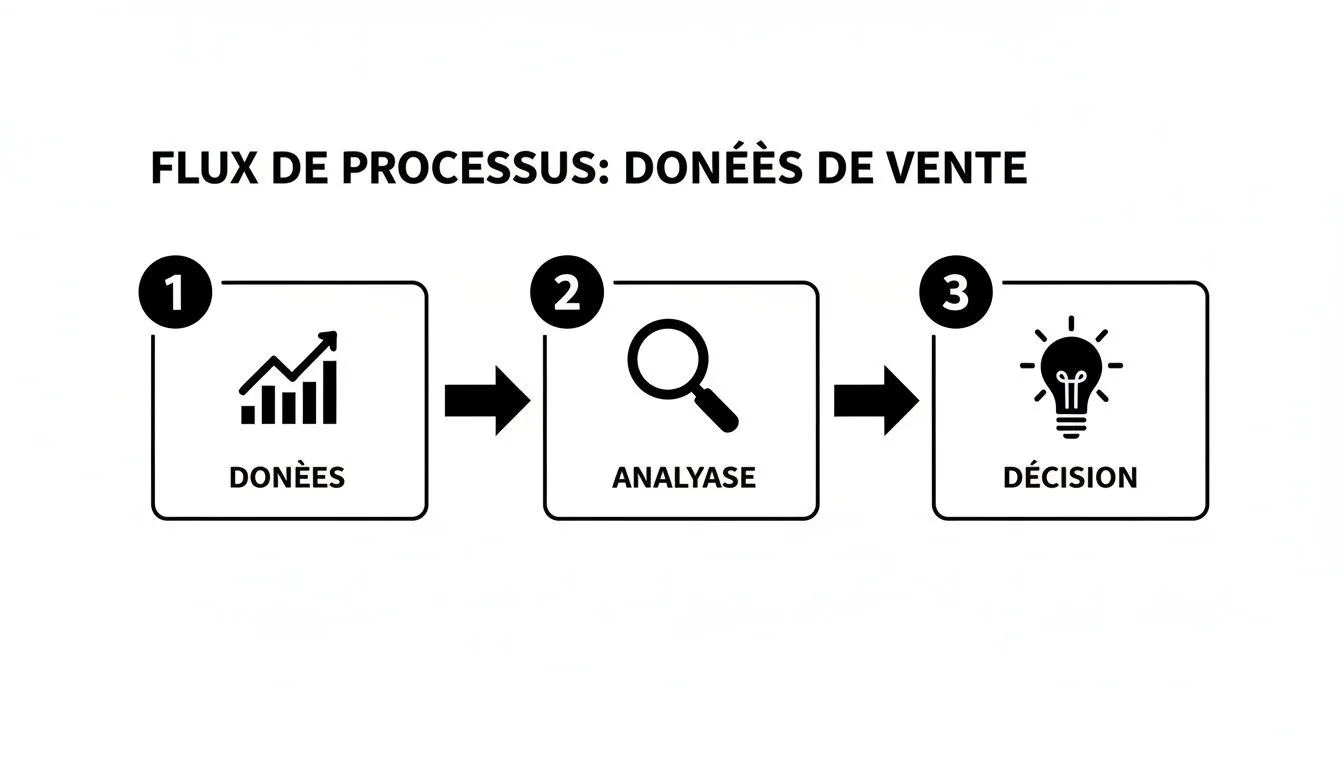
Moving from simply collecting information to rigorous analysis is what lets you make truly profitable decisions, rather than ones based on intuition alone.
More than a tool, a true financial infrastructure
Where most software focuses on one specific stage of the customer journey (acquisition, conversion…), Bizyness works behind the scenes. Its mission: to ensure every transaction is financially sound, compliant with regulations and ready for your accountant.
In concrete terms, how does it work?
- Invoicing automation: Every sale, whether it comes from your store or a marketplace, instantly generates a perfect invoice, with the correct legal notices and the correct VAT rate. No more headaches.
- Complex VAT management: Selling internationally? Bizyness natively handles the OSS/IOSS schemes. The correct VAT rate is applied for each destination country, without you having to lift a finger.
- Instant accounting preparation: Forget CSV exports that need hours of tinkering. Every sale is already converted into a clean, structured accounting entry, ready to be handed off to your accountant.
Our goal isn’t to replace your CRM or your marketing tool. It’s to make them more effective. We make sure that the fruit of their labor — the sales — is managed with absolute financial rigor. Because a sale is only a win if it’s profitable and compliant.
Bizyness solidifies the foundations, allowing all your other tools to perform to their full potential.
The bridge between sales and administrative compliance
For a growing online seller, the real challenge isn’t just selling more. It’s managing that growth without sinking into administrative chaos. More orders means more invoices, more transactions to reconcile, and a tax complexity that can quickly spiral out of control.
That’s exactly the gap Bizyness fills.
Let’s take an example. Your marketing team launches an effective campaign that generates 1,000 new orders from Germany, Italy and Spain.
- Without Bizyness, that’s 1,000 invoices to create, either by hand or through a basic plugin, with a high risk of VAT rate errors. It then becomes painstaking work to consolidate the figures and file your OSS return.
- With Bizyness, the process is invisible. Orders are pulled in automatically, invoices are generated with the correct German, Italian or Spanish VAT, and your OSS report updates in real time.
By centralizing all these operations, the platform gives you a clear view of your financial health, not just in terms of revenue, but in real profitability.
Adding a platform like Bizyness to your arsenal of sales enablement tools simply means choosing peace of mind. You can finally focus 100% on acquiring and retaining customers, knowing that your financial operations are not only under control, but also optimized to support your growth rather than hold it back.
How to build your e-commerce toolbox as you grow
There’s no magic recipe or miracle list of tools that works for everyone. The right approach is to build your app ecosystem brick by brick, at the pace of your own development. Every phase of your e-commerce journey has its own challenges, and your tools should be there to help you, not to complicate your life.
This roadmap is designed to support you whether you’re just starting out solo, whether your D2C brand is accelerating, or whether you’re already selling across multiple channels internationally. The goal isn’t to pile up subscriptions, but to pick the right tools, at the right time. Trust me, trying to install a powerhouse CRM and an expensive Business Intelligence tool on day one is the surest way to burn out for nothing.
Step 1: For the creator just starting out
At this stage, your watchwords are simplicity and efficiency. Your only goal: validate your concept and make your first sales, without drowning in a sea of technical or administrative complexity.
The essentials come down to two points:
- A reliable e-commerce platform: Start on solid ground with a solution like Shopify or WooCommerce. They’re built to launch fast while being able to grow alongside you.
- A tool to manage your finances: This is a habit to build in from day one. A platform like Bizyness automates your invoicing and VAT management. You start on sound, compliant foundations, which will save you a lot of headaches later on.
When starting out, your time is your most precious asset. Bet on tools that automate repetitive, low-value tasks like paperwork. That frees you up to focus on what really matters: your product and your first customers.
Step 2: For the brand taking off
Sales are picking up, your customer file is growing… and your spreadsheets are starting to seriously creak. That’s the signal it’s time to level up, structure your business and make decisions based on data, not gut feeling.
Your toolbox grows with:
- A real CRM: The time has come to centralize all your customer data to understand it better, segment your contacts and personalize your messages. It’s the new cornerstone of your customer retention strategy.
- Business Intelligence (BI) tools: Having a clear view of your profitability by product, sales channel or customer type is no longer optional. These tools turn your raw data into visual dashboards that are actually useful for taking action.
- Marketing automation solutions: You can go far beyond a simple abandoned cart email. Picture full scenarios to nurture your prospects or win back former customers who are just waiting to return.
How to choose your next tools wisely
For every new tool you’re considering adopting, ask yourself these simple questions. Think of it as a common-sense checklist to avoid costly mistakes.
- Integration: Will this tool actually “talk” to my other software (my Shopify store, my Bizyness account, etc.)? A poor connection is a guaranteed recipe for data silos and, ultimately, more manual work.
- Scalability: Will the tool be able to handle 10 times my current volume without breaking? Always think ahead so you don’t have to switch everything a year from now.
- Price: Is the subscription cost genuinely offset by the time I’ll save or the additional revenue I can expect? Try to calculate a realistic return on investment (ROI) before pulling out your card.
Your frequently asked questions about sales enablement tools
When you’re getting started in e-commerce, the sheer number of available tools can quickly become overwhelming. It’s normal to have questions. Where do you start? How do you choose? Let’s untangle the most common ones together.
What budget should I plan for?
The budget question is on everyone’s mind, but there’s no single answer. It all depends on your level of maturity and your ambitions.
- To get started: Many tools offer a free version or very affordable plans, often for less than €50/month. It’s perfect for getting a feel for the basic features.
- To grow: Other pricing models scale with your growth. Your subscription evolves based on your sales volume or number of contacts, as with a CRM.
- To structure your business: Finally, there are more complete platforms with fixed monthly pricing, which makes it easier to keep your costs under control.
Ultimately, price is secondary. The real question is the return on investment (ROI). A good tool isn’t an expense — it’s an investment that saves you time, saves you money, or directly boosts your sales.
Is it better to use a single all-in-one tool?
The promise of an “all-in-one” platform is certainly tempting. The idea of centralizing everything in one place simplifies day-to-day management. But be careful — these solutions are rarely best-in-class across every domain.
That’s why many experienced online sellers prefer a best-of-breed approach: choosing the best tool for each specific function (the best CRM, the best invoicing tool, etc.). You gain in performance and flexibility.
The point isn’t to have a single piece of software, but to make sure your different tools communicate perfectly with each other. That’s where the key to a smooth, efficient system lies.
This communication happens through native integrations or connectors like Zapier. One piece of advice: always favor software with open APIs. That’s your guarantee they’ll be able to integrate into your ecosystem, today and tomorrow.
Which tool should you start with as a beginner?
If you had to choose just one, right after launching your store, it should be the one that secures your finances. People often think of marketing first, but that’s a mistake.
Before trying to optimize your campaigns, make sure every sale is properly invoiced, that VAT is correctly handled, and that your accounting is flawless. That’s the foundation of everything.
By securing your financial flows from day one, you build a solid foundation for your future growth. That’s precisely Bizyness’s mission. Discover how to automate your financial management on Bizyness.fr.
