

 Français
Tax optimization for sole traders: practical strategies and maximized benefits
Master tax optimization strategies for sole traders (micro-entrepreneurs) with concrete, proven advice. Discover how to legally reduce your tax burden and sustain your business.

The fundamentals that change the game
Tax optimization for sole traders is essential to the success of your business. To make the most of it, you need to understand the specifics of this simplified regime. This status, which appeals to many French entrepreneurs, lets you focus on your activity thanks to its administrative and tax advantages.

A simple, accessible regime
Setting up and managing a sole proprietorship (micro-entreprise) is very straightforward. Administrative steps are minimal, saving valuable time. Tax calculation, based on actual revenue, greatly simplifies tax returns. Sole traders also benefit from social protection tailored to their situation — a major asset for those just starting out.
Revenue as a key indicator
Managing your revenue is at the heart of tax optimization. Staying within the thresholds is essential to keep the micro-tax regime. Exceeding them triggers more complex obligations. You therefore need to closely track your activity and plan for its growth. Mastering deductible expenses is also a way to reduce taxes — a lever that’s often overlooked.
Since it was created in 2009, the sole trader (auto-entrepreneur) regime has enjoyed strong success. According to Acoss, there were 307,500 registrants at the end of January 2010, of whom 131,000 reported revenue. Nearly 60% therefore had no declared activity. For more information, see the Senate report.
Planning ahead for success
Tax regulations are constantly evolving. Sole traders need to stay informed and adapt their strategy accordingly. Regular training and support from an accountant are major assets for optimizing your taxes. In short, success rests on understanding the rules, rigorous management, and adapting to change.
Mastering the thresholds to optimize your income

The sole trader status offers great flexibility, but you need to be well versed in the revenue thresholds. These limits determine whether you stay under the simplified micro-tax regime or move to the VAT regime with more complex accounting. This shift requires anticipation and adjustments to your tax management. The caps are set by the State according to your line of business. For 2023-2025, the threshold is €188,700 for trading and accommodation activities, and €77,700 for services. For more details, see this explanatory guide.
Preparing for threshold breaches
Approaching the thresholds is an opportunity to boost your income. Closely tracking your revenue is essential. Use tools such as a spreadsheet or software like Bizyness to forecast your income and anticipate crossing the thresholds. This lets you adjust your business approach with confidence.
How to adapt to the thresholds
Here are a few suggestions for managing the approach to the caps:
- Review your prices: A small increase can improve your income without significantly affecting sales
- Expand your offering: New products can bring in more revenue and attract new customers
- Build partnerships: Teaming up with other businesses opens new markets and boosts revenue
Switching to the actual regime: a key step
Exceeding the thresholds means switching to the actual VAT regime. This change alters your accounting and tax management. You need to prepare carefully by understanding the new obligations and VAT deduction rules. Don’t hesitate to get help from an accountant. Mastering these changes well will let you keep optimizing your taxes while growing your business. The key is to see this shift as an opportunity to better structure your company.
“Maximizing your tax benefits”:
Maximizing your tax benefits
Tax optimization is essential to succeeding as a sole trader. It’s about intelligently leveraging existing legal mechanisms to reduce your costs while staying within the law. This approach lets you increase your profits to better grow your business.
VAT exemption: a key advantage
VAT exemption is one of the main perks of sole trader status. It greatly simplifies administration since you neither collect nor remit VAT. Your prices become more attractive to your customers as a result. To qualify, your annual revenue must stay below the following thresholds: €91,900 for trading and €36,800 for services. More information on tax optimization.
The micro-tax regime: practical and advantageous
The micro-tax regime is particularly appealing for sole traders. It makes calculating and paying taxes much simpler. No need for complex bookkeeping — tracking your revenue is enough. Your contributions and taxes are calculated using a fixed percentage of your income. This simplicity lets you focus on your core business.
Optimizing deductible expenses
Even under the micro regime, you can reduce your costs. Certain business expenses are deductible from your revenue, thereby lowering your taxable base. For example: transport costs, communications, supplies, and professional subscriptions. Carefully tracking these expenses is essential to maximize your benefits.
The importance of precise tracking with Bizyness
To manage your taxes well, regularly tracking your figures is essential. Bizyness makes this task much easier. This tool helps you manage your invoices, track your bank transactions, and generate reports. This lets you anticipate VAT thresholds and adjust your strategy. Bizyness also simplifies tracking deductible expenses to optimize your taxes. By automating administrative tasks, you save time to grow your business.
The section in French, preserving all links and structure but with a more natural writing style:
Financial strategies that make the difference
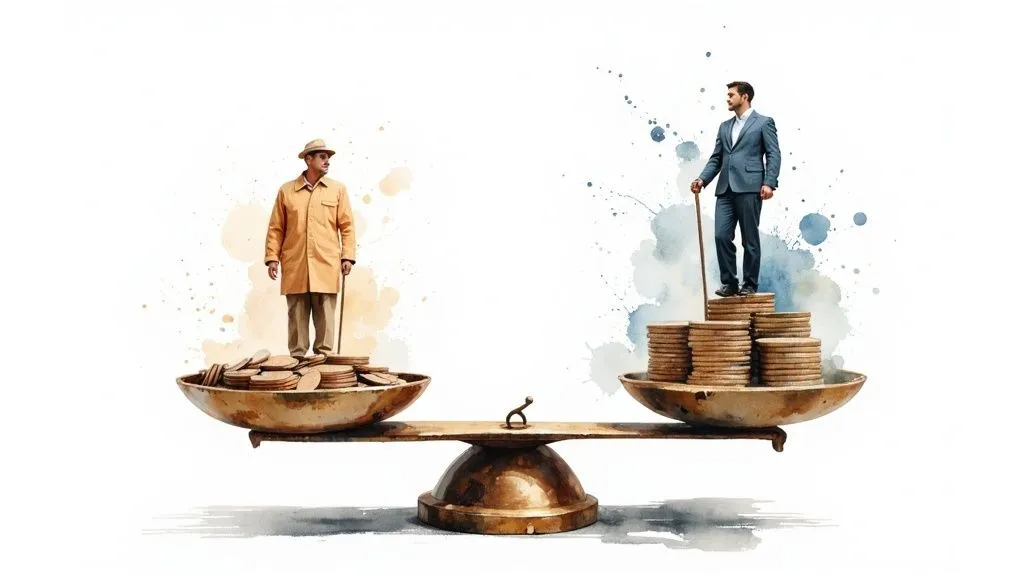
To succeed as a sole trader, it’s essential to adopt effective financial strategies. Good management not only helps sustain your business but also increases your income. The key lies in a methodical approach combining cash flow management, precise bookkeeping, and tax planning.
Cash flow management: a pillar of stability
Healthy cash flow is essential for any sole trader. Regularly tracking money coming in and going out helps you anticipate potential difficulties. For example, [Bizyness] offers an automated invoicing system that makes managing payments and client follow-ups easier.
Accounting optimization: beyond the basic obligations
Even though bookkeeping for sole traders is simplified, staying organized remains important. Filing documents, categorizing expenses, and using software like [Bizyness] simplify tax returns while helping you spot tax optimization opportunities. This detailed tracking helps you make the right decisions.
Tax planning: anticipating for better management
Tax planning requires constant attention throughout the year. Every decision, such as purchasing professional equipment, should be assessed for its tax impact. A thoughtful approach, combined with suitable management tools, helps reduce your tax burden and optimize your income.
Key performance indicators: steering your business
To optimize your management, certain indicators are essential to track: revenue, margin rate, payment terms, and customer acquisition cost. This data lets you assess your company’s health and adjust your strategy. Modern management tools offer clear dashboards to visualize this information. By mastering these indicators, sole traders can make informed decisions for sustainable growth.
Optimizing your expenses intelligently
As a sole trader, tax optimization calls for a methodical, thoughtful approach. Beyond standard deductions, it’s essential to put in place rigorous management of your expenses to maximize tax benefits.
Spotting deductible expenses
Take the time to identify every expense related to your business. Directly related costs like equipment or travel are obvious, but don’t forget less visible expenses like professional subscriptions or ongoing training. Regularly stay informed about new deduction opportunities.
Organizing your bookkeeping tracking
Rigor in tracking expenses is essential. Bizyness software lets you record and categorize your expenses efficiently. Carefully keep all your receipts — they are essential in the event of an audit. Precise tracking will help you spot possible areas for optimization.
Business investments
Purchasing professional equipment is a significant deductible investment. Evaluate each purchase based on its real contribution to your business. For example, a new, more powerful computer can boost your productivity and justify its cost.
Setting up your workspace
Working from home lets you deduct part of the costs related to your housing. The calculation is based on the surface area dedicated to your business. Coworking spaces offer an interesting alternative with fully deductible costs.
Ongoing professional training
Training expenses directly related to your business are tax-deductible. Regular training is doubly beneficial: it builds your skills while reducing your tax burden. Always keep a record of your certificates.
Accounting expertise
Taxation can be complex — don’t hesitate to consult an accountant. Their expertise will help you optimize your deductions while staying within the law and keep you informed of regulatory changes. This personalized support is often a worthwhile investment in the long run.
A personalized action plan for success

Setting up an effective tax optimization strategy requires a methodical, thoughtful approach for sole traders. This section guides you through building your personal strategy.
Setting clear, measurable goals
Precise goals are essential to make progress. Do you want to reduce your taxation by 10%? Or grow your business while staying within the thresholds? Concrete goals let you track your progress and stay motivated.
Setting a precise timeline
Break your goals down into concrete actions with deadlines. For example, schedule a monthly session to review your expenses and spot optimization opportunities.
Identifying key actions
For each goal, determine the necessary actions. To manage your revenue thresholds well, set up regular tracking with a tool like Bizyness. To optimize your expenses, research the expenses you’re entitled to deduct.
Tracking and adjusting your strategy
Tax optimization requires ongoing monitoring. Regularly analyze your results and adjust your approach as needed. Tracking tools help you evaluate your performance. Don’t hesitate to consult an accountant for advice.
Example 6-month action plan:
| Goal | Actions | Deadline | Tracking indicators |
|---|---|---|---|
| Master my thresholds | Weekly revenue tracking with Bizyness | Monthly | Revenue trend, proximity to thresholds |
| Optimize my expenses | Identify 3 new deductible expenses | End of month 1 | Number of deductible expenses identified |
| Improve my profitability | Raise my rates by 5% | End of month 3 | Net profit trend |
| Anticipate changes | Stay informed on new tax regulations | Quarterly | Number of new regulations known |
The success of your tax optimization depends on rigorously applying your action plan. Good organization and precise planning are essential for peaceful financial management.
Simplify your administrative and tax management with Bizyness. This all-in-one tool lets you monitor your revenue, manage your expenses, and stay informed of regulatory changes, so you can focus on growing your business.
