

 Français
 The Customer Follow-Up Guide to Build Lasting Loyalty
Discover customer follow-up strategies to turn your buyers into ambassadors. A complete guide to building loyalty and growing sustainably.
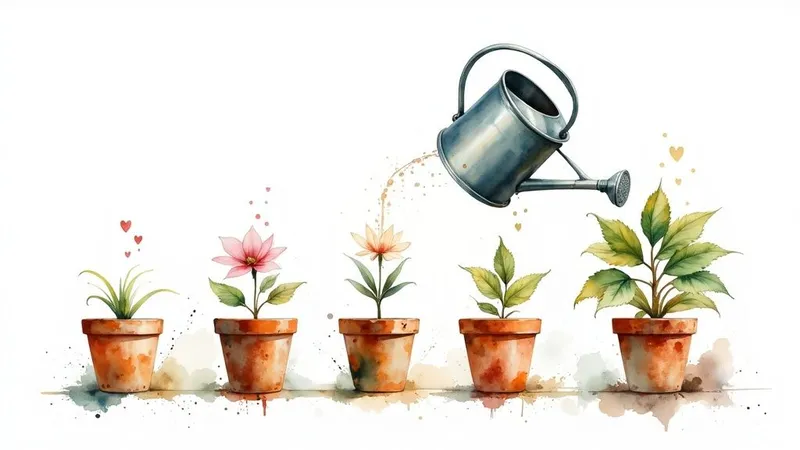
Customer follow-up is far more than a simple courtesy after a sale. It’s a genuine strategy, a proactive approach aimed at building a strong, lasting relationship with each of your customers. Think of it as an ongoing dialogue, not a series of one-off transactions. The goal? To turn occasional buyers into true, trusted partners.
Understanding the real stakes of customer follow-up

Too many businesses fall into the trap of pouring all their effort into acquiring new customers. In doing so, they forget that the real goldmine lies in retention. That’s where customer follow-up comes in: it’s the art of nurturing that relationship to reap the rewards over the long run.
Think of a gardener. They don’t just plant a seed and wait. They water, feed, and protect each plant so it can thrive. It’s exactly the same with your customers. Effective follow-up nurtures the relationship long after the initial purchase, making it stronger and more resilient.
This approach turns an isolated transaction into an authentic conversation. It gives you the keys to anticipate needs, personalize every interaction and, above all, build unshakeable trust. Rather than passively waiting for a customer to flag a problem, you get ahead of their expectations.
More than simple courtesy, a growth lever
Make no mistake: customer follow-up isn’t just about politeness. It’s one of the most powerful growth levers at your disposal. A customer who feels heard and genuinely valued won’t just come back; they’ll become an enthusiastic ambassador for your brand.
The numbers speak for themselves: studies have shown that improving customer retention by just 5% can boost profits by 25% to 95%. The return on investment is simply enormous.
Such an approach naturally relies on a detailed understanding of your customers’ journey. The whole challenge is knowing precisely when and how to step in to deliver maximum value, at the right moment.
Customer follow-up is the bridge between a successful sale and lasting loyalty. It turns satisfaction into loyalty and data into authentic human relationships.
The direct benefits of well-managed follow-up
When done well, customer follow-up translates into very concrete, measurable benefits for your business. It’s not just about improving brand image, but genuinely strengthening the foundations of your activity. By embedding this practice at the heart of your strategy, you can expect:
- Better retention: Your customers feel valued. They have no reason to look elsewhere.
- An increase in recurring sales: Smart follow-up is the perfect opportunity to spot new up-selling or cross-selling opportunities.
- Valuable feedback: Every conversation is a goldmine of information for improving your products or services.
- A rock-solid brand reputation: Flawless after-sales service generates positive word of mouth, still the best marketing argument there is.
To make sure your efforts pay off, it’s crucial to track the right metrics. To dig deeper, take a look at our full guide on business performance indicators. It will help you measure the real impact of your follow-up strategy.
How do you build a customer follow-up strategy that actually holds up?
Good customer follow-up doesn’t happen by chance. It’s a bit like building a house: if the foundations aren’t solid, everything risks collapsing at the first storm. Without a well-thought-out base, your efforts will be scattered and, let’s be honest, not very effective.
For your approach to deliver real results, it needs to rest on four pillars. Think of them as the four legs of a table: all of them are essential to keep things balanced and turn your customer interactions into a genuine loyalty lever.
Pillar 1: centralize your data to see clearly
The first pillar is data centralization. Imagine trying to put together a puzzle whose pieces are scattered all over the house. That’s exactly what happens in many businesses: purchase history sits in one piece of software, emails in another, and phone call notes… on sticky notes that keep falling off.
A customer relationship management (CRM) tool acts as your control tower. It centralizes all this information to give you a 360-degree view of every customer. Without this overview, consistent, relevant follow-up simply isn’t possible.
Pillar 2: personalize for real
The second pillar is personalization. And here, we’re not just talking about dropping the customer’s first name into an email. The days of “Dear customer,” are over. Today, personalizing means understanding each person’s unique journey and adapting your communication accordingly.
What does that actually look like?
- Suggesting a product that perfectly complements their last purchase.
- Sending a quick message right when they might need a hand.
- Thanking them for their loyalty with an offer no one else gets.
To pull this off, you need to properly break down your contact base. If the topic interests you, check out our guide on how to segment your customer base.
Pillar 3: get ahead with proactivity
The third pillar is proactivity. The idea is to stop waiting for a customer to call you with a problem, and instead anticipate their needs and defuse frustrations before they even arise.
A simple example: you sell software? Send a short video tutorial a few days after purchase, just before the user runs into the trickier features. This kind of attention shows you don’t just want to sell them a product, but that you genuinely care about their success.
A proactive approach transforms customer service. From a simple cost center, it becomes a genuine growth lever. Every problem avoided is a golden opportunity to build trust and loyalty.
Pillar 4: listen carefully (and act)
Finally, the fourth and last pillar: active listening. Every piece of customer feedback, good or bad, is a goldmine. The goal isn’t just to collect reviews to look good, but to analyze them, respond to them and, above all, use them to improve your products or services.
Businesses that master the customer experience see the value of their loyal customers soar. That loyalty translates directly into better retention and lower acquisition costs. In fact, numerous customer loyalty statistics confirm this. By turning every piece of feedback into concrete action, you prove to your customers that their voice truly matters. And that’s the foundation of a relationship that lasts.
Rolling out your follow-up process step by step
Setting up effective customer follow-up can feel like a mountain to climb, but in reality, it all comes down to a logical sequence of actions. It’s not about aiming for perfection on day one, but about building a solid system, brick by brick. The idea is to turn raw data into lasting human relationships.
To get there, you need a method. Think of this process like a recipe: every ingredient and every step matters to the success of the final dish. If you skip an element or reverse the order, the result is likely to disappoint. It’s exactly the same here: a clear framework ensures no customer is left behind.
This guide breaks the approach down into simple, directly actionable steps. Think of it as a roadmap for building a follow-up system that runs smoothly, even with limited resources.
Step 1: unify and segment your data
The first step, and it’s non-negotiable, is bringing together all your customer information in one single place. Purchase histories, email exchanges, contact forms… all this data is your raw material. A CRM tool, even a basic one, is perfect for getting that famous 360-degree view.
Once everything is centralized, the real work can begin: segmentation. Your customers aren’t all the same, so why talk to them all the same way? The goal is to create homogeneous groups based on criteria that make sense for your business.
Here are a few examples of relevant segments:
- New customers: They’ve just bought from you. This is the ideal time to reassure and guide them.
- Loyal customers: They come back regularly and deserve special attention. Think exclusive offers or early access.
- Dormant customers: They haven’t bought anything in a while. A well-thought-out approach could bring them back.
- High-value customers: Their average basket is high. They’re strategic for your revenue.
This step is absolutely crucial. It will determine the relevance of all your future communications. A personalized message sent to the right segment will have 10 times more impact than a mass email sent blindly.
Step 2: automate key touchpoints
Automation is your best ally for delivering consistent follow-up without spending all your days on it. The trick is to identify the key moments in the customer journey where automated communication can really make a difference.
Automation isn’t meant to replace people, but to free them up. It handles repetitive tasks so you can focus on the conversations that truly matter, the ones that build a unique bond.
Once in place, these communications run on autopilot and strengthen the relationship with your customers, step by step.
The infographic below sums up this flow well: turning your data into concrete actions through automation.
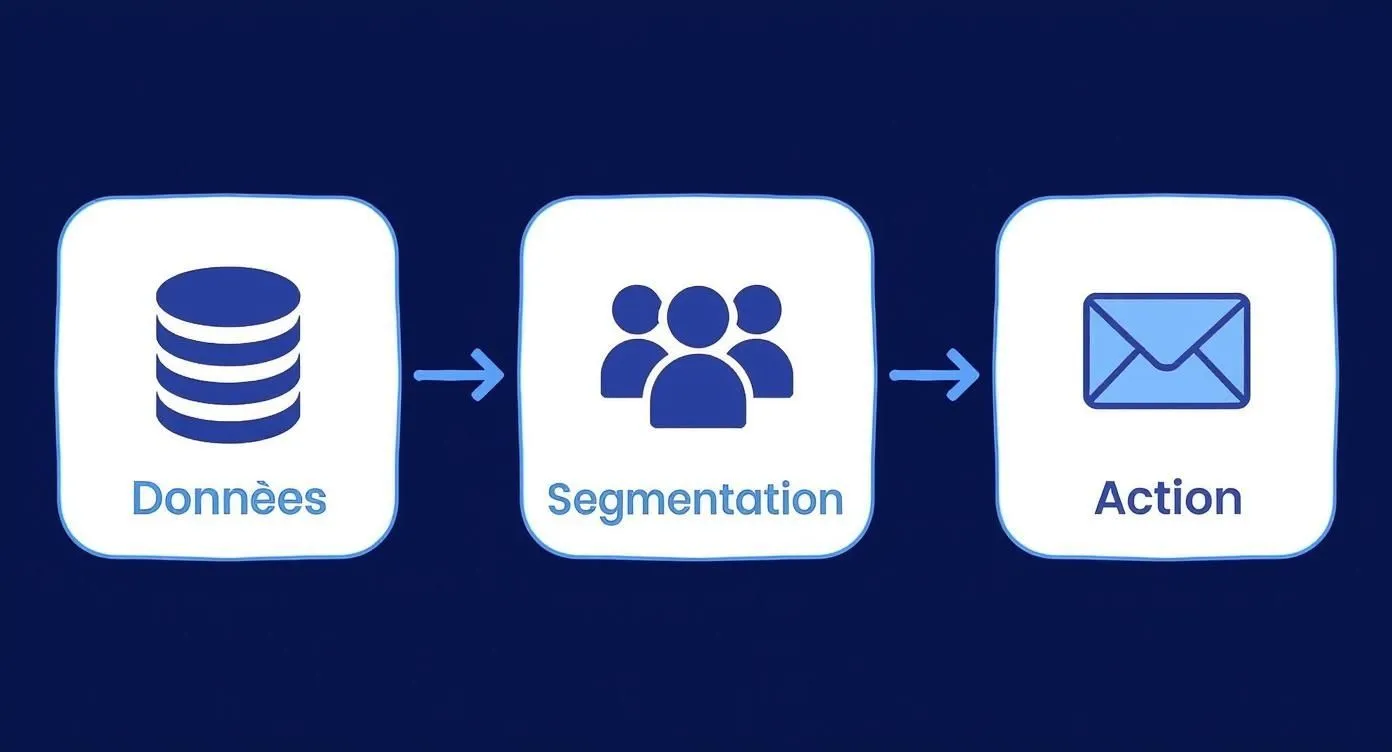
This visual shows the logical progression clearly: clean data enables fine-grained segmentation, which in turn allows for targeted, effective actions.
Step 3: plan human interactions and analyze
But automation has its limits. Some situations call for a human touch: an unhappy customer, a complex question, or simply a word of thanks for great loyalty. It’s up to you to plan these high-value contacts. A simple phone call or personal email can turn an ordinary customer experience into a memorable one.
Finally, a good follow-up process is never set in stone. The last step, which is actually an ongoing task, is analysis. Take the time to measure the results of your actions:
- The open and click-through rates of your follow-up emails.
- The repeat purchase rate of customers you’ve reached back out to.
- The satisfaction scores (NPS, CSAT) after an interaction.
- The number of inactive customers you’ve managed to reactivate.
These numbers will tell you what’s working and what needs adjusting. It’s this continuous improvement loop that will turn your customer follow-up into a genuine competitive advantage.
How do you choose the right tools for your customer follow-up?

Even the most brilliant customer follow-up strategy remains just a nice idea on paper without the technology to bring it to life. Choosing the right tools isn’t just a matter of comfort, it’s what will actually let you move from vision to action.
Imagine you have a flawless furniture plan. Without the right tools – screwdriver, drill, tape measure – the result is likely to end up wobbly. It’s exactly the same here: your tools are an extension of your strategy. They help you work faster, with more precision, and at a much larger scale.
The CRM: the control tower of your customer relationship
The centerpiece of any good follow-up system is customer relationship management software, the famous CRM. Think of it as the brain of your operation, the place where all information about your customers converges and comes to life.
Every email exchanged, every call made, every purchase completed gets recorded there. Without it, information is scattered all over the place, making it impossible to have a clear, unified view. A good CRM ensures your whole team speaks the same language and has access to the same level of information, for a smooth, seamless customer experience.
A well-used CRM doesn’t just store data. It turns it into intelligence, helping you understand the past, manage the present and anticipate the future of every customer relationship.
Automation: to communicate the right thing, at the right time
Then there are automation platforms. Their role? To help you send the right message, to the right person, at the right time, without you having to do everything manually. They’re the engine that brings the communication scenarios you’ve imagined to life.
And it goes well beyond simply sending mass emails. These tools let you finely segment your contact base and trigger communications based on a customer’s actual behavior. As it happens, to lighten your workload, you can also look at how to automate administrative tasks that eat up so much of your time.
Support and feedback tools: to listen and respond
Complete customer follow-up also requires unified request management. Customer service tools, often called helpdesks, centralize all tickets, whether they come from email, social media or chat. The goal is simple: guarantee a fast, coordinated response, no matter the channel.
Finally, let’s not forget feedback software, essential for taking the pulse of customer satisfaction. According to the Customer Relationship KPI Barometer, 75% of companies already measure this satisfaction. More than half of them even calculate the Net Promoter Score (NPS), a key loyalty indicator. These tools let you collect reviews, analyze them and, above all, act on them. The loop is closed.
Overcoming common customer follow-up obstacles
Setting up good customer follow-up is one thing. Keeping it effective over the long term is another story entirely. Even with the best of intentions, obstacles always end up appearing. Ignoring them is a bit like letting small cracks grow until they weaken the entire structure of your customer relationships.
One of the first pitfalls is simple: growth. Your business expands, the volume of requests explodes, and your teams quickly find themselves overwhelmed. The result? Response times stretch out and service quality takes a nosedive.
Another classic problem is information silos. Customer data is scattered across sales, technical support and marketing… No one has the full picture. For the customer, the experience is disjointed and frustrating: they feel like they have to repeat their story to every new person they talk to.
Handling customer silence
Sometimes the real challenge isn’t managing too much communication, but rather its total absence. This is the well-known “customer silence.” Many simply stop giving news or sharing their opinion, often out of fatigue or because they feel it’s pointless.
A recent study actually put its finger on this phenomenon: proactive customer participation in sharing reviews has dropped by 8%. The main reason? Endless satisfaction surveys and questions that seem pointless. To reverse the trend, you need to simplify feedback collection and, above all, show that every review matters. To go further, you can check out these customer relationship trends to help you adjust your strategy.
To reopen the dialogue with these silent customers, you need to be smarter about it. Drop the mass emails and opt for personalized outreach based on their history.
- Simplify your surveys: A single, clear, direct question is often enough.
- Show the impact: Communicate the concrete improvements you’ve made thanks to their feedback.
- Vary your channels: Reach each customer on the platform they prefer, whether it’s email, SMS or social media.
Turning challenges into opportunities
Ultimately, every obstacle in your customer follow-up is a chance to improve. An unhappy customer who takes the time to tell you why hands you, on a silver platter, a golden opportunity to make things right and win back their trust.
The key isn’t aiming for zero defects, but building a system that can absorb the blows and learn from them. A good “feedback loop” turns criticism into an innovation idea for the whole company.
By viewing every difficulty not as a failure but as valuable information, you build a genuine culture of continuous improvement. That’s what will let you keep adjusting your customer follow-up so it stays relevant, human, and in service of your growth.
The questions everyone asks about customer follow-up
Even with the best strategy in the world, you often end up with very concrete questions on your hands. That’s normal. The idea here is to answer the most common doubts head-on, so you can move into action with confidence.
Moving from theory to practice always raises questions. What’s the right pace so you don’t harass your customers? How do you justify the time and money invested? And above all, where do you start when you’re beginning from scratch? That’s what we’ll cover, so your approach succeeds from day one.
How often should I contact my customers without becoming intrusive?
This is THE question that keeps people up at night. And the answer isn’t a magic number, but a matter of common sense and relevance. There’s no universal rule, because the perfect frequency depends on your industry, your products’ life cycle and, of course, your customers’ expectations.
The real key is making sure every contact brings something of value. If you have nothing useful or interesting to say, silence is golden.
Good customer follow-up isn’t measured by the number of messages you send, but by the value you bring to each interaction. The goal isn’t to make noise, but to build a dialogue that strengthens trust.
To give you a few concrete benchmarks:
- Right after a purchase: Send a thank-you message right away. A week later, a short email asking for feedback or offering help is often much appreciated.
- For loyal customers: Reaching out once a month or once a quarter to share news, an exclusive offer or a practical tip keeps the flame alive.
- For dormant customers: Try a reactivation attempt every three to six months with a special offer. That’s enough to show you’re thinking of them without seeming desperate.
Your best ally is listening. Keep an eye on your open and unsubscribe rates: your customers will tell you themselves whether you’re doing too much or not enough.
How do I know if my customer follow-up is profitable?
Customer follow-up isn’t an expense, it’s an investment. And to prove it to yourself (or to your boss), you need to look at the right numbers. Return on investment doesn’t boil down to some complicated formula; it shows up across several indicators that, taken together, tell the story of your success.
To measure the real impact of your efforts, focus on these three points:
- Customer retention rate: This is indicator number one. Simply compare the percentage of customers who stay from one year to the next between those who receive follow-up and those who don’t. A small increase here can have a massive effect on your revenue.
- Customer lifetime value (or LTV): A well-followed-up customer buys more often and spends more over the long term. Track how this value evolves for the customers you take care of. You’ll quickly see the difference.
- Net Promoter Score (NPS): This indicator measures how likely your customers are to recommend you. Quality follow-up turns satisfied customers into genuine ambassadors for your brand.
With these numbers in hand, you’ll have rock-solid arguments to justify, and even increase, your customer relationship efforts.
I run a small business, what are the first 3 things to do?
When you’re starting from zero, the mountain can seem enormous. Above all, don’t aim for perfection right away. Instead, focus on three simple actions that will lay solid foundations for your customer follow-up.
Here’s your plan to get off to a good start:
- Step 1: Centralize your data. Before anything else, put all the information about your customers in one place. A simple spreadsheet or a free CRM like Bizyness’s works perfectly fine at first. What matters is knowing who bought what, and when.
- Step 2: Identify your 10 best customers. Don’t try to do everything at once. Spot the small group of customers who generate the most value and start by giving them special treatment. A call, a personalized email… It’s an excellent start.
- Step 3: Automate one essential message. Set up an automatic welcome email that goes out right after the first purchase. It’s easy, it’s effective, and it immediately shows newcomers that you care about them.
These three steps are your launchpad. They’ll get you quick results without spreading yourself too thin.
Taking care of your customers is what turns a one-off sale into a lasting relationship. With the right tools, even the smallest business can pull it off. Bizyness helps you centralize your customer data and automate your invoicing, so you can focus on what matters most: taking good care of your customers.
