

 Français
 6 Deposit Invoice Examples Decoded for 2025
Discover our complete guide with 6 deposit invoice examples for every sector. Templates, tips and legal obligations to secure your payments.
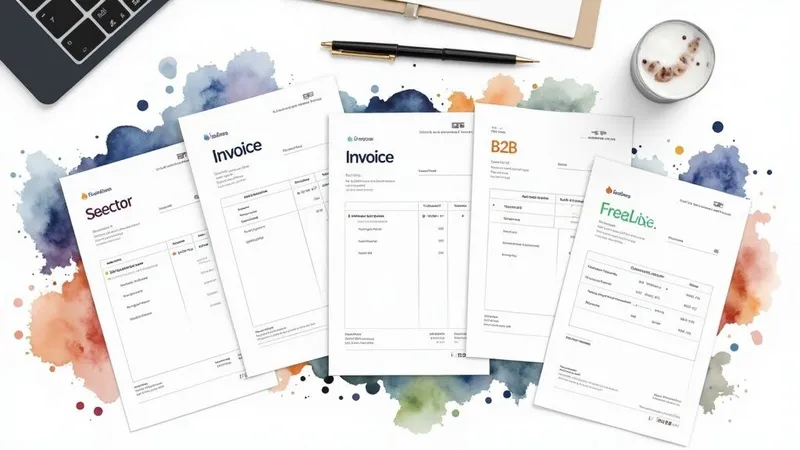
The deposit invoice is a crucial tool for securing your revenue and optimizing your cash flow, but implementing it can seem complex. What are the mandatory legal statements? How do you adapt it to your sector, whether you’re a freelancer, in construction, or in e-commerce? A mistake can lead to payment delays, disputes, or tax compliance issues.
This article goes beyond simple templates. We’ll break down 6 concrete deposit invoice examples in detail, analyze their specific structure, and give you actionable strategies to integrate them effectively into your billing process. Each deposit invoice example was chosen to illustrate a specific business situation, from international trade to service delivery.
You’ll discover how each type of invoice meets unique needs and how tools like Bizyness can automate this essential process. This lets you focus fully on your core business. Get ready to turn deposit management into a genuine lever for growth and financial stability for your company.
1. The Essential: Classic B2B Deposit Invoice Example
The classic B2B deposit invoice is the backbone of cash flow management for many French companies. It formalizes a partial payment request before or during the delivery of a service or goods. This document is crucial for securing revenue, funding initial costs, and formally committing the client to the project.
Although simple in appearance, this template relies on strict accounting and legal rules. It must contain all the mandatory statements of a standard invoice (parties’ identities, date, number, service details) while clearly specifying its deposit status. The goal is to avoid any confusion with a balance invoice.
Strategic analysis of this deposit invoice example
The main strength of this template lies in its clarity and compliance. By clearly distinguishing the deposit from the total amount, it makes accounting tracking easier for both issuer and client. For example, a construction company requesting a 40% deposit to purchase materials, or a consulting firm requiring 30% to start an audit engagement, secure their cash flow and minimize the risk of non-payment.
Key strategic point: Using distinct numbering (e.g., “DEPOSIT-2024-001”) and explicitly referencing the initial quote (e.g., “30% deposit on quote QUOTE-2024-058”) creates airtight administrative traceability.
This deposit invoice example is particularly effective for long-term or high-cost projects. It builds a relationship of trust and professionalism from the outset, showing that both parties are committed.
Practical applications and tips
To implement this template effectively, follow these steps:
- Include the mandatory statements: Don’t just write “Deposit.” Use the precise legal wording “Deposit invoice” and specify the percentage or fixed amount.
- Clarify payment terms: State the deposit’s due date and, if possible, the conditions for issuing the balance invoice.
- Detail the service covered: Briefly indicate what the deposit corresponds to (e.g., “Deposit for resource booking and phase 1 kickoff”).
- Cross-reference: Always link the deposit invoice to the accepted quote. This confirms the payment is based on a prior agreement and simplifies accounting reconciliation.
In conclusion, this template is essential because it structures the business relationship, protects cash flow, and ensures full compliance, making it fundamental for any company operating B2B.
2. The Sector-Specific: Deposit Invoice Example for Construction
In the construction and public works sector, the deposit invoice is more than a simple cash advance; it’s an essential project management tool. It structures payments according to work progress milestones, covering high initial costs such as material purchases, equipment rental, and labor mobilization. This instrument is indispensable for maintaining liquidity in the sector.
This type of invoice stands out for its granularity. Unlike a standard deposit, it’s often broken down by lot or phase (foundations, structural work, finishing). It must explicitly link back to the initial detailed quote, ensuring full transparency for the client project owner and rigorous management for the contractor or construction company.
Strategic analysis of this deposit invoice example
The main advantage of the construction deposit invoice is its ability to tie financial flows to actual site progress. This progressive method considerably reduces financial risk for the contractor. For example, a renovation company might invoice a 40% deposit at kickoff, 30% at the end of the structural work, and the balance upon completion. This structure secures each investment phase.
Key strategic point: Staggering deposits according to clearly defined project milestones (e.g., “Deposit #2 - Roof completion”) turns the invoice from a simple accounting document into a genuine project management tool.
This deposit invoice example is crucial for long-duration projects. It establishes payment discipline and lets the client see the concrete progress funded by their payments, reinforcing trust and clarity.
Practical applications and tips
To apply this template successfully, follow these points:
- Break down by cost item: Attach a detailed description of the materials and labor covered by the deposit. Transparency is key.
- Structure around the schedule: Set deposit payment deadlines according to the major stages of the work schedule (e.g., end of masonry, installation of fixtures).
- Reference the quote line by line: Each deposit must correspond precisely to line items in the accepted initial quote, for flawless traceability. To learn more, check out a guide on invoicing software for construction.
- Include legal information: Don’t forget to mention your insurance details (ten-year warranty, liability) and applicable late-payment penalties.
In short, this template is a pillar for the financial health of construction businesses. It secures cash flow, minimizes the risk of non-payment on large-scale projects, and professionalizes the relationship with the client project owner.
3. The Must-Have: Deposit Invoice Example for International Trade
The deposit invoice for international trade is an essential financial and logistical tool for companies operating across borders. It allows for requesting an advance payment in a cross-border B2B context, incorporating crucial elements such as currency management, intra-community or export VAT compliance, and international delivery terms (Incoterms).
This complex document goes far beyond a simple payment request. It serves as an initial contract that secures the transaction for the exporter, while clarifying the importer’s obligations. Its rigor is essential to prevent misunderstandings related to different tax and trade regulations between countries, thereby ensuring smooth trade.
Strategic analysis of this deposit invoice example
The strength of this template lies in its thoroughness and its ability to anticipate the complexities of global trade. By including specific mentions like Incoterms (for example, “EXW - Ex Works” or “DDP - Delivered Duty Paid”), it unambiguously defines who — seller or buyer — is responsible for transport, insurance, and customs costs. For example, a French exporter of machine tools requesting a 50% deposit from a German client secures the custom manufacturing and covers their initial costs.
Key strategic point: Including both parties’ EORI numbers (Economic Operators Registration and Identification) and correctly applying the VAT reverse charge mechanism are critical. The invoice must clearly state “VAT Reverse Charged” and show a VAT amount of €0, thereby shifting the declarative responsibility to the intra-community client.
This deposit invoice example is vital for exporters and importers. It minimizes financial risks tied to currency fluctuations and international payment delays, while ensuring strict customs and tax compliance.
Practical applications and tips
To use this template optimally, follow these recommendations:
- Specify the Incoterms: Clearly mention the applicable Incoterm 2020 to define delivery responsibilities.
- Provide complete bank details: Include IBAN and SWIFT/BIC codes to facilitate international transfers and minimize fees.
- Handle VAT correctly: For a B2B sale within the EU, verify the client’s intra-community VAT number and apply the reverse charge. For an export outside the EU, the sale is VAT-exempt.
- Clarify the currency: Specify the invoicing and payment currency (e.g., EUR, USD) to avoid any confusion.
- Include identification numbers: EORI numbers are mandatory for trade with non-EU countries.
In conclusion, this template is not a mere formality but a strategic instrument that protects both parties, streamlines customs operations, and boosts credibility on the international stage. It differs from a simple quote, such as a pro forma invoice, which doesn’t carry the same binding value. To learn more, you can check out information on the pro forma invoice on Bizyness.fr.
4. Essential for Experts: Deposit Invoice Example for Professional Services (Retainer)
In professional service sectors like consulting, legal, or IT, the “retainer” deposit invoice is a strategic management tool. It formalizes an advance payment made by a client to secure the availability of an expert or team over a defined period, or to kick off a large-scale project. This document is fundamental to guaranteeing a steady revenue stream and securing the necessary resources.

This template goes beyond a simple deposit on a total amount. It represents an upfront financial commitment, often monthly or quarterly, covering a volume of hours or a set of agreed deliverables. It must therefore be impeccably clear, precisely detailing the scope of work covered by the advance.
Strategic analysis of this deposit invoice example
The main advantage of this template lies in its ability to turn a one-off client relationship into a long-term partnership. For a law firm requesting a monthly advance or a design agency requiring 40% before starting a creative project, the retainer stabilizes cash flow and enables better resource planning. It also gives the client peace of mind, knowing the expertise they need is reserved for them.
Key strategic point: Linking this invoice to a Statement of Work (SOW) or a detailed service agreement is non-negotiable. This supporting document must precisely define what’s included (and excluded), how overtime hours are handled, and how any unused balance is treated.
This deposit invoice example is particularly well suited to complex engagements requiring ongoing involvement. It establishes a clear financial framework, preventing billing discussions at each interaction and letting both parties focus on project goals.
Practical applications and tips
To apply this template optimally, follow these recommendations:
- Attach a Statement of Work (SOW): Systematically include a document detailing the scope, deliverables, communication protocols, and approval procedures.
- Define the rules of engagement: Clearly specify in the invoice or associated contract the terms for hours exceeding the advance, response times, and what happens to any remaining balance at period end (carried over, refunded, etc.).
- Specify the nature of the deposit: Use a clear statement such as “Fee advance for the period [Month/Year]” or “50% deposit on the IT consulting project per quote [number].”
- Ensure rigorous traceability: Set up precise time tracking to justify the use of hours covered by the deposit and guarantee transparency with your client.
In conclusion, this template is a powerful instrument for high-value service providers. It secures revenue, strengthens the client relationship, and lays the groundwork for a structured, professional collaboration.
5. The Automated: Deposit Invoice Example for E-commerce and Digital Products
In the digital age, the deposit invoice adapts to dematerialized transactions. For sellers of digital products, software licenses (SaaS), or online courses, this document is often generated automatically after payment. Its purpose is less about securing a project than formalizing an instant transaction and granting immediate or scheduled access to a service or product.
This template is fundamentally different from the previous ones because it’s built into an automated customer journey. The deposit may represent the first payment of a subscription, payment for course access, or an advance on a digital marketing campaign. Its main characteristic is instantaneity and its direct link to service activation.
Strategic analysis of this deposit invoice example
The major advantage of this template is its operational efficiency. Automation cuts administrative overhead to zero and eliminates any risk of human error in billing. For example, an e-learning platform requesting a 100% deposit for a video course triggers the invoice and access as soon as payment is confirmed, offering a smooth and immediate customer experience.
Key strategic point: Automating this deposit invoice example is a conversion lever. By providing official, instant proof of purchase, it reinforces customer trust and legitimizes the transaction — a crucial point for intangible goods.
This template is essential for high-transaction-volume businesses. It guarantees rigorous, centralized accounting management, essential for tracking recurring revenue (SaaS subscriptions) or one-off digital product sales. E-commerce accounting is thus greatly simplified.
Practical applications and tips
To optimize this type of deposit invoice, follow these recommendations:
- Include license details: Clearly specify the terms of use, license duration (e.g., “Annual access to the Pro license”), and any restrictions.
- Clarify access terms: The invoice or accompanying email must contain clear instructions for activating the product or accessing the service, as well as technical support contact details.
- Automate generation: Use invoicing software or an e-commerce platform (Shopify, WooCommerce) that automatically generates and sends the invoice after payment confirmation.
- Manage recurrence: For subscriptions, mention the automatic renewal date and cancellation terms, in line with DGCCRF guidelines.
In conclusion, this automated template is essential for any online business. It turns an administrative obligation into a tool that serves the customer experience, while ensuring sound and scalable financial management.
6. Essential for Rentals: Deposit Invoice with Security Deposit
In the equipment and property rental sector, the deposit invoice takes on strategic importance by often incorporating a security deposit. This document not only commits the client but also protects high-value assets against damage, loss, or non-return. It’s indispensable for companies renting out construction equipment, event equipment, or vehicles.
This template combines two distinct financial flows: the advance payment of part of the rental (the deposit) and a refundable security deposit (the caution). Its complexity lies in the need to clearly distinguish these two amounts, both from an accounting and legal standpoint, since the security deposit isn’t recognized as revenue until the item is returned in good condition.
Strategic analysis of this deposit invoice example
The strength of this template is its ability to minimize the financial risks tied to making costly assets available. By requiring a security deposit, the company protects itself against unforeseen repair or replacement costs. For example, a sound equipment rental company might request a deposit to reserve the equipment and a security deposit of 25% of its value to cover risks during the event.
Key strategic point: Clearly separating “Rental deposit” and “Security deposit (caution)” on the invoice is non-negotiable. It enables rigorous accounting management and simplifies refund or partial/full withholding procedures in the event of a dispute, based on an initial condition report.
This deposit invoice example is an indispensable risk management tool. It formalizes the renter’s responsibilities and provides a clear framework for resolving issues, establishing a transparent and secure relationship.
Practical applications and tips
To implement this template effectively, follow these steps:
- Separate the line items: Create separate billing lines for the deposit and the security deposit, specifying that the latter is “not subject to VAT” and “refundable under conditions.”
- Reference the rental agreement: The invoice must always mention the rental agreement detailing the terms of use, liability in case of damage, and return procedures.
- Document the item’s condition: Attach an initial condition report to the invoice, with photos and serial numbers if possible. This document will serve as the reference for assessing the equipment’s condition upon return.
- Clarify refund terms: Clearly state on the invoice (or in the referenced contract) the timeline and terms for refunding the security deposit after inspecting the returned equipment.
In conclusion, this specialized template is fundamental to securing rental operations. It protects the company’s assets while establishing a clear, professional contractual framework with the client.
Comparison — 6 deposit invoices
| Invoice type | Complexity 🔄 | Resources / Efficiency ⚡ | Expected outcomes 📊 | Ideal use cases 💡 | Key benefits ⭐ |
|---|---|---|---|---|---|
| Classic Deposit Invoice (B2B) | Low → standardized template; simple VAT calculation | Few resources; some administrative tracking needed; fast processing ⚡ | Secures seller’s cash flow; reduces risk; clear accounting 📊 | General B2B projects (services, manufacturing); 30–50% deposit | Legal compliance; recognized format; transparent VAT ⭐⭐⭐ |
| Construction Deposit Invoice | High → multiple installments, progressive calculations 🔄 | Significant site documentation and tracking; construction-specific tools recommended; slower ⚡ | Payments aligned with progress; protection against overruns 📊 | Construction sites, renovation, public contracts; milestone-based installments | Cost transparency; sector best practice; robust financial planning ⭐⭐ |
| International Trade Deposit Invoice | Very high → currencies, Incoterms, complex VAT regimes 🔄 | International expertise required; longer processing; customs compliance | Fewer payment disputes; customs compliance; cross-border coordination 📊 | Exporters/importers; intra-EU sales; Incoterm-based contracts | Currency/VAT management; regulatory protection; clarifies responsibilities ⭐⭐ |
| Professional Services Deposit Invoice (Retainer) | Medium → requires SOW and time tracking 🔄 | Time and deliverable tracking; potential automation; medium efficiency ⚡⚡ | Clarifies expectations; protects against non-payment; simplifies recurring billing 📊 | Consultants, lawyers, creative agencies, IT — retainers and projects | Defines scope; reduces scope creep; secures payments ⭐⭐⭐ |
| E-Commerce Deposit Invoice (Digital products) | Medium → technical integration and consumer rules 🔄 | High automation; payment gateway integration; instant collection ⚡⚡⚡ | Fast payments; scalable; better conversion; instant digital delivery 📊 | SaaS, licenses, e-learning, e-commerce platforms | Automation & scalability; payment integration; GDPR compliance ⭐⭐⭐ |
| Equipment Rental Deposit Invoice | High → guarantees, condition reports, insurance clauses 🔄 | Photo documentation, inventory and inspections; heavier management; delays ⚡ | Deposit security; fewer equipment disputes; asset traceability 📊 | Equipment rental, events, vehicle leasing | Damage protection; traceability; clear liability clauses ⭐⭐ |
Take Action: How to Automate Your Deposit Invoices and Gain Peace of Mind
Throughout this article, we’ve broken down six deposit invoice templates, showing that every sector — from construction to e-commerce to international services — has its own subtleties. Each deposit invoice example analyzed highlights a universal truth for every entrepreneur: accurate, compliant invoicing isn’t a mere administrative formality — it’s a strategic pillar for your company’s financial health.
Mastering the deposit invoice is about much more than simply requesting an initial payment. It’s a powerful tool for securing your cash flow, minimizing the risk of non-payment, and professionalizing the relationship with your clients from the very start of a collaboration. Clear legal statements, rigorous numbering, and adapting the terms to each context are the keys to turning this document into a genuine lever for trust and financial stability.
Summary of Strategic Lessons
To turn theory into practice, let’s recap the key takeaways from our analysis:
- Compliance is non-negotiable: Every invoice, whether a deposit or balance invoice, must include the mandatory statements (SIRET number, VAT-related statements, etc.). Omitting this information can not only lead to penalties but also weaken the validity of your claim in the event of a dispute.
- Clarity comes first: Use simple, precise language. The client should understand at a glance the deposit amount, which quote it refers to, and what this first payment covers. This is the foundation of a healthy, transparent business relationship.
- Adaptation is the key to success: As we’ve seen, a deposit invoice example for a freelancer won’t look like one for a construction company. Customize your documents to reflect the specifics of your business, such as retention guarantees or international payment clauses.
Your Next Concrete Steps
Manually managing these invoices through spreadsheets or word processors is an open door to errors, omissions, and considerable time loss. To truly secure your cash flow and free your mind, automation is the most effective solution.
Adopting dedicated invoicing software is no longer a luxury but a necessity for any business focused on efficiency. These tools not only guarantee perfect legal compliance through regular updates, but also automate numbering, payment reminders, and linking to corresponding quotes. You save valuable time, reduce administrative stress, and project an image of flawless professionalism to your clients. Ultimately, investing in good deposit management means investing in the long-term stability and peace of mind of your business.
Ready to say goodbye to manual errors and administrative complexity? Bizyness lets you create, send, and track every deposit invoice example covered in this article, in full compliance with French legislation. Simplify your invoicing and secure your cash flow today by trying Bizyness.
