

 Français
How to Do Your Own Accounting: A Simple, Effective Guide
Discover how to do your own accounting with our practical guide. Tips, key steps, and advice for managing your bookkeeping independently.

Demystifying accounting when you’re starting from absolute zero
Starting a business is an exciting adventure! But let’s be honest, accounting can quickly turn into a real headache. Between debits, credits, the balance sheet, VAT… it’s easy to feel lost when you’re alone facing your numbers. It’s completely normal to feel a bit overwhelmed at first, believe me, I’ve been there! The key is to grasp the basics without drowning in technical information.
Take debits and credits as an example. We often imagine that a debit means money is being lost. Well, not necessarily! Think of your bank account: a debit is money coming in, a credit is money going out. In accounting, it’s the same principle, but applied to all of your company’s accounts. A bit counterintuitive at first, I admit, but with a little practice, it becomes automatic.
Choosing your tax regime is a key step, and shouldn’t be taken lightly. Micro-entrepreneur (sole trader), simplified regime, standard regime… each option has its pros and cons. The micro-entrepreneur status is often the simplest way to get started, thanks to the flat-rate allowance on revenue. On the other hand, if you have a lot of expenses, another regime might be more advantageous. In fact, solo bookkeeping is a significant topic in France. In 2025, 717,200 micro-enterprises were created, representing a large share of businesses managing their own accounting. For these micro-entrepreneurs, choosing the right tax regime is crucial. More on business creation figures in France.
Once you’ve chosen your regime, you need to clearly identify your accounting obligations. Keeping a record of income and expenses is the bare minimum. Depending on your regime, other obligations may apply, such as keeping a journal ledger or a general ledger. The most important thing is to set up a simple, effective system from the start. Personally, I sort my invoices by month and by expense type. A real time-saver!
Managing your own accounting is entirely possible, and even rather rewarding. Take the time to learn, get organized, and above all, don’t hesitate to ask for help if needed. With a bit of practice, you’ll see that accounting isn’t so scary after all!
Finding the accounting software that truly fits you
After juggling a dozen different accounting tools, I understood one thing: the perfect software doesn’t exist. However, the perfect software for you — now that’s a different story! Some micro-entrepreneurs are perfectly happy with free tools, while others need more advanced features from day one. To manage your own accounting effectively, choosing the right software is fundamental.
To find your way, first focus on the user interface. Is it intuitive? If you spend your time hunting for features, that’s a bad sign. Next, bank synchronization is a real plus. Imagine: no more manually entering every transaction! Finally, think about scalability. Your software should be able to grow along with your business.
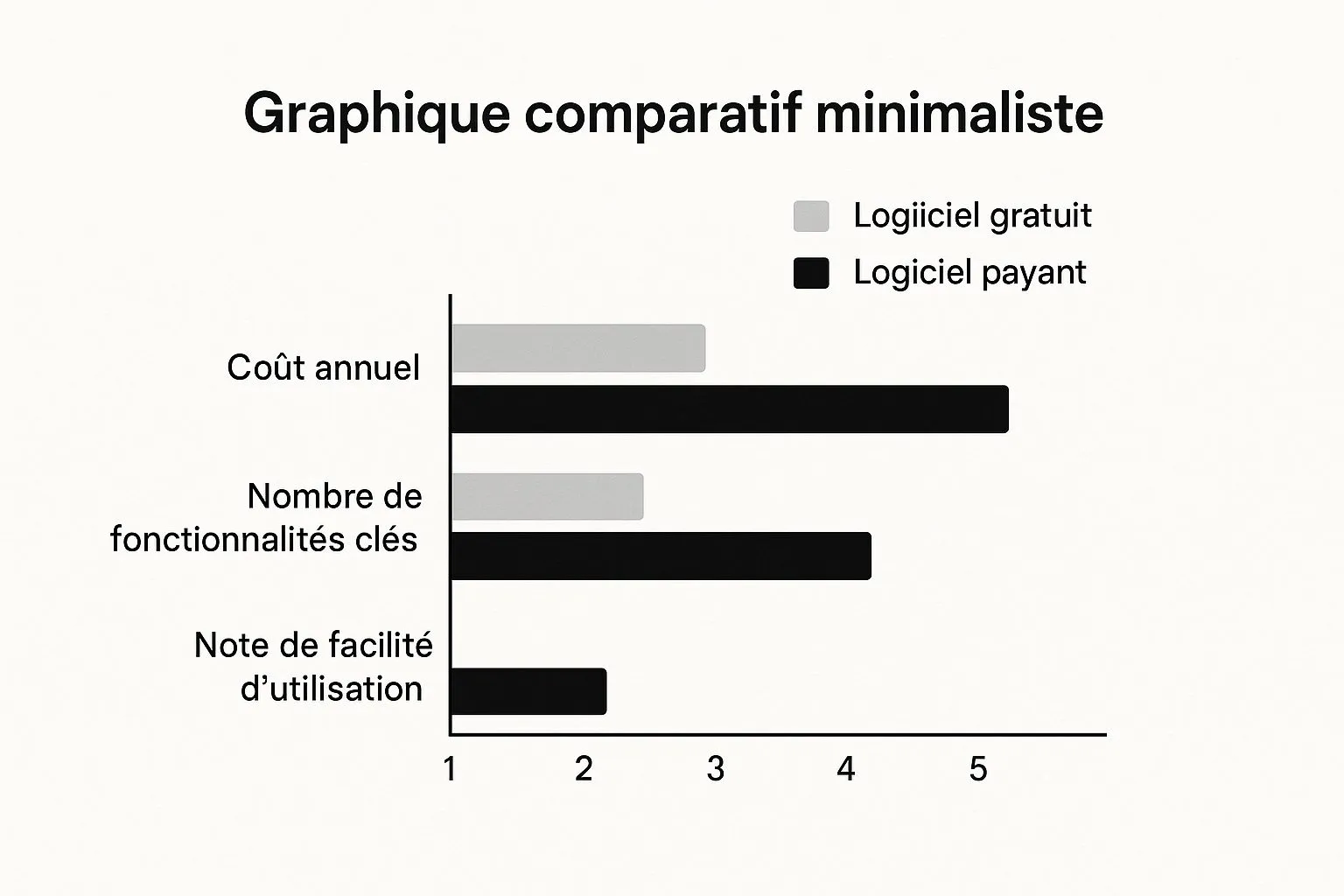
This chart compares free and paid software in terms of annual cost, number of features, and ease of use. We can see that paid solutions, while more expensive, offer a smoother user experience and more complete features. That said, for starting out as a micro-entrepreneur, free software can be perfectly adequate.
Popular solutions: pros and cons
Let’s review a few concrete options. Sage, for instance, is a benchmark for SMEs, with very comprehensive features for VAT management and invoicing. Its price, however, can be a barrier for smaller budgets.
Sage’s interface is professional and well organized. You can immediately tell it’s a powerful piece of software. Ciel, on the other hand, is more accessible and offers a simplified interface, perfect for beginners. Solutions like Tiime and Pennylane focus on startups and freelancers, with innovative features and integrations with other tools.
To help you choose, here’s a comparison table:
Before making a decision, I recommend comparing the different offers on the market carefully. The table below summarizes the strengths and weaknesses of a few popular solutions.
| Software | Monthly price | Advantages | Disadvantages | Ideal for |
|---|---|---|---|---|
| Sage | From €25 | Comprehensive features, ideal for VAT management | High price, complex interface | SMEs |
| Ciel | From €10 | Simplified interface, easy to learn | Limited features | Sole traders, small businesses |
| Tiime | From €9 | Integrations with other tools, innovative features | May lack some features for more complex businesses | Startups, freelancers |
| Pennylane | From €29 | Expert support, task automation | High price | Fast-growing startups |
Don’t forget: every piece of software has its strengths and weaknesses. The key is to find the one that best matches your needs.
Decoding the offers and testing before you commit
Before subscribing, take the time to analyze the commercial offers. Most software providers offer free trial periods. Take advantage of them! It’s the best way to test the interface and features in real conditions. Don’t hesitate to contact customer support with your questions to make sure the software will meet your expectations.
For more information, I recommend this article: Choosing accounting software as a sole trader. Once you’ve found the right tool, you’ll be ready to manage your accounting on your own, calmly and confidently.
Building an organization system that actually holds up

Managing your own accounting may seem intimidating, but believe me, with good organization, it’s entirely doable. The goal isn’t to aim for absolute perfection, but rather to set up an efficient, practical system that simplifies your life. From experience, it’s the small habits, the ones you build into your daily routine, that make the real difference.
Automating repetitive tasks
To start, think about bank synchronization. Seriously, it’s a game-changer! Once properly set up in your accounting software, you can say goodbye to manually entering transactions. Imagine the time saved!
And for recurring expenses, like rent or subscriptions, entry templates are your best friends. A simple copy-paste and you’re done.
Another essential point: document filing. Personally, I’ve adopted a digital folder system, organized by month and by category (supplier invoices, customer invoices, expense reports, etc.). I can find everything in seconds. No more cold sweats or wasted hours searching for a missing invoice.
Finding the right rhythm
A question that comes up often: how frequently should you handle your accounting? Every day, every week, once a month? Well, there’s no magic formula. The ideal rhythm depends on your business, your transaction volume, and of course, your personal organization.
If your business generates few transactions, a monthly update may be enough. On the other hand, if you have a constant flow of operations, it’s better to check in more regularly, for example once a week. This will keep you from getting overwhelmed and help you maintain a clear view of your finances. By the way, did you know that in 2023, revenue for small and medium-sized businesses grew by 1%, after a 6% increase in 2022? More on SME statistics. Good accounting management is therefore essential to make the most of these fluctuations.
The key is to find a rhythm that suits you and that you can maintain over time. Don’t hesitate to try different approaches to find what works best for you. The goal: accounting that’s always up to date, without it becoming a chore. And believe me, once you’ve found the right rhythm, accounting can almost become… enjoyable!
Navigating tax filings without panicking
Ah, tax filings… Just the word can be enough to send a shiver down your spine. But honestly, once you’ve untangled it all, it’s far less terrifying than it seems. The secret? Organization and anticipation. Forget the stress of last-minute filings!
To manage your accounting calmly on your own, mastering tax filings is essential. Depending on your status (micro-entrepreneur, sole proprietorship, company…), filings and their deadlines vary. It’s easy to get lost between VAT (monthly or quarterly), income declarations (BIC, BNC…), and all these procedures that can seem complex at first glance.
Preparing in advance: the secret to a stress-free filing
A friendly piece of advice: prepare your filings ahead of time. It sounds obvious, yet how many entrepreneurs wait until the last minute? By anticipating, you limit stress-related errors and can calmly verify each piece of information.
For instance, for VAT, gather all your purchase and sales invoices from the start of the month or quarter. Keep them well organized (physically or digitally, with software like EBP or Sage). Believe me, this will make your life much easier when it’s time to file.
Personally, it took me a while to understand the importance of organization. At first, I kept my invoices in a simple shoebox… A real nightmare when trying to find a specific one! I quickly realized that good organization was essential to save time and avoid mistakes.
To help you visualize the deadlines, here’s a summary table:
Calendar of key tax obligations
Annual schedule of filings and tax deadlines by type of business
| Period | Filing | Applicable status | Deadline | Penalties for late filing |
|---|---|---|---|---|
| Monthly / Quarterly | VAT | Micro-entrepreneur, sole proprietorship, company | Varies by status and regime | 10% of the VAT amount due |
| Annual | Income declaration (BIC, BNC) | Micro-entrepreneur, sole proprietorship | May | 10% of the tax due + late interest |
| Annual | Corporate income tax | Company | Varies by legal structure | Surcharge on tax due + late interest |
This table is an example and may vary depending on the specifics of each situation. It’s important to refer to official information from the tax authorities.
Keep this table close at hand so you never miss a deadline. It’s a simple but remarkably effective tool for staying organized.
Online filings, supporting documents, and mistakes: let’s take a breath
Online filing procedures may seem intimidating, but once you get the hang of them, they save valuable time. Don’t hesitate to check out tutorials and online help resources. Most platforms are now fairly intuitive and easy to use.
For supporting documents, carefully keep all your invoices, bank statements, expense reports… In the event of a tax audit, you’ll be relieved to have them on hand. Also consider digitizing them for safer, more practical archiving.
And what if you make a mistake? Relax! It happens to everyone. What matters is knowing how to correct it. Contact your local tax office or an accountant. They’ll guide you and explain the steps to take. Generally, all it takes is filing an amended return. It’s much less serious than you might think!
Speaking of optimization, for micro-entrepreneurs, I recommend this article: Tax optimization for sole traders. It offers interesting ways to legally reduce your taxes.
By applying these few tips, you’ll see that tax filings become much less stressful. A bit of organization, a touch of anticipation, and you’re all set!
Mastering your cash flow to sleep soundly
Keeping your accounting up to date is essential, of course. But to truly stay in control of your business and avoid cold sweats at night, you need to master your cash flow. It’s a bit like your company’s dashboard, giving you a precise picture of its financial health and letting you anticipate potential problems. A true thermometer for your business!
Anticipating cash flow: simpler than it looks!
We often assume cash flow forecasting is complicated, reserved for experts. But honestly, not at all! With a bit of logic and a few simple tools, you can absolutely anticipate your money coming in and going out. The goal isn’t to become a fortune teller, but to have a clear, realistic view of your finances.
Start by listing all your predictable incoming payments. Think about client payments, any potential grants… Then, estimate your upcoming expenses: rent, supply purchases, salaries… And above all, don’t forget one-off expenses! That new laptop you need, or registration for that trade show that could bring you new clients.
Spotting warning signs and reacting quickly
Once your forecast is set, it’s important to track it regularly and compare it against reality. A client who’s late paying, an unexpected expense… These small gaps, even if they seem insignificant, can quickly have a major impact on your cash flow.
If you notice an imbalance, above all, don’t panic! Take the time to analyze the situation and identify possible solutions. Follow up with clients who are behind on payments, negotiate payment terms with your suppliers, or postpone a non-urgent investment. The key is to react quickly to prevent the situation from worsening.
Optimizing collections and managing seasonality
To speed up client payments, several solutions exist. You can offer early payment discounts, or use online payment platforms that simplify transactions for everyone. If your business is seasonal, with ups and downs, plan ahead for slow periods by building up a safety reserve. It’s your safety net in case of a rough patch. Set an amount that fits your business and top it up regularly.
Preparing well for your meeting with the bank: an essential asset
If you need financing, a well-prepared meeting with your banker is essential. Present them with a solid business plan and a realistic cash flow forecast. Show them that you’re on top of your accounting and that you know where you’re headed. Doing your own accounting effectively means giving yourself the means to present clear, precise figures — a strong argument to reassure your banker and secure the financing you need to grow your business.
Recognizing when delegating becomes the smarter move

Managing your own accounting is great for staying on top of your finances and saving money, especially in the early days. You really get to know the inner workings of your business, and that’s invaluable. But sometimes, clinging to that independence becomes a burden. So how do you know when it’s time to delegate, partly or fully, your accounting?
Signs it’s time for a change
From my experience, several signs suggest it might be time to consider something else. First, time. Do you spend more time buried in your books than on your core business? If so, that’s a warning sign. Your time is precious, and it’s better spent on what truly grows your company.
Then there are mistakes. Missed invoices, errors in filings, confusion in the accounts… Lack of time and increasingly complex accounting can lead to these mistakes, which can sometimes prove costly in the long run.
Finally, the evolution of your business is a key factor. New partners, major investments, rapid growth… all of this makes accounting more complex and demands more specific skills. Incidentally, the accounting expertise sector is booming. In France, there were more than 22,000 chartered accountants in 2025, a 12% increase compared to 2015. This proves there’s real demand for this type of service, even though managing your own accounting remains entirely possible. More on the accounting expertise market.
Hybrid solutions: combining independence and support
Delegating doesn’t necessarily mean giving up everything! Hybrid solutions exist that combine independence and support. For example, partial outsourcing: entrusting specific tasks to an accountant (tax filings, annual balance sheet…) while still handling day-to-day bookkeeping yourself.
Another option: one-off consulting. You call on an accountant for specific questions, to choose software, or for guidance at a particular stage of your business’s development.
Finally, personalized training lets you build the skills to manage your own accounting, with advice from a professional. With Bizyness, for example, you get personalized customer support to guide you.
The most important thing? Find the solution that fits your needs and your budget. Don’t hesitate to explore the different options and seek advice to make the best decision for your business.
Your action plan for successful accounting independence
Managing your own accounting can seem intimidating at first. A bit like building a house without ever having touched a trowel! But rest assured, with a good plan and a little organization, it’s entirely achievable. It’s not necessarily a walk in the park, but the satisfaction of being self-sufficient is well worth it. Here’s a three-month action plan for gradually building good habits, without feeling overwhelmed.
First month: getting your bearings
The priority this first month is choosing the tool that will accompany you day to day: your accounting software. There are many solutions available, some free, some paid. My advice? Try several out! It’s like trying on shoes: you need to find the pair that fits you perfectly. The goal is to get familiar with the interface and basic features. Once you’ve chosen your software, remember to set up bank synchronization. Believe me, this time savings is invaluable. Finally, for recurring transactions (rent, internet, etc.), create entry templates.
Second month: organizing your workflow
Now that you have your tools, it’s time to get organized! Set up a filing system for your invoices and supporting documents. You don’t need anything ultra-sophisticated, the important thing is that it’s practical for you. Personally, I use digital folders organized by month and document type. I can find everything in a snap! By the way, if you’d like to learn more about the balance sheet, take a look at our guide: Simplified guide to the balance sheet.
Also try out different update rhythms. Weekly, monthly… Find the frequency that suits you so you stay up to date without it becoming a chore. And get into the habit of reconciling your bank accounts regularly. This helps catch errors and avoid unpleasant surprises.
Third month: fine-tuning the details
Now it’s time to tackle tax filings. Identify the ones that apply to you and note the deadlines carefully. Your accounting software can make this step much easier, and don’t hesitate to check the tax authorities’ online resources. It’s a bit like the final coat of paint before moving into your new house. You can even run a filing simulation to get familiar with the forms.
This week’s priority checklist
- Choose and install your accounting software.
- Set up bank synchronization.
- Create a filing system for your documents.
- Schedule your first accounting update session.
With this gradual action plan, you’ll be able to manage your own accounting efficiently and with peace of mind. Keep in mind that accounting independence is a marathon, not a sprint. Take the time to get organized, learn, and adapt. And above all, don’t hesitate to get help if you need it!
To make your life even easier, discover Bizyness, the all-in-one tool for sole traders and small businesses. Simplify your accounting with Bizyness !
