

 Français
 Payment receipt template - free and simple
Free payment receipt template to download (Word, PDF). Learn how to fill it in and comply with the mandatory information.
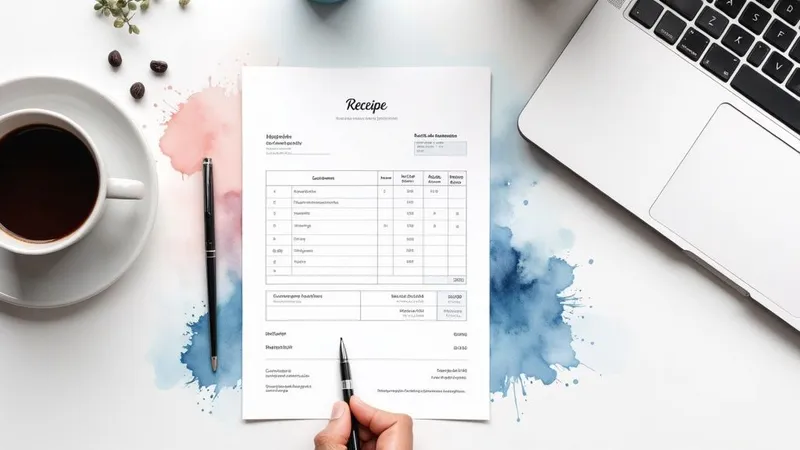
A payment receipt isn’t just a piece of paper. For any business, it’s an essential tool that builds trust with your customers. By giving them clear, unambiguous proof of their payment, you’re not just confirming a transaction — you’re professionalizing your image. Using a well-designed payment receipt template is the first step to securing your exchanges and showing your seriousness.
Why a good payment receipt is essential
Let’s get straight to the point: a payment receipt does much more than simply acknowledge a payment. It’s a document that plays several key roles in the financial health and credibility of your business. Think of it as a kind of formal handshake that closes out a transaction.
Every payment you collect marks the completion of a sales cycle. By systematically sending a receipt, you end this interaction on a professional and reassuring note. It’s a small gesture that reinforces the trust relationship you’ve worked hard to build with your customer.
A legal and tax shield
Beyond customer service, this document is your best ally in case of trouble. Whether it’s a tax audit or a dispute with a customer, the receipt is irrefutable proof of payment. It protects you, just as it protects the buyer. Without this paper trail, proving that an invoice was paid can quickly become a headache and create costly misunderstandings.
A properly formalized receipt is the first line of defense for your cash flow. It removes any ambiguity about the status of an invoice and prevents future disputes.
For the tax authorities, rigor in keeping your books is not optional. Payment receipts are fundamental accounting records that justify your income. They must be kept carefully, as they validate the compliance of your tax filings.
Save time and gain professionalism
The advantage of adopting a standardized receipt template is that the benefits are immediate. No more reinventing the wheel with every new transaction; you start from a solid, complete base.
- Fewer errors: A template with predefined fields significantly reduces the risk of forgetting important information or making a typo.
- A consistent brand image: Your financial documents speak for you. A clear, clean, well-presented receipt reinforces the image of a serious, organized business.
- More efficiency: You and your team save precious time. That time can be spent on higher-value tasks, like growing your business, instead of drowning in paperwork.
In short, issuing a receipt for every payment is not a mere formality. It’s a sound management practice and an essential foundation for securing your business.
Enough theory — time to get down to business. To help you manage your transactions like a pro without spending hours on it, I’ve prepared a few ready-to-use payment receipt templates. Each format is designed to fit your way of working and give you a turnkey solution.
All that’s left is to choose the version that suits you best and download it. It’s by far the simplest and fastest way to make sure your documents are both accurate and professional.
The right format for your way of working
Every entrepreneur has their favorite tools, and that’s perfectly normal. That’s exactly why our payment receipt template comes in several versions, for maximum flexibility.
-
The Word template (.docx): Perfect for those who like to control the design. You can easily add your logo, adjust the colors to match your brand, and rearrange the layout however you like. It’s the ideal option for a truly personalized result.
-
The fillable PDF template: The ally of pure efficiency. When you need to move fast, this format is unbeatable. You open it, fill in the fields directly on your computer or tablet, save, and send. Simple, fast, and readable by everyone.
-
The Google Sheets template: The solution for those who live in the cloud. This format is great if you manage everything online. It can automate certain calculations (like VAT or totals) and lets you centralize the tracking of all your receipts in one place, accessible from anywhere.
Your choice really depends on your habits. What matters is finding the tool that saves you time while ensuring your documents are flawless.
Download the template that suits you best and start securing your transactions right away. These templates are an excellent foundation, but it’s also important to understand the nuances with other documents. In fact, to go further, I recommend taking a look at our guide on the receipted invoice template, which is the perfect complement to the receipt. Each document has its role to play for well-kept books.
The essential information on a receipt
A payment receipt template, to be truly useful and legally valid, must contain much more than a simple “thank you for your payment.” Think of this document as a miniature contract that proves a transaction took place. Every piece of information matters and serves to protect both you and your customer.
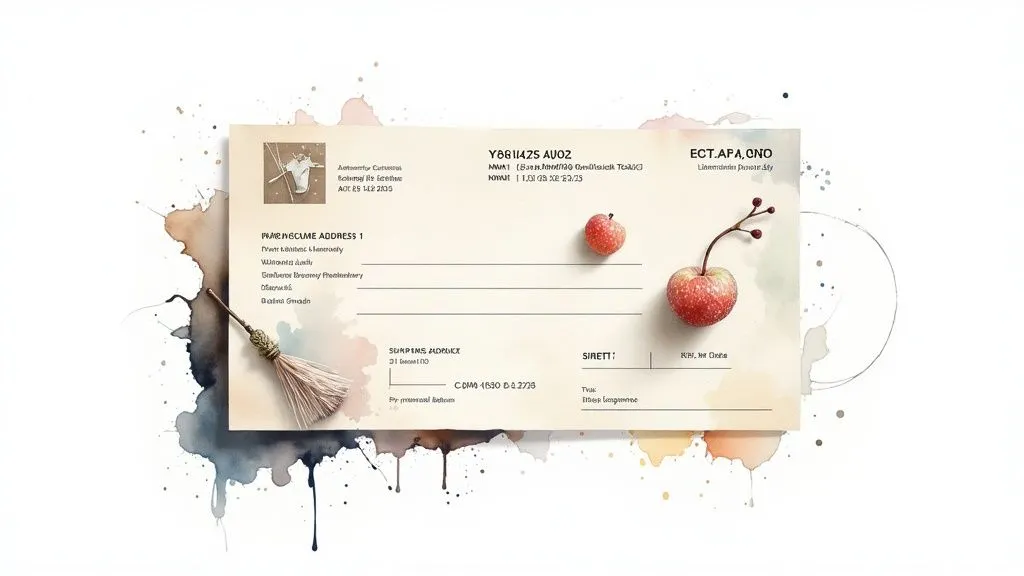
Think about it: a clear, complete receipt is the best way to avoid misunderstandings or disputes. It’s also a sign of professionalism that will reassure your customer and greatly simplify your bookkeeping.
The data you must never forget
For a receipt to be solid, there’s a list of details that must absolutely appear on it. Think of them as the foundations of your document.
- The identity of both parties: Your name (or your company’s legal name), full address, and SIRET number must be clearly visible. The same applies to your customer: their name and address. This is the basis for knowing who is paying whom.
- Numbering and date: Each receipt must carry a unique number. Ideally, follow an uninterrupted logical sequence (for example: RC-2024-001, RC-2024-002…). The issue date is just as essential for tracking in your records.
- Transaction details: A simple but precise description of the product or service is required. If this receipt settles an invoice, be sure to indicate that invoice’s number. It’s a detail that can save a lot of time later.
- The amount and payment method: The total amount paid should be written in figures, but also in full letters. It’s an old trick that prevents any error or dispute. Don’t forget to specify how the payment was made: bank transfer, card, check, or cash.
In France, rigorous payment management is crucial, and the 2008 LME law reinforced the importance of closely monitoring cash flow. Issuing properly formatted receipts is a habit that supports this and helps you meet your tax obligations.
Necessary vs. useful: knowing the difference
Not all the information on a receipt carries the same weight. Some is a legal requirement, while other elements are simply good sense and good practice for sound management.
To make things clearer, here’s a quick summary table.
Mandatory vs. recommended details on a payment receipt
| Detail | Status | Why it matters |
|---|---|---|
| Identities of seller and customer | Mandatory | Allows the transaction to be attributed to the right parties, without any doubt. |
| Date and receipt number | Mandatory | Essential for traceability and organized, chronological bookkeeping. |
| Amount paid (in figures and letters) | Mandatory | Removes any ambiguity about the amount paid and limits the risk of errors. |
| Description of the product/service | Mandatory | Justifies the reason for the payment and links the receipt to an actual service. |
| Issuer’s signature | Recommended | Not legally required, but it strengthens the document’s evidentiary value. |
| ”Paid in full” mention | Recommended | Very useful for a final payment, this mention confirms the debt is fully settled. |
This table highlights what’s essential and what’s a “bonus” for clarity.
This distinction between what’s mandatory and what’s recommended isn’t unique to receipts. You’ll find it in many accounting documents. If you want to dig deeper, our article on mandatory information on an invoice will give you very useful additional information. More generally, to understand the legal framework for your business, taking a look at the legal notice is always a good idea.
Juggling deposits, balances, and refunds
A business’s life is rarely a smooth, uninterrupted stream of single payments. Very often, you need to navigate split payments, whether to lock in a large order or for projects that stretch over several months. These situations are common, but they demand flawless administrative rigor to avoid misunderstandings.
Every payment, from the initial deposit to the final settlement, must be documented with an appropriate payment receipt. This guarantees full transparency for your customer and clean bookkeeping for you.
The deposit receipt: getting the relationship off to a good start
Requesting a deposit is a perfectly sound practice, especially for services or custom orders. It’s a safety net for you and a commitment from your customer. The deposit receipt is the document that formalizes this first step.
To be crystal clear, this receipt must absolutely specify a few key points:
- The mention “Deposit received” should be prominent in the title so there’s no confusion with a final payment.
- The total amount of the service or good, to properly frame the context of this partial payment.
- The deposit amount just paid, in figures and in full letters, as a double safeguard.
- And above all, the remaining balance due, calculated and clearly visible. This is the crucial information your customer will remember.
Example Imagine you’re building a website for €2,000. You ask for a 30% deposit. Your deposit receipt should clearly state: “Total amount: €2,000”, “Deposit received: €600” and “Balance due: €1,400”. No room for confusion.
The balance receipt: the finishing touch
The job is done, the product delivered: it’s time for the final payment. The balance receipt closes the transaction for good. It confirms in black and white that your customer has fulfilled all of their financial obligations.
For perfect traceability, this document should always reference the beginning of the story. Be sure to note the number of the original quote or invoice. The magic phrase is “Paid in full”. It acts as a final seal, confirming that absolutely nothing more is owed for this transaction.
The tricky case of refunds
Even with the best organization in the world, a refund can happen: a customer cancels, a product is defective… How you handle this situation is decisive for your image. The refund receipt, also called a credit note, is then your best ally.
Think of it as the mirror image of a standard receipt: it proves that the money made the trip back.
Points not to forget for a refund receipt:
- A clear reference to the original transaction (the invoice number or the initial receipt number).
- The reason for the refund, stated plainly (“Returned merchandise”, “Service cancellation”).
- The refunded amount, shown as negative (for example, -€50) or with the mention “Credit”.
Managing these financial flows is an integral part of the customer relationship. A 2016 study even showed that the payment method used depended heavily on the amount, which directly affects the format and tracking of receipts for complex transactions like deposits. To dig deeper, I recommend taking a look at the findings of this analysis on trust and payments. Mastering these documents means securing peace of mind in every situation.
Say goodbye to manual receipts: switch to automation
Filling out a payment receipt template by hand gets the job done. But let’s be honest: it’s a repetitive task that eats up your precious time. Every minute spent copy-pasting information is a minute you’re not investing in growing your business. It’s high time to streamline this process.
Picture this for a moment. Your customer pays their invoice online. Instantly, the system marks the invoice as paid, generates a flawless payment receipt with your branding, and sends it directly to the customer. All without you lifting a finger. This is exactly what modern invoicing tools like Bizyness let you do.
The concrete benefits of an automated system
Automation isn’t just a gimmick for saving time. It’s a genuine step up for your business management, with very real benefits.
- Zero forgotten receipts, zero errors. To err is human, as they say. By automating, you eliminate the risk of forgetting or making a typo. Every customer reliably receives their receipt, which reinforces your reputation for reliability.
- Professional responsiveness. A receipt sent immediately after payment is a strong signal of professionalism. It reassures your customer and closes the transaction on a positive note.
- All your documents centralized. No more files scattered across your computer. Quotes, invoices, receipts — everything is stored in one place, accessible in a few clicks and ready to send to your accountant.
This shift is part of a broader trend: electronic invoicing. In 2020, nearly half of the 17 billion invoices exchanged were already dematerialized. This evolution dramatically simplifies the automatic generation of documents like receipts.
Automation transforms receipt management: from a reactive task you endure, it becomes a proactive, seamless process. You no longer have to think about it — the system handles it. It’s a real plus for the customer experience and the rigor of your bookkeeping.
How does it actually work?
Setting it up is much simpler than you might think. With software like Bizyness, you just need to connect your bank account. As soon as a transfer matching an invoice is detected, reconciliation happens automatically.
This mechanism applies to the entire lifecycle of an invoice, whether it’s a deposit, the balance payment, or even a refund.
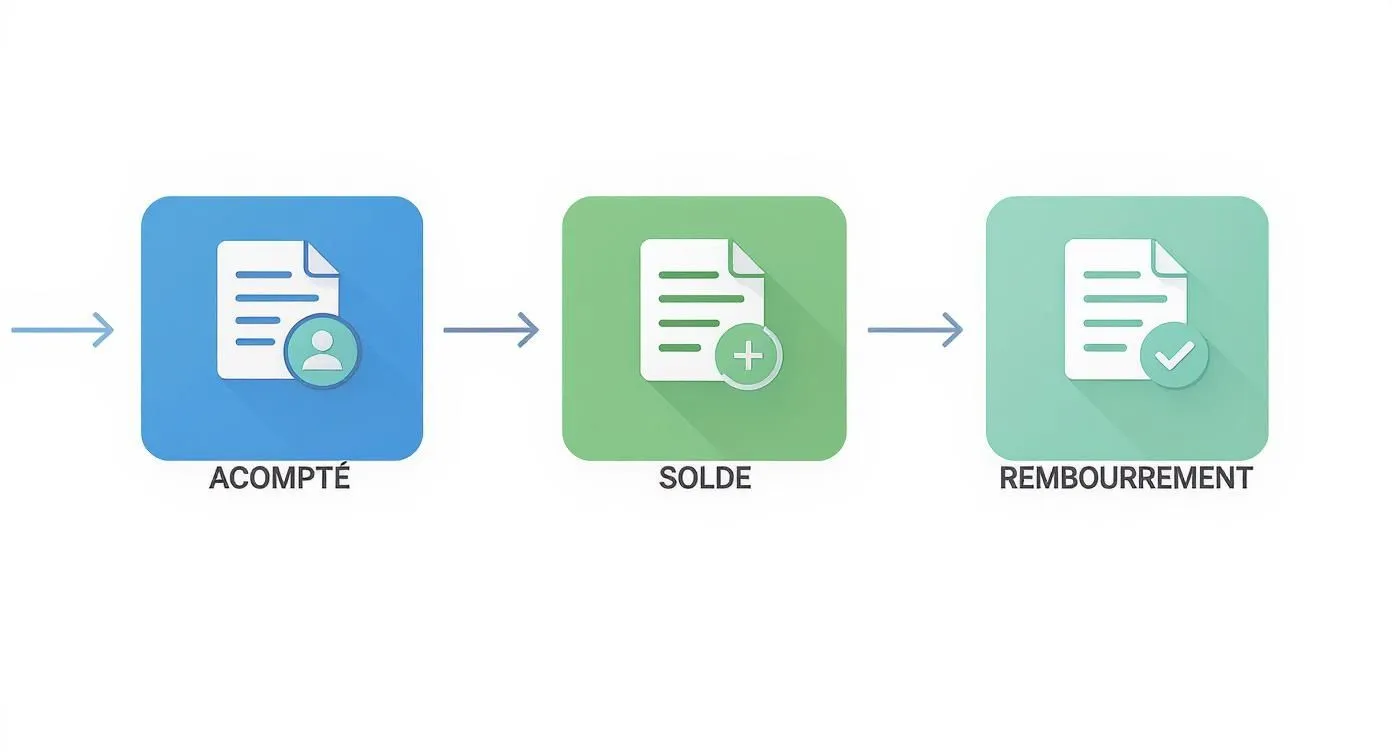
As this diagram shows, every payment step can be tracked and documented effortlessly, ensuring perfect traceability.
This structured approach is essential for keeping your finances healthy. For those who want to go further, integrating an ERP system lets you connect your invoicing to other parts of the business, such as inventory management or project tracking.
Ultimately, the goal is simple: free your mind from administrative constraints so you can focus on what you do best. To dig deeper, check out our tips on automating administrative tasks. You’ll see that investing in the right tools quickly pays for itself through the hours saved every month and the peace of mind you gain.
Frequently asked questions about payment receipts
Even with the best receipt template in hand, a few gray areas often remain. That’s perfectly normal. To help you clear up any last doubts, we’ve compiled the questions that come up most often.
The idea is to give you everything you need to manage your receipts without the slightest stress, whether facing a customer or preparing for an audit.
What’s the difference between an invoice and a receipt?
This is the number one point of confusion, yet the distinction is quite simple once you look at it the right way.
- An invoice is a request for payment. It tells your customer: “Here’s what you owe me for the work done or the product delivered.” It’s what officially creates the debt.
- A receipt is proof of payment. It only comes after the transaction and confirms that the debt has been settled. Its message is simple: “Payment received, we’re even!”
To put it simply: the invoice opens the dance by requesting payment. The receipt closes it by confirming the money has arrived. They’re two sides of the same coin, but they never come into play at the same time.
How long do I need to keep my receipts?
This isn’t just a recommendation — it’s a legal requirement. And the deadlines are very clear. Best to keep them in mind to avoid unpleasant surprises.
For a business in France, the rule is simple: all accounting documents, including receipts justifying your income, must be kept for 10 years. Note that this period only starts at the close of the relevant fiscal year.
For an individual, even though the requirements are more relaxed, it’s strongly recommended to keep important receipts for at least 5 years. This corresponds to the statute of limitations for most civil debts.
Is a signature really mandatory?
Great question. Is an unsigned receipt valid? The short answer is yes. Legally, a signature is not a mandatory element on a payment receipt.
In most cases, especially between businesses, proof of payment already exists elsewhere. A bank transfer, for example, leaves a trail that’s hard to dispute. The strength of a receipt comes primarily from the information it contains: who paid whom, how much, when, and for what.
That said, signing the receipt is still a very good habit to keep. It costs nothing and strengthens the document’s value. It’s a gesture that proves the document really came from you and can cut short any discussion in case of a dispute.
Juggling quotes, invoices, and receipts shouldn’t take up all your time. With Bizyness, you can automate the creation and sending of all your management documents. You’ll save precious time, strengthen your brand image, and finally be able to focus on what matters most: growing your business. Discover how to simplify your daily routine at https://www.bizyness.fr.
