

 Français
Sole trader quote template: simple and compliant, free to download
Get a free, compliant sole trader quote template with all the mandatory information you need to secure your sales and cash flow.
A quote template for sole traders isn’t just an administrative scrap of paper. It’s much more than that: it’s your first real sales tool. A clean, clear document with zero mistakes changes everything. It reassures your prospect, shows you’re a professional, and protects you legally before you’ve even started work.
Why a flawless quote is your best salesperson
We tend to see the quote as a chore, a formality to rush through. Big mistake. In reality, it’s the very first building block of your relationship with a client. This is the document that turns a simple first contact into a concrete project, with a scope and a budget. For a sole trader — whether you’re a craftsperson, a consultant, or a digital freelancer — it’s a golden opportunity to show your professionalism.
Conversely, a sloppy quote can quickly turn into a nightmare. Missing information, a rushed calculation, careless formatting… not only can it cost you the contract, it can also crush your reputation. The risks are far from trivial:
- Instant loss of credibility: a vague or incomplete document, and doubt sets in. Your potential client will wonder if you’re really capable of handling their request.
- A source of misunderstandings and disputes: if the description of your services is vague, you open the door to endless negotiations and arguments over what was or wasn’t included.
- Guaranteed late payments: without clear payment terms (deposit, balance, deadlines), you’ll struggle to manage your cash flow. It’s an open door to financial trouble.

Turn this obligation into your greatest strength
Think of your quote as an extension of your brand image — the very first “deliverable” your client will receive from you. A polished, personalised, and complete document proves one essential thing: you’re organised and you respect your client and their project.
A professional quote isn’t just a price list. It’s a contract of trust. It sets the rules of the game, protects everyone, and lays the solid groundwork for a successful collaboration.
The world of independent workers is booming. Take August 2025, for example: a record was broken with 68,464 micro-businesses created in a single month in France. For all these new entrepreneurs, knowing how to create compliant quotes is the first real challenge in winning clients, whether in services or e-commerce. You can read this full analysis of business creation trends to learn more.
Getting into the good habit, right from the start, of using a rigorous sole trader quote template will save you a huge amount of time and spare you plenty of headaches. It’s a small investment for great peace of mind.
The mandatory information that secures your quote
A quote isn’t just a price list. Once your client signs it, this document becomes a genuine contract. Every piece of information needs to be there for a good reason: to clearly identify you, describe the service without any ambiguity, and set the rules of the game. It’s your best insurance against disputes.
Think of your quote as the identity card of your future project. To be compliant, it must above all allow both parties to be identified at a glance. Forgetting even a small piece of information could weaken your position if a disagreement arises.
Who are you, and who are you working for?
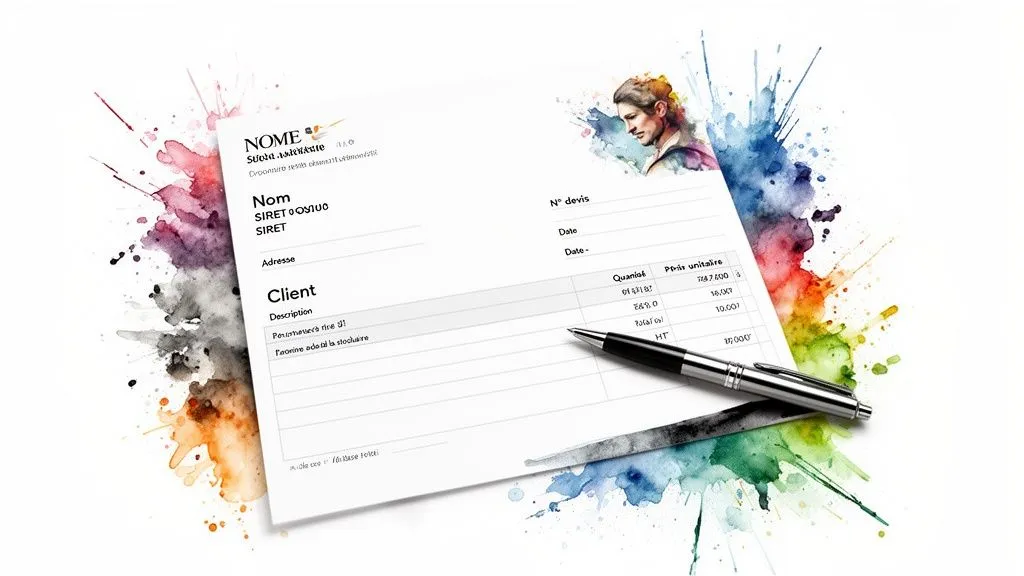
The basics are about presenting the parties involved. Start with your full details: first and last name, your micro-business address, and of course your SIRET number. Don’t forget the legal mention “Entrepreneur Individuel” or its abbreviation “EI” (Sole Trader), which must appear either before or after your name.
Then do the same for your client. State their name (or company name for a business) and their address. This clarity is non-negotiable, since it’s what officially defines who is committing to what by signing the document.
Framing the offer: what, when, and how?
Every quote must be unique. To make it traceable, two elements are essential: a unique quote number (adopt a logical sequence, such as QUOTE-2024-001, QUOTE-2024-002…) and the issue date. This simple numbering will save you a lot of trouble when it comes to your bookkeeping.
Next comes the heart of the matter: the detail of your services. Here, precision is your best friend. Leave no room for interpretation. Each line should detail a task or product with:
- A precise description of what you will do or deliver.
- The quantity (in hours, days, units, etc.).
- The unit price excluding VAT.
- The total amount excluding VAT for that line.
Trust me, this rigour will save you many painful conversations along the lines of “Oh, but I thought that was included!”.
For the vast majority of sole traders, one mention is absolutely essential: “VAT not applicable, art. 293 B of the French Tax Code”. If you benefit from the VAT exemption threshold, this short phrase is mandatory. It tells your client that your prices are net and there will be no surprises.
The clauses that protect you if something goes wrong
Beyond the strict legal framework, a few well-crafted commercial clauses are essential to set a healthy working framework and manage expectations. Get into the habit of always including:
- The validity period of the offer: state how long your prices are guaranteed. 15 or 30 days is common practice. It protects you if the cost of your materials or tools rises in the meantime.
- Payment terms: be crystal clear. Is a deposit required? Spell it out in black and white (for example, 30% upon signing the quote). Also clearly state the payment deadline for the balance (upon receipt of invoice, within 30 days, etc.).
- Delivery timelines: give a realistic estimate of the project’s start date and delivery deadline.
- Terms and conditions of sale: if you’ve drafted them, mention that they apply and indicate where your client can consult them.
By including these elements, your quote moves from a simple price proposal to a genuine, professional, and reassuring working tool. To go further and make sure you haven’t forgotten anything, our full guide on mandatory information for a quote breaks down every legal aspect for rock-solid compliance. Once you’ve mastered these points, your quote becomes your best asset for building a calm and solid client relationship.
Enough theory, let’s get practical! To get you started without wasting a minute, here’s a ready-to-use sole trader quote template. You can download it right now in Word or Excel format. The advantage? These are tools you already know inside out.
The goal is simple: to give you a solid, functional working base. These templates already contain all the essential sections for you to add your legal information, the detail of your services, and the final calculations.
So, Word or Excel?
Each format has its strengths. The best choice will mostly depend on your habits and the nature of your business.
- The Word template is perfect if you care about your brand image. It’s a breeze to add your logo, play with your brand colours, or adjust the layout. It’s the ideal option if aesthetics matter a lot to you and your quotes don’t require complex calculations. To go further, take a look at our article on the free Word quote template, it’s full of tips.
- The Excel template is the king of calculations. It can automatically handle adding up amounts excluding VAT and quantities, which is a real plus. But watch out, it’s also the champion of small human errors… A forgotten formula, a wrongly selected cell, and the total is wrong.
It’s precisely to avoid this kind of trap that a management tool like Bizyness changes the game. Take a look:
This image clearly shows how dedicated software brings everything together in one place. The time spent on a quote is reduced to a minimum, and the risk of error is almost nil.
How to personalise your template
Once you have the file in hand, the first step is to adapt it to your micro-business. Fill in, once and for all, the information that doesn’t change: your name, address, SIRET number, and don’t forget the “EI” mention. Remember to add your logo to the header — it instantly looks more professional.
After that, all you need to do is duplicate this “master” file for each new client, adding the details of their request.
A friendly tip: these templates are great for getting started, but you’ll quickly hit their limits. They don’t let you track the status of a quote (accepted, declined), convert it to an invoice in one click, or manage numbering automatically. It’s an excellent first step, before moving on to a tool that really works for you.
This time saved isn’t a luxury. In 2025, France will have around 2.6 million active micro-entrepreneurs. Many struggle to earn a decent income, averaging between €590 and €670 per month. Every minute saved on paperwork is a minute you can spend finding clients or developing your offer. That’s where automation makes all the difference.
Mastering VAT and the exemption threshold: a piece of cake?
Tackling VAT as a sole trader can feel daunting. Yet it’s an essential point to master. Rest assured, when starting out, most micro-businesses benefit from the VAT exemption threshold.
What does that actually mean? Simply that you don’t charge VAT. Your prices are net of tax, which can be a real competitive advantage, especially if you’re targeting individual clients. For them, your rate will be lower than that of a standard business.
Be careful: for your sole trader quote template to be fully compliant, one mention is mandatory: “VAT not applicable, art. 293 B of the French Tax Code”. This is non-negotiable. Forgetting it could render your quote void in the eyes of the authorities and sow doubt among your clients.
What if I exceed the thresholds?
The exemption threshold is great, but it’s not forever. It depends on revenue caps. As soon as you cross them (either the increased threshold, or the base threshold for two consecutive years), the rules of the game change. You become liable for VAT.
This shift isn’t trivial — you need to plan for it. Your quotes and invoices will need to be fully revised to include VAT. Here’s what awaits you:
- Requesting an intra-community VAT number from your tax office (SIE).
- Updating all your documents: showing prices excluding VAT, the VAT rate (generally 20%), and the total including VAT.
- Declaring and paying the VAT you’ve collected on behalf of the state.
To make this clearer, let’s take an example. A service you used to charge €500 net will become €500 excluding VAT + €100 VAT (at 20%), for a total of €600 including VAT for your client. It’s crucial to explain this change to your loyal clients so they aren’t caught off guard. If you need more details, our article will help you find out whether you’re exempt from VAT.
Moving to VAT isn’t a punishment, it’s a sign your business is growing. Well managed, this milestone sets your business up for the future. This is where a tool like Bizyness becomes a valuable ally: it automates this change, applies the right rates at the right time, and helps you avoid costly errors.
The average income of a sole trader is between €590 and €670 per month in 2025. With social security contributions on the rise, every euro counts. A tool that automatically handles calculations and anticipates VAT thresholds is no longer a luxury but a necessity to protect your margin. You can dig deeper into the topic with this analysis of sole traders’ real income.
To help you see things more clearly, here’s a simple diagram for choosing the right tool for your quotes.
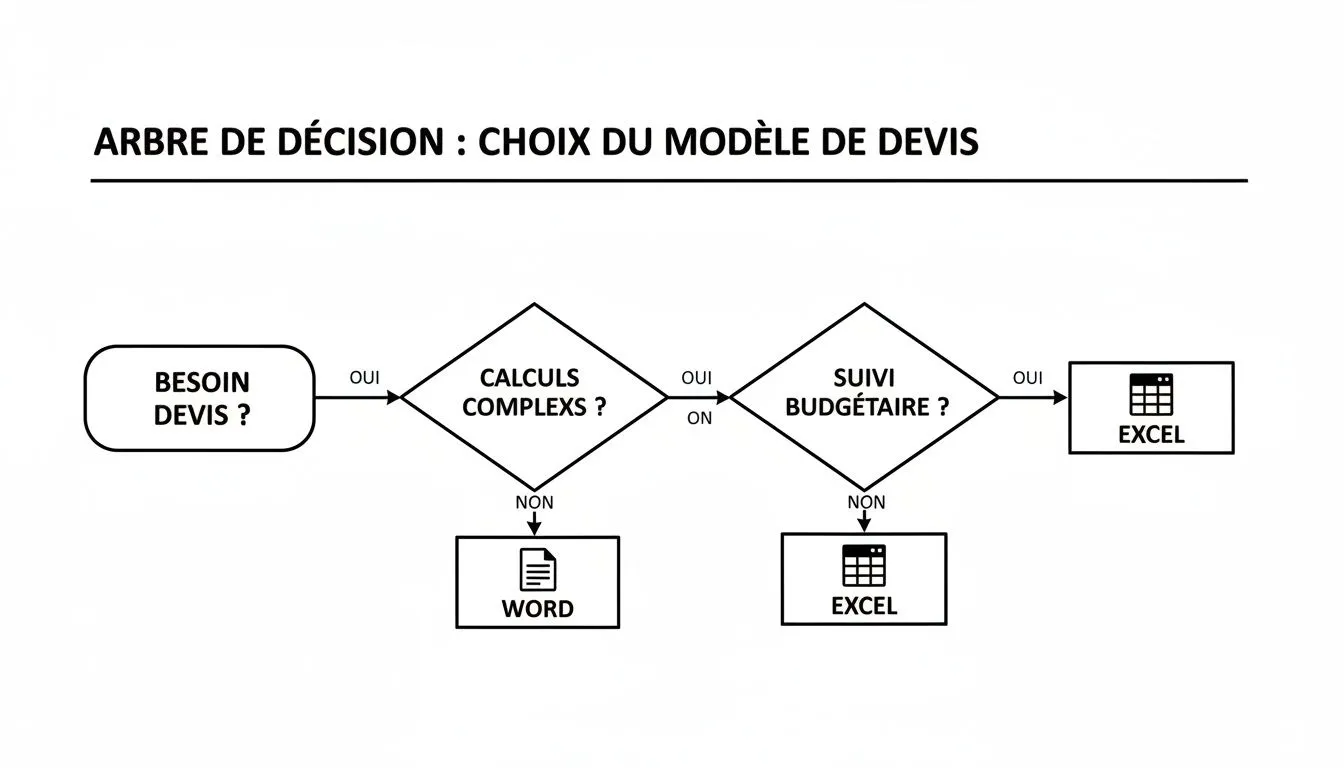
It’s clear: while Word and Excel are handy at the start, they quickly show their limits. Especially once VAT gets involved and the risk of a manual calculation error rises sharply.
Quote templates: the breaking point and the switch to an online tool
Starting out with a sole trader quote template in Word or Excel is an excellent reflex. It’s free, you already know the software, and it works perfectly for your first assignments. But let’s be honest, this method very quickly hits its limits as soon as your business gains a bit of momentum.
The time spent checking every calculation, making sure quote numbering stays consistent, or digging up an old client’s details… that’s time you’re not spending on your actual job. Not to mention small careless mistakes, like a formula breaking in Excel, which can create confusion and damage your professional image.
Reclaim your time and peace of mind
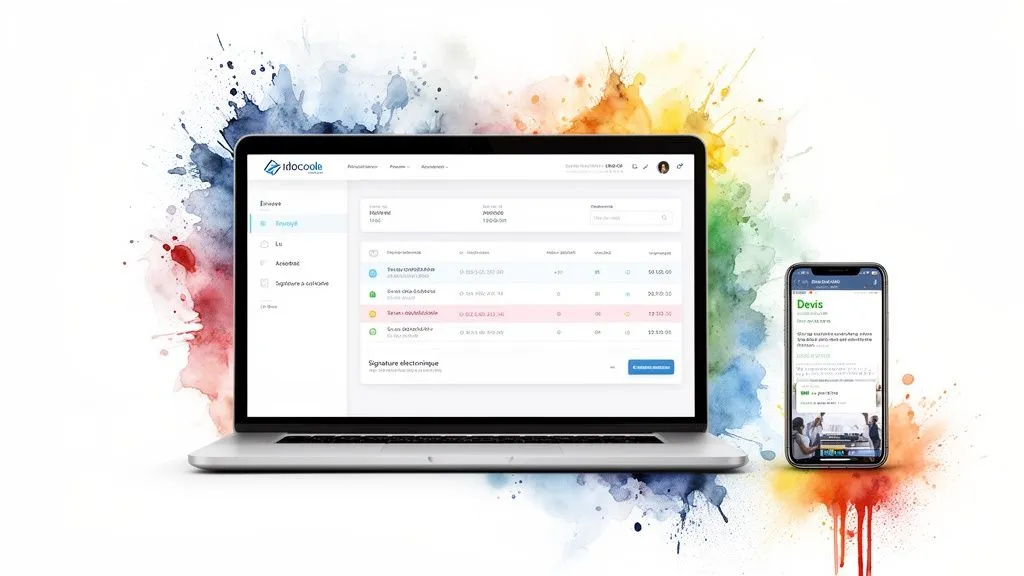
The most obvious benefit of dedicated invoicing software? Automation. No more headaches over numbering or worrying you’ve forgotten a mandatory mention. The tool handles it for you and guarantees every quote is spotless and legally compliant, in just a few clicks.
Picture the scene: a prospect calls you about an urgent project. Instead of digging through your files to find the right template, copying and pasting, and wrestling with spreadsheet cells, you simply open your app. You pick your client from the list (or create a new one in 30 seconds), add the services you’ve already saved, and there you go. The quote is generated, ready to send.
Switching from a Word template to quoting software is a bit like trading an old paper road map for a GPS. Both get you to your destination, but the second does it much faster, with less stress, and helps you avoid traffic jams.
Client management, finally centralised
A good online tool does much more than create documents. It becomes the true dashboard of your client relationships. All the information is stored in one place and accessible from anywhere.
What does that actually change day to day?
- A client database at your fingertips: no more digging through old emails for an address or a SIRET number. It’s all there, centralised and secure.
- One-click conversion to invoice: quote accepted? A single click is enough to convert it into an invoice. The numbering follows, the information is kept. It’s a huge time saver.
- Real-time tracking: this is the game-changing feature. You know exactly when your client opened the quote. No more chasing up blindly or wondering if they even received your proposal.
Features that boost your brand image
Beyond simple efficiency, dedicated software strengthens your credibility. It puts tools in your hands that, not so long ago, were reserved for big companies.
Take electronic signature, for example. It’s a small revolution. Your client receives the quote and can approve and sign it directly from their computer or phone. The process is smoother, faster, and has genuine legal value. It speeds up project approval and, ultimately, secures your cash flow.
And personalisation goes far beyond a simple template. You can create quotes that truly match your visual identity, with your logo, your colours, and a polished layout. It’s this kind of detail that makes the difference and reinforces the professional image you project. By freeing up hours every month, these tools let you focus on what matters: doing great work and growing your business.
Your questions about sole trader quotes, answered
Starting out as a micro-entrepreneur also means discovering a whole host of new administrative obligations. To help you see things more clearly, I’ve put together the answers to the questions that come up most often about quotes. The goal is for you to move forward with confidence.
Is a quote always free?
In theory, yes, a quote is free. It’s even a legal obligation in certain fields, such as personal services (once it exceeds €100 including VAT per month), removals, or funeral services.
But there are exceptions. Imagine that pricing a project requires you to travel a long distance or spend several hours on an in-depth technical study. In that case, it’s entirely legitimate to charge for this preparatory work. The one golden rule: discuss it with the client beforehand and get their agreement on the amount. Transparency is the foundation of a trusting relationship.
Can a signed quote be cancelled?
Once signed, a quote changes status: it becomes a genuine contract. Whether it can be cancelled depends entirely on your client.
- If it’s a business client: cancellation is only possible if you included a withdrawal clause in the quote or in your terms and conditions of sale. Otherwise, the contract is firm and final.
- If it’s an individual: the law protects them. They have a 14-day right of withdrawal, but note that this only applies if the contract was signed remotely (on your website, by email…) or outside your business premises (for example, at their home).
Whatever happens, a good conversation is always better than a long dispute. Trying to find an amicable solution is often the best way to preserve the business relationship.
One thing to remember: a signed quote has the same legal value as a contract. The law requires you to keep it for 5 years. My advice: always keep a copy of your quotes and invoices — it’s essential for your bookkeeping and will protect you in case of a problem.
Quote vs. invoice: what’s the actual difference?
This is a classic point of confusion at the start, but the distinction is fundamental.
The quote is your commercial proposal. It’s a document you send before the project to detail what you’re going to do and at what price. As long as it isn’t signed, it has no accounting value.
The invoice comes after the project. It’s an accounting document that proves your client owes you money. It formalises the debt. A quote will never replace an invoice. In fact, a good practice is to always mention the quote number on the corresponding invoice for flawless tracking.
What if I don’t issue a quote when it’s mandatory?
The authorities don’t take this lightly. Forgetting or refusing to provide a quote when the law requires it can cost you dearly: the administrative fine can go up to €3,000. A good reason to build the right habits from the start, don’t you think?
Tired of racking your brain over mandatory mentions and manual calculations? Simplify your life and save a huge amount of time with a tool like Bizyness. It lets you create professional, compliant quotes and invoices in just a few clicks. You’ll finally be able to focus on what you love: your craft.Try Bizyness for free today!
