

 Français
 VAT for sole traders and invoicing - Essential guide
Master VAT for sole traders and invoicing with our tips to optimize your tax situation and create compliant invoices.
Understanding VAT to succeed as a sole trader

VAT (Value Added Tax) is a fundamental aspect of running a sole trader business. Understanding how it works is essential for sound administration and a transparent relationship with your customers. While the topic may seem complex at first, a step-by-step approach helps demystify it and turn it into an asset for your success.
The different VAT rates and how they apply
The French VAT system includes three main rates: 20% (standard rate), 10% (reduced rate) and 5.5% (super-reduced rate). The rate applicable to your business depends on the nature of the services or products you sell. For example, service provision is generally subject to the standard rate of 20%. Certain food products and books benefit from a reduced rate of 10%. Finally, the super-reduced rate of 5.5% applies to essential goods, such as certain medications.
It is essential to identify the VAT rate applicable to your business in order to issue correct invoices. This rate has a direct impact on the final price paid by your customers and, consequently, on your profit margin.
The VAT exemption scheme: simplified but sometimes restrictive
Many sole traders opt for the VAT exemption scheme (franchise en base de TVA). This simplified regime exempts you from charging VAT to your customers and reclaiming it on your purchases. The main advantage lies in simplified administrative procedures, notably the absence of VAT returns.
However, this regime can have drawbacks if you make significant investments or if your customer base is mostly made up of VAT-registered professionals. The latter might prefer a supplier who charges VAT, so they can deduct it.
VAT liability: opportunities and obligations
Becoming VAT-liable can be a choice, or an obligation if your revenue exceeds certain thresholds. The sole trader sector is booming, with a significant increase in the number of active traders and average revenue. In the second quarter of 2023, there were 2.715 million administratively active sole traders, an increase of 8.6% year-on-year. Learn more about how the sector is evolving.
As a VAT-registered business, you collect VAT on behalf of the state and can deduct the VAT paid on your business expenses. This mechanism can represent a significant financial advantage, but it also involves more complex reporting obligations.
Choosing the right regime for your situation: a strategic decision
The choice between the VAT exemption scheme and VAT liability is a strategic decision that should be made based on your business, your customer base and your growth objectives. It is essential to analyze the pros and cons of each option to optimize your tax situation and profitability. Don’t hesitate to consult an accountant to help you through this process and choose the solution best suited to your situation regarding VAT for sole traders and invoicing.
VAT exemption thresholds: navigating the changes
A good understanding of VAT exemption thresholds is essential to the success of your sole trader business. These thresholds, which determine the obligation to collect VAT, depend on the nature of your business. It is therefore important to know these limits and the associated grace periods well in order to anticipate changes and adapt your strategy.
Current thresholds and their impact
VAT exemption thresholds currently differ for service provision, sales of goods and mixed activities. The threshold for service provision is set at €37,500. For sales of goods, the threshold is €85,800. Exceeding these thresholds triggers the obligation to collect VAT, which has a direct impact on your invoices and your customer relationships.
For example, if you are a service provider and your revenue exceeds €37,500, you will need to charge VAT. This change can affect your rates and requires an adaptation of your accounting management, particularly regarding VAT for sole traders and invoicing.
For sole traders, optimizing your processes is crucial. Discover how to use no-code tools to simplify your business.
Grace periods
Grace periods are provided to help you cope with fluctuations in your revenue. If you exceed a threshold in one year, you may, under certain conditions, benefit from a VAT exemption the following year.
This mechanism helps avoid an abrupt shift to VAT liability and provides valuable time to adapt. Take the example of a merchant who slightly exceeds the threshold during a particularly good year. Thanks to the grace period, they can keep their VAT exemption the following year, giving them time to adjust their business if necessary.
The 2025 finance bill and its consequences
The 2025 finance bill initially planned to lower the VAT exemption threshold for micro-entrepreneurs to €25,000 per year, which would have had a major impact on exemptions. According to the Fédération nationale des auto-entrepreneurs (FNAE), this measure would have affected approximately 250,000 additional sole traders and could have led to price increases of 20% for some customers. This measure was ultimately suspended pending consultation. More information on this topic.
To better understand the exemption thresholds, here is a comparison table:
VAT exemption thresholds by type of activity
Comparison table of current VAT exemption thresholds by type of activity
| Type of activity | Current exemption threshold | Proposed threshold | Impact |
|---|---|---|---|
| Service provision | €37,500 | €25,000 (suspended) | Potential lowering of the threshold |
| Sale of goods | €85,800 | €25,000 (suspended) | Potential lowering of the threshold |
| Mixed activities | Calculated pro rata | €25,000 (suspended) | Potential lowering of the threshold |
This table highlights the significant difference between the current thresholds and the threshold proposed in the 2025 finance bill. The suspension of this measure offers a reprieve for sole traders, but it remains important to stay informed of upcoming changes.
Anticipating and adapting
Anticipating when thresholds will be crossed is essential to avoiding tax difficulties. Tracking and forecasting tools let you monitor your revenue and anticipate the impact of becoming VAT-liable. By mastering these aspects, you turn a regulatory constraint into an opportunity for controlled growth. Think of these thresholds as milestones to cross consciously, adapting your business strategy and administrative management for a smooth transition.
Creating flawless invoices with or without VAT
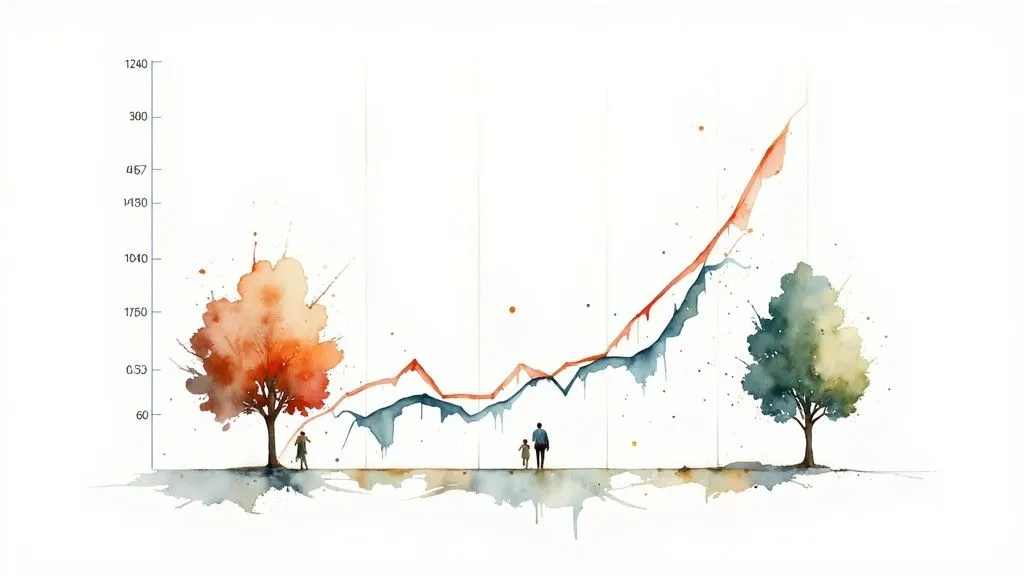
Careful invoicing is essential to the credibility of your sole trader business. This document, far more than a mere formality, reflects your professionalism and directly impacts your customer relationships. Let’s see how to create flawless invoices, whether or not you are VAT-registered.
Mastering the mandatory information
An invoice, with or without VAT, must include mandatory legal information. Your SIRET number, the issue date, the invoice number, a precise description of your services and your full contact details are essential. Missing this information can lead to penalties during an audit.
If your invoice is VAT-exempt, the wording “VAT not applicable, Article 293B of the French General Tax Code” is required. It indicates your VAT exemption status. If you are VAT-registered, you must indicate the rate applied, the amount excluding VAT and the amount including VAT.
Personalizing your invoices: your company’s image
Beyond legal obligations, personalizing your invoices strengthens your brand image. Adding your logo, choosing professional typography and a clear layout all contribute to a positive impression. Invoicing software like Bizyness can simplify these steps and save you time.
Automating your invoicing: a valuable time saver
Automating your invoicing is a major asset for gaining efficiency. Solutions like Bizyness let you generate invoices automatically, send them by email and track payments. Imagine saving up to 5 hours a month! This saved time can be devoted to growing your business.
Invoice templates for every sector
Every sector has its own specifics. Using an invoice template suited to your profession lets you follow industry conventions and present the relevant information. Whether you are a consultant, a graphic designer or a tradesperson, customizable templates are available to make creating your VAT for sole traders and invoicing easier. Bizyness offers sector-specific templates to simplify your processes.
Securing your invoices: expert advice
In the event of a dispute or a tax audit, flawless invoices are your best protection. Even minor errors can have significant consequences. Certified invoicing software compliant with standards, such as Factur-X, guarantees optimal legal security. Consult an accountant to check the compliance of your invoices and avoid costly mistakes. Sound advice can save you time and money, particularly regarding VAT for sole traders and invoicing.
Managing your VAT effectively on a daily basis
Managing VAT as a sole trader can seem complex. However, with good organization and the right tools, this tax obligation becomes an integral part of your business. Optimizing the management of your VAT for sole traders and invoicing ensures healthy cash flow and full compliance.
Simplifying VAT management
For effective management, setting up a clear and organized system is essential. Start by collecting VAT on your invoices, applying the rate corresponding to your sector of activity. Then carefully keep all receipts for your business expenses, as they will let you deduct the VAT paid.
Invoicing software like Bizyness can greatly simplify these processes. It automates VAT calculation and centralizes your expenses, making it easier to prepare your returns. In addition, Bizyness offers payment tracking and report generation features for optimal control of your cash flow.
Choosing the right tax regime
Two tax regimes are available to VAT-registered sole traders: the simplified real regime and the standard real regime. The choice depends on your revenue and the complexity of your business. The simplified regime offers lighter management with annual returns and semi-annual installments. The standard regime involves monthly returns but allows for more precise VAT deduction.
If your business generates stable revenue, the simplified regime may be sufficient. Conversely, if your business experiences significant fluctuations, the standard regime could be more advantageous.
It is important to stay up to date with regulatory changes. The reform initially planned for 2025, introducing a single threshold of €25,000, has been suspended. Despite this, a large proportion of sole traders would remain exempt from VAT, with average annual revenue estimated at €19,600. Find out more about this reform.
Here is a summary table to help you choose the regime best suited to your situation:
VAT return calendarDeadlines and filing procedures depending on the chosen tax regime
| Tax regime | Frequency | Deadlines | Procedures |
|---|---|---|---|
| Simplified real regime | Annual (plus semi-annual installments) | Annual return: May of the following year. Installments: July and December | CAHT return and online payment |
| Standard real regime | Monthly | The 24th of the following month | CA3 return and online payment |
This table shows the main differences between the two VAT tax regimes. Don’t forget to consult an accountant for personalized advice.
Digital tools, your allies
Many digital tools simplify the management of your VAT for sole traders and invoicing. From invoicing software like Bizyness to online accounting apps, these solutions automate tasks, save you time and minimize errors.
Anticipating and adapting
VAT regulations can change. Stay informed and adapt your strategy. By using effective tools and staying proactive, VAT management becomes an asset for your micro-business. Don’t hesitate to consult an accountant for personalized advice to optimize your tax situation.
Reclaiming VAT: maximize your rights without risk
As a VAT-registered sole trader, you collect this tax on behalf of the state. You can also reclaim VAT on your business expenses. This VAT deduction represents a significant financial advantage for your business and positively impacts your VAT for sole traders and invoicing. This mechanism lets you deduct the VAT paid on your business purchases from the VAT collected, reducing the amount paid to the state.
Identifying expenses eligible for VAT recovery
Only business expenses directly related to your activity and substantiated by an invoice with all the required legal information, including the VAT amount, are deductible.
Here are some examples of eligible expenses:
- Purchases of raw materials and supplies: For a tradesperson, VAT on the purchase of wood, metal or paint is recoverable.
- Rent and rental charges: VAT on the rent of business premises is deductible.
- Business travel expenses: VAT on train tickets, fuel or tolls is recoverable.
- Purchases of IT equipment and software: VAT on computers, printers or business software is deductible.
- Communication and marketing costs: VAT on advertising, flyer printing or website creation is recoverable.
Keep all your invoices to optimize the recovery of VAT for sole traders and invoicing. Invoicing software like Bizyness can help you centralize these documents and automate certain tasks.
Building a solid file for smooth recovery
A complete and organized file is essential to avoid problems during a tax audit. Make sure every invoice includes the mandatory information. Sort your invoices by category and in chronological order.
A numbering system can make it easier to track documents. Bizyness offers filing and archiving features to simplify the management of your invoices.
Sector-specific aspects of VAT recovery
VAT deduction rules can vary depending on your sector of activity. The rules for a restaurant owner differ from those for a marketing consultant. Find out about the specific rules for your field.
An accountant can support you and help you optimize your VAT recovery. Mastering these aspects turns VAT for sole traders and invoicing from a constraint into a financial lever.
Concrete examples of VAT optimization
Take the example of Sophie, a graphic designer, and Marc, a plumber. Sophie buys a computer for €1,500 including VAT (of which €250 is VAT) and Marc buys tools for €2,000 including VAT (of which €333 is VAT). Thanks to the deduction, Sophie recovers €250 and Marc recovers €333. This mechanism reduces their costs and lets them reinvest.
These examples illustrate the impact of VAT recovery on the cash flow of sole traders. Optimizing this process strengthens your business’s financial stability and improves your profitability. Bizyness can simplify the management of your VAT for sole traders and invoicing and maximize your recovery.
Strategies for adapting to future VAT changes
The tax environment, particularly regarding VAT for sole traders, is constantly evolving. Anticipating these changes is essential to turning constraints into opportunities and maintaining the competitiveness of your sole trader business. This article explores trends and adaptation strategies to navigate this fluctuating tax environment with confidence.
Understanding upcoming changes and challenges
VAT legislation for sole traders is likely to be amended. The example of the 2025 finance bill, although suspended, shows the government’s willingness to adapt the system. Keeping up with tax news and parliamentary discussions is therefore essential. Resources such as the official Tax Authority website and publications from professional federations will help you stay on top of changes.
Preparing your business for potential changes
Adapting starts with regular information monitoring. Subscribe to newsletters from official bodies and follow tax experts to anticipate changes to VAT.
Diversifying your customer base can also be a worthwhile strategy. If your customers are mostly private individuals, consider offering your services to professionals, who can reclaim VAT. This can soften the impact of a potential VAT increase on your prices.
Optimizing your management to minimize the impact
Effective invoicing software like Bizyness will support you in managing your VAT. It automates calculations, simplifies returns and lets you quickly adapt your invoicing in the event of regulatory changes.
Rigorous cash flow management is also fundamental. Anticipating VAT changes lets you adjust your rates and plan your expenses to maintain healthy cash flow and avoid surprises.
Turning constraints into strengths
Some entrepreneurs have managed to turn VAT changes into competitive advantages. The obligation to charge VAT can, for example, be an opportunity to rethink your positioning and target a professional customer base.
Implementing optimized processes to manage VAT can also improve your overall business efficiency and save you valuable time.
Concrete examples of adaptation
Take the example of a sole trader offering translation services. Facing a potential VAT increase, they can develop a specific offer for businesses, including additional services such as proofreading or layout. This justifies a rate increase and helps them stand out from the competition.
Another example: a tradesperson anticipating a VAT change can invest in more efficient equipment, allowing them to deduct the VAT and increase their productivity. They thus turn a tax constraint into a profitable investment.
By adapting your strategy and using the right tools, such as Bizyness, you can not only minimize the impact of VAT changes, but also take advantage of them to grow your sole trader business. Anticipate future changes now and ensure the longevity of your business. Simplify your VAT management and focus on growing your business with Bizyness. Try it free!