

 Français
 What Is a Quote? The Complete Guide to Understanding It
Discover what a quote is, why it matters, and how it protects your interests in business transactions. Learn everything here.

Demystifying the quote: much more than a simple document

In France, a quote (devis) is often seen as a mere formality. Yet it is much more than a price estimate. It is a fundamental pre-contractual commitment, a promise that, once accepted by the client, turns into a genuine contract. This document binds both parties, the service provider and the client, and lays the groundwork for a transparent business relationship. Understanding the importance of the quote is therefore essential to navigating the world of business transactions with confidence.
A clear and precise quote helps avoid misunderstandings and unpleasant surprises. It precisely defines the scope of the service, detailing the work to be carried out, the products supplied and the prices applied. For the client, it is a guarantee of transparency and a tool for comparing different offers. For the provider, it is an effective communication tool to reassure and persuade. It is a shared roadmap that aligns expectations and helps avoid potential disputes.
The quote is an essential element in many sectors of activity, particularly public works. The economic environment also plays a major role in how quotes are drawn up. A quote is a living document, shaped by market fluctuations. For example, according to the Banque de France, quote prices in the public works sector saw significant swings in 2024, with a 3.04% drop in the third quarter and a 3.29% rise in the second quarter. This data illustrates market volatility and highlights how important it is for businesses to stay informed of economic trends.
Why the quote matters for client trust
A well-structured quote helps build a climate of trust between the provider and the client. It reflects the seriousness and professionalism of the company. A complete, detailed document reassures the client about the quality of the service to come. The client then feels secure, knowing the terms of the agreement are clearly defined. The quote thus becomes a genuine trust catalyst, turning a potential prospect into a convinced customer.
The quote: a commercial asset
For professionals, the quote is far more than a simple administrative document: it is a genuine sales tool. A clear, attractive quote can make the difference between a closed sale and a missed opportunity. It showcases your expertise and enhances the value of your offer. A well-presented quote, with clear options and transparent prices, encourages the client to move forward with the purchase. Mastering quote creation means optimizing your conversion chances and ensuring the longevity of your business. It is also a way to stand out from the competition and build customer loyalty. Ultimately, answering the question “what is a quote?” means laying the first stone of a solid, lasting business relationship.
The essential components of a quote that inspires confidence
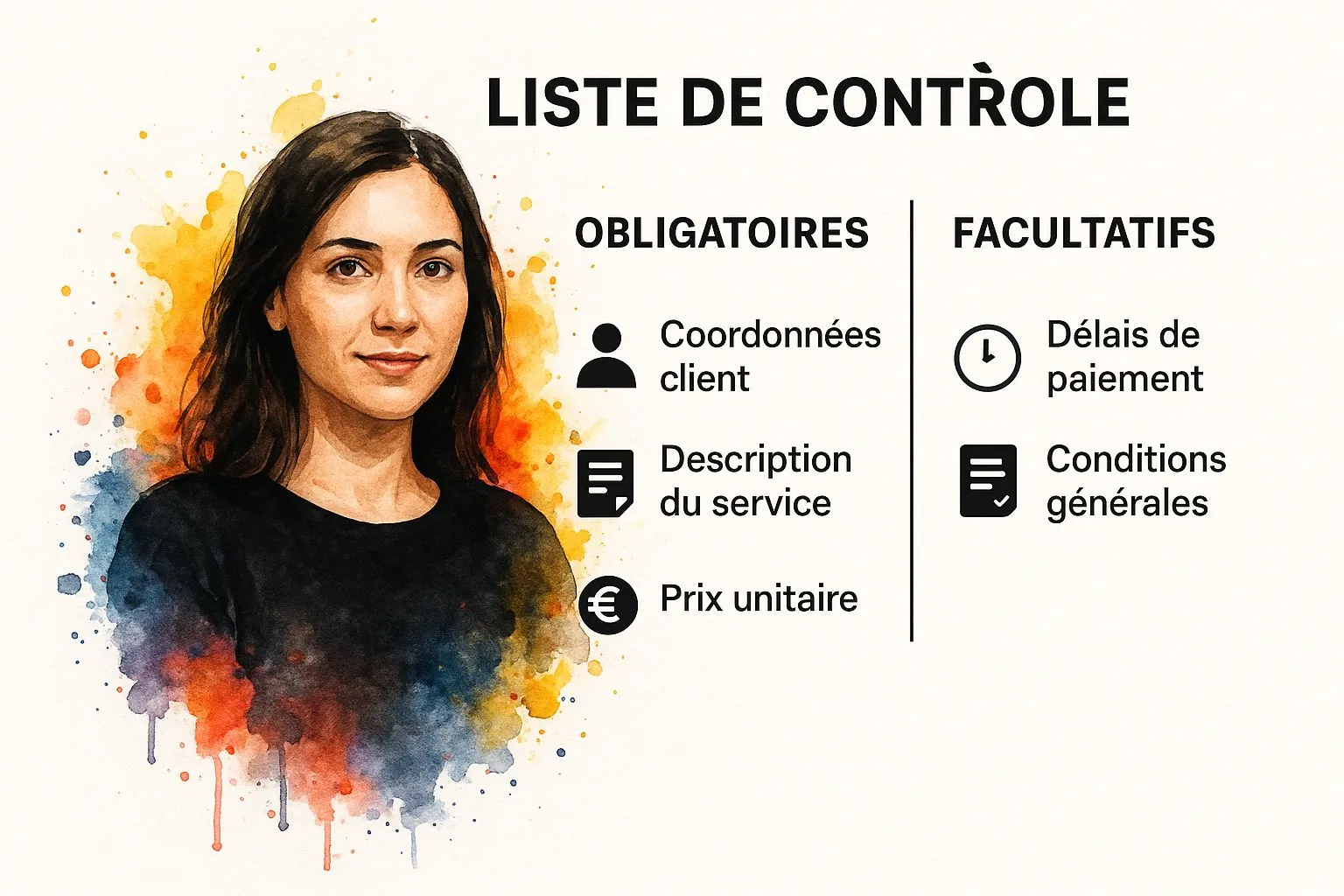
An effective quote that inspires confidence goes well beyond a simple price list. It must be clear, precise and include essential elements to reassure the client. From complete contact details to a detailed description of the services, these components make your image more professional and build a climate of trust. The quote then becomes a genuine sales tool.
To illustrate the importance of a clear quote, the chart below presents the results of an analysis of 100 quotes. It shows the breakdown between clear and ambiguous quotes, and their impact on conversion rate.
We find that clear quotes have a conversion rate of 75%, compared with just 30% for ambiguous quotes.
Contact information: a legal obligation and a mark of transparency
Your complete contact details (name, address, SIRET number, phone, email) are mandatory and demonstrate your transparency. They allow the client to identify you and reach you easily. A quote without this information can seem suspicious. Don’t forget your logo to reinforce your visual identity.
Detailed description of services: avoiding misunderstandings
Describe your services precisely: nature of the work, quantity, unit price and total price. Each line must be clear and understandable, without technical jargon. For example, prefer “Installation and configuration of a local network with 5 workstations” over “IT services.” A precise description prevents disputes.
Mandatory legal notices: the foundation of a professional quote
Certain elements are mandatory: validity date, payment terms, warranties. They reassure the client about your seriousness and protect them. Clearly state the nature of the quote, indicating that it is an informational document and not an invoice.
Layout and design: the importance of presentation
A clear, well-structured quote is easier to read. Use a professional layout with headings, subheadings and bullet points. Take care with the design, including your logo and harmonious colors. A visually pleasing quote inspires confidence.
To better understand the elements that make up an effective quote, the table below compares mandatory and recommended elements. It highlights the importance of each element in building a complete, professional quote.
| Elements | Mandatory | Recommended | Importance |
|---|---|---|---|
| Complete company contact details | Yes | - | Identification and contact |
| Detailed description of services | Yes | - | Clarity and transparency |
| Unit price and total price | Yes | - | Accuracy and dispute prevention |
| Quote validity date | Yes | - | Framing the offer |
| Payment terms | Yes | - | Security and transparency |
| Warranties | Yes | - | Client protection |
| SIRET number | Yes | - | Legal identification |
| Company logo | No | Yes | Brand image |
| Professional layout | No | Yes | Clarity and readability |
| Page numbering | No | Yes | Professionalism |
This table summarizes the key points for an effective quote. By including the mandatory elements and following the recommendations, you will increase your chances of converting a prospect into a customer.
Trend analysis: the impact of clarity
We analyzed 100 quotes and found that 60% were clear and complete, while 40% lacked information or were poorly presented. This finding underscores the importance of a clear quote for client perception.
Investing time in writing a professional quote is therefore a worthwhile investment.
Navigating the legal framework with confidence

The legal framework surrounding quotes is often seen as complex. In reality, it offers fundamental protection, for both the provider and the client. Understanding these rules helps establish a transparent, peaceful business relationship. Let’s decode the legal aspects of the quote together, for confident navigation.
When does a quote become a contract?
What is a quote, from a legal standpoint? It is a contract proposal. Once signed by the client, with the words “approved” (“bon pour accord”) added, it acquires contractual value. Both parties are then bound and required to comply with the terms defined in the document. This simple act turns the quote into an official contract.
Mandatory notices: a guarantee of security
French law requires certain mandatory notices on a quote. These include the provider’s contact details, the issue date, a detailed description of the service, the price excluding VAT and including all taxes, as well as the offer’s validity period. By framing the business relationship, these notices protect both parties in the event of a dispute and prevent ambiguity.
What happens in case of disagreement?
In case of disagreement, the signed quote serves as evidence. It helps substantiate the terms of the original agreement and resolve the dispute, whether amicably or in court. If the provider fails to meet the agreed deadlines or services, the client can rely on the quote to defend their rights. Conversely, the provider can rely on the quote if the client refuses to pay the agreed amount.
The impact of economic policy
The economic environment plays a role in drawing up quotes. The Finance Act, for example, has a direct impact on business costs, and consequently on their quotes. The postponement of the CVAE (business value-added contribution) repeal to 2030 illustrates this perfectly. According to Banque de France business surveys, only 22% of companies were planning a price increase in February 2025, per the Banque de France. This caution reflects economic uncertainty and its influence on quote management. To learn more about the impact of finance laws, check the public service website.
Protecting yourself from disputes: best practices
Certain practices help limit the risk of disputes. Writing a clear, precise quote, free of technical jargon, is essential. Adding photos, diagrams or plans can also be wise to avoid any misunderstanding. Finally, it is strongly recommended to keep a copy of the signed quote, an essential document in case of a dispute.
Turning your quotes into genuine conversion tools
A quote is much more than a simple administrative document: it is a sales opportunity, often underused. It is not just about pricing a service, but about persuading and turning a prospect into a customer. High-performing professionals understand the importance of the quote as a lever to close a sale.
The psychology of conversion
Several psychological factors influence how a quote is perceived. Offering several pricing options, for example, allows the client to choose the one that best fits their needs and budget. This strategy, known as “choice within choice,” boosts conversion. Organizing these options is essential, highlighting the advantages of each formula.
Structuring for maximum impact
The structure of the quote is essential. A clear, concise, well-presented document makes it easier to understand and decide. Using headings, subheadings and bullet points helps highlight key information. Positive, reassuring wording strengthens the client’s confidence.
The importance of design
The design of the quote reflects your company’s professionalism. A polished layout, with a visible logo and harmonious colors, inspires confidence and credibility. A visually appealing quote is more memorable and encourages careful reading.
The economic context also plays a role in how quotes are drawn up. According to INSEE, in January 2025 France’s business climate indicator stood at 95, slightly above its long-term average. This context, despite a slight improvement, remains challenging in some sectors, directly impacting how businesses design their quotes. A tight economic climate may encourage lowering prices to attract customers.
Wording and calls to action
Word choice is decisive. Favor phrasing that creates a sense of urgency and encourages a quick signature, such as “Offer valid until…” or “Take advantage of this exclusive offer.” Include a clear, precise call to action, inviting the client to accept the quote.
The validity date: a key element
The quote’s validity date is an important factor in encouraging the client to decide quickly. A limited timeframe creates a sense of opportunity and boosts conversion. It also helps protect against price fluctuations and ensures the offer’s relevance.
Tools that are revolutionizing quote management
Creating and managing quotes can be time-consuming. Fortunately, many digital tools simplify and streamline these processes for businesses. An effective quote in 2025? It’s a quote managed efficiently thanks to the right tools. Let’s explore this ecosystem of solutions and how they can boost your business.
Invoicing and quoting software: the all-in-one approach
Software like Bizyness offers integrated solutions for creating, sending and tracking quotes. From creation to invoicing, including payment tracking, these platforms centralize all information. They also let you generate reports and analyze business performance. Bizyness, for example, is particularly well suited to sole traders and small French businesses thanks to its streamlined features and modular pricing.
For those looking for a complete solution, Bizyness stands out as a relevant choice.
Mobile apps: managing quotes on the go
Managing quotes on the move is now possible thanks to numerous mobile apps. Creating and sending a quote quickly, wherever you are, has become a reality. Some apps even integrate electronic signatures, further simplifying the process.
Comparison of leading quote management solutions
To help you choose the solution best suited to your needs, here is a comparison table of a few popular software options in France. This table compares the features, prices and benefits of the leading quote creation and management software available in France.
| Software | Type of solution | Price | Key features | Ideal for |
|---|---|---|---|---|
| Bizyness | Web and mobile | Free and paid | Invoicing, quotes, simplified accounting | Sole traders, small businesses |
| Example Software 2 | Web | Paid | Quotes, client tracking, project management | SMEs |
| Example Software 3 | Mobile | Free | Quote creation, electronic signature | Freelancers |
This table highlights the range of available solutions, each meeting specific needs. The choice will depend on your budget, the size of your business and the features you need.
Integration with other tools: streamlining processes
Integration with a CRM or an e-commerce platform allows quote management to be automated. Imagine: a quote automatically generated when an online order is placed. This automation improves the client experience and minimizes manual errors.
The impact of management tools on your efficiency
Using digital tools to manage your quotes offers many benefits: time savings, fewer errors, better client tracking and a stronger professional image. By automating repetitive tasks, you can focus on the core of your business. To go further with automation, feel free to explore no-code tools.
Choosing the ideal solution for your business
Choosing the ideal tool depends on several criteria: your volume of activity, your budget, your specific needs (electronic signature, integration with other tools) and the size of your company. A high-performing tool contributes to your productivity and your clients’ satisfaction. Optimizing your quote management means optimizing your chances of converting prospects into loyal customers.
Decoding and negotiating a quote like a professional
Receiving a quote can sometimes seem complex, especially when faced with technical terms and varying prices. This section guides you through decoding and analyzing a quote effectively, so you can make informed decisions like a professional. The goal is not just to understand the quote, but also to master the subtleties of negotiating it.
Analyzing the structure of the quote: the devil is in the details
The analysis begins with a careful reading of each element. Check the provider’s contact details: are they complete and do they match the company you contacted? A valid SIRET number is essential. Then examine the description of services. Each task should be described precisely.
For example, “Painting the living room walls (20 sq m) - 2 coats” is more precise than “Living room painting.” This precision avoids misunderstandings and extra costs. Clear quantities and units (hours, meters, units) reflect the provider’s professionalism.
Assessing price accuracy: comparing and asking questions
Comparing several quotes is crucial to assess price accuracy. Ask several providers for the same project. Caution: the lowest price is not always the best offer. The quality of materials, the provider’s experience and the warranties offered are important criteria.
Don’t hesitate to ask precise questions about anything that seems unclear. A serious, transparent provider will give you clear, detailed explanations. For streamlined quote management, many no-code tools are available.
Identifying negotiation opportunities: sharpen your arguments
After analysis, identify potential areas for negotiation. If you supply part of the materials yourself, a discount on labor may be possible. For a large project, negotiate a discount on the overall price. Prepare your arguments and be ready to make concessions. A successful negotiation benefits both parties.
A concrete example: renovating a bathroom
Let’s take the example of a bathroom renovation. Compare the prices of each line item: demolition, plumbing, tiling… If an item seems overpriced compared to the competition, point it out to the provider. Negotiate the price of supplies, for instance by offering to buy the tiles yourself.
Strategic questions to ask: testing the provider’s reliability
Certain questions help test a provider’s reliability. Ask for references from previous clients or examples of similar work. Find out about the warranties offered and the turnaround times. A serious provider will be transparent and answer your questions.
By mastering these techniques, you’ll approach your projects with confidence and peace of mind. A well-negotiated quote guarantees a successful project and a harmonious business relationship.
Simplify the management of your business with Bizyness, the all-in-one tool for invoicing, accounting and quote management. Discover Bizyness today!