

 Français
The guide to online business accounts for sole traders
Discover our guide to online business accounts for sole traders. Obligations, benefits and criteria to choose the best offer and manage your business.
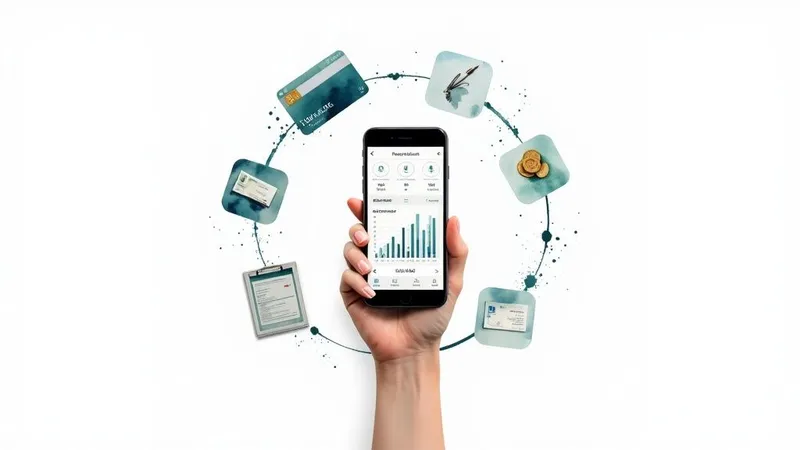
Far from being a mere administrative constraint, an online business account for sole traders is a genuine strategic ally for running your business. It radically simplifies your day-to-day management, all at much lower rates than traditional banks.
Why the online business account is a real game-changer
The micro-entrepreneur (sole trader) status has shaken up the French economic landscape, giving incredible flexibility to thousands of independent workers. This inherently agile status calls for tools that match it. Gone are the days of endless bank procedures and opaque branch fees. Today, people want instant, efficient, autonomous solutions.
In this context, choosing your bank is no longer a minor detail. It’s a decision that directly impacts your productivity and peace of mind.
A good online business account for sole traders is a bit like your business’s co-pilot. It anticipates your needs, automates low-value tasks and gives you a clear view of your cash flow. The result: you can finally focus on what really matters — your craft.
A solution born from explosive growth
The success of the micro-entrepreneur status is phenomenal. To give you an idea, INSEE recorded more than 1.1 million businesses created in France in 2024. Of that total, 64.5% were micro-entreprises, representing 717,200 new registrations! Faced with this wave, the banking world had to adapt and create offers designed for these new entrepreneurs.
This generation of independent workers, often very comfortable with digital tools, has very specific expectations:
- Speed: Being able to open an account in under 10 minutes from your sofa has become the standard.
- Simplicity: A clear, intuitive interface to manage transfers, payments and documents is non-negotiable.
- Time-saving tools: Creating quotes and invoices directly from the app, or benefiting from automatic bank reconciliation, is a precious time saver.
- Transparent, controlled costs: Online offers are often up to three times cheaper, with even free plans to help you get started.
Ultimately, the online business account perfectly embodies the spirit of the micro-entreprise: freedom, agility and cost control.
The business bank account for sole traders: decoding a legal obligation

The question of a dedicated bank account is a real headache for many sole traders starting out. Is it really mandatory? For whom? And since when? Let’s clear things up so you can focus on what really matters: growing your business.
At first glance, the idea of separating your business and personal finances looks like yet another administrative burden. Yet it’s one of the best habits to adopt from day one. It’s the foundation for protecting your money and having a clear, precise view of your micro-entreprise’s financial health.
Imagine trying to follow a complex recipe by mixing all the ingredients at random in the same bowl. The result would be chaotic, to say the least, wouldn’t it? That’s exactly what happens when your personal and business transactions get tangled up in a single bank account.
The famous €10,000 threshold
Fortunately, the PACTE law of 22 May 2019 simplified things for the smallest businesses. It introduced a very precise threshold, which is the real trigger for this obligation.
The obligation to open a bank account dedicated to your business only applies if your annual revenue exceeds €10,000 for two consecutive calendar years.
In other words, if you stay below this threshold, the law doesn’t require anything of you. Be careful, though: exceeding this cap for just one year isn’t enough. The obligation only kicks in if it happens two years in a row.
Let’s take a concrete example: you earn €12,000 in revenue in 2024, but only €8,000 in 2025. In this case, you’re still not required to open a dedicated account. The obligation would only start on 1 January 2026, if you exceeded €10,000 again in 2025.
A “dedicated” account doesn’t mean a “business” account
This is where an important nuance comes into play, and it could save you money. The law requires a dedicated account, but not necessarily a business account. What’s the difference?
- A dedicated account is simply another standard current account that you use exclusively for your business: collecting client payments, buying equipment, paying URSSAF contributions, etc.
- A business account is a banking offer specifically designed for companies. It often comes bundled with additional services: invoicing tools, insurance, payment terminals…
In practice, the nuance is more complex. If you try to open a second personal account at your traditional bank and explain it’s for your business, chances are you’ll be redirected to a “pro” offer, which is much more expensive.
This is precisely where the online business account for sole traders stands out. It offers the best of both worlds: the useful features of a business account, but at ultra-competitive rates (or even free), often far more attractive than a second standard current account.
Why separate your accounts, even without an obligation?
Waiting until you hit the legal threshold is a mistake many beginners make. In reality, by separating your finances from day one, you do yourself a huge favour.
First, it radically simplifies your revenue declarations to URSSAF and makes a potential tax audit far less stressful. With a 100% dedicated account, every line on your bank statement is a business transaction. No more tedious sorting to distinguish a dinner with friends from a supply purchase.
Second, and this is crucial, you get an instant view of your cash flow. At a glance, you know exactly how much your business has collected and what’s left once expenses are paid. This is the essential foundation for making good decisions and running your business with peace of mind.
The concrete benefits for your micro-entreprise
Of course, there’s the legal obligation. But seeing the online business account for sole traders only through that lens misses the point. In reality, it’s a strategic decision that can truly change your day-to-day life as an independent worker. It’s a bit like switching from an old, rusty toolbox to an ultra-efficient digital Swiss Army knife.
The most obvious argument is price. Online bank offers are often up to three times cheaper than business accounts from traditional banks. Forget account-management fees that creep up without warning and obscure commissions on every little operation. Here, the rule is simple: clear pricing, generally a fixed monthly subscription, so you know exactly what you’re getting into.
Speed and accessibility that change everything
Picture this: you’re comfortably sitting on your sofa and, in under 10 minutes, your business account is open. Just your smartphone and a few documents at hand. That’s exactly what most online providers offer today. A speed that’s become essential given the growing number of independent workers launching their businesses.
It’s a real phenomenon. By mid-2024, URSSAF counted 2.971 million active sole traders, an increase of over 8% in one year. This explosion has pushed banks to adapt quickly by offering fully digital services, perfectly tailored to the expectations of a new generation of entrepreneurs. For those who like numbers, the full statistics are available on INSEE’s website.
And this simplicity doesn’t stop at sign-up. Your bank now fits in your pocket, accessible 24/7. An urgent transfer, checking a balance late at night, blocking a card on the spot… everything happens instantly, without waiting for branch opening hours.
Built-in management tools that simplify your life
The real strength of an online business account lies in the tools it comes with. Your banking app turns into a genuine dashboard for running your business. This is where the magic happens.
- Quote and invoice creation: In a few clicks, you produce professional, legally compliant documents directly from the app. You send them straight to your clients and track in real time whether they’ve paid.
- Automatic expense categorisation: The app is smart enough to sort your transactions on its own (supplies, travel, contributions…). This makes preparing your declarations much less painful and gives you a clear picture of where your money goes.
- Real-time notifications: You’re notified as soon as an invoice is paid or a major direct debit goes through. No more stressing over the unknown — you stay in full control of your cash flow.
Far from being mere gadgets, these features automate administrative tasks that take up a huge amount of your time and reduce the risk of errors. And to go even further, many integrate seamlessly with accounting software for sole traders, creating a complete management system.
Extra services, genuinely designed for independent workers
Finally, many of these business accounts don’t stop there. They add services specifically designed to secure and grow your business. This is what makes all the difference compared to a simple current account you’d have dedicated to your business.
Among the most useful extras, you’ll often find:
- Professional insurance: Some plans directly include Professional Liability Insurance (RC Pro), legal protection or even hospitalisation coverage. This is a real plus that saves you from juggling multiple contracts.
- Payment terminals: You can easily get a small mobile card reader so your clients can pay you simply, often with very attractive commission rates.
- Responsive customer support: Contrary to what you might think, customer service is often a strong point. Accessible via chat, email or phone, advisors know the challenges independent workers face and give quick, relevant answers.
In short, an online business account is much more than a place to store your revenue. It’s a genuine ecosystem of services that eases your mental load, protects your business and gives you back time to focus on what you do best: your craft.
How to compare and choose the best online business account
Faced with a jungle of offers, finding the right online business account for sole traders can quickly become a headache. Yet, with a bit of method, it’s easy to see things more clearly and find the rare gem that fits your business perfectly.
The idea isn’t to chase the lowest price at all costs. The real goal is to find the best value for money for your needs. Think of it like choosing your main work tool: a freelance graphic designer won’t need the same equipment as a craftsperson selling at markets. Your business account is the same. It should be an extension of your business, not a constraint.
Looking beyond the sticker price to analyse fees
The first instinct is often to jump on the cheapest offer, or even a free one. That’s a classic mistake. An enticing headline rate can hide a multitude of extra fees that, in the end, drive up the bill.
To make an honest analysis, you need to break down the pricing grid by asking the right questions:
- Monthly subscription: Are there fixed fees each month? Is it a launch price that will increase later?
- Cost of bank cards: Is the first card included in the offer? How much does an additional card cost, whether physical or virtual?
- Fees on everyday transactions: How much do transfers cost (especially instant ones or those outside the eurozone), direct debits or ATM withdrawals?
- “Surprise” fees: Watch out for intervention fees in case of a mishap or inactive account fees, which can add up quickly.
A tip: don’t be blinded by a headline price of €0 per month. The truly most economical offer is the one that matches your daily usage, minimising fees on the operations you carry out most often.
Evaluating the services and limits that really matter
A business account isn’t just an IBAN and a debit card. The services that come with it and the limits it imposes are just as important. There’s nothing worse than seeing your business held back by payment caps that are too low or the absence of an essential feature.
Here are a few points you absolutely must check before signing:
- Payment and withdrawal caps: Are they high enough to cover your monthly expenses (equipment purchases, supplier payments, etc.)?
- Number of SEPA transfers: If you pay many suppliers each month, an offer with unlimited transfers is a must.
- Payment collection methods: Does your business need to deposit cheques or cash? Make sure this is possible and easy.
- Payment solutions: Does the provider offer a mobile payment terminal with reasonable commission rates? This is crucial if you sell in person.
Account opening is often fast, but document validation can take more or less time depending on the case. The image below gives an overview of average processing times.
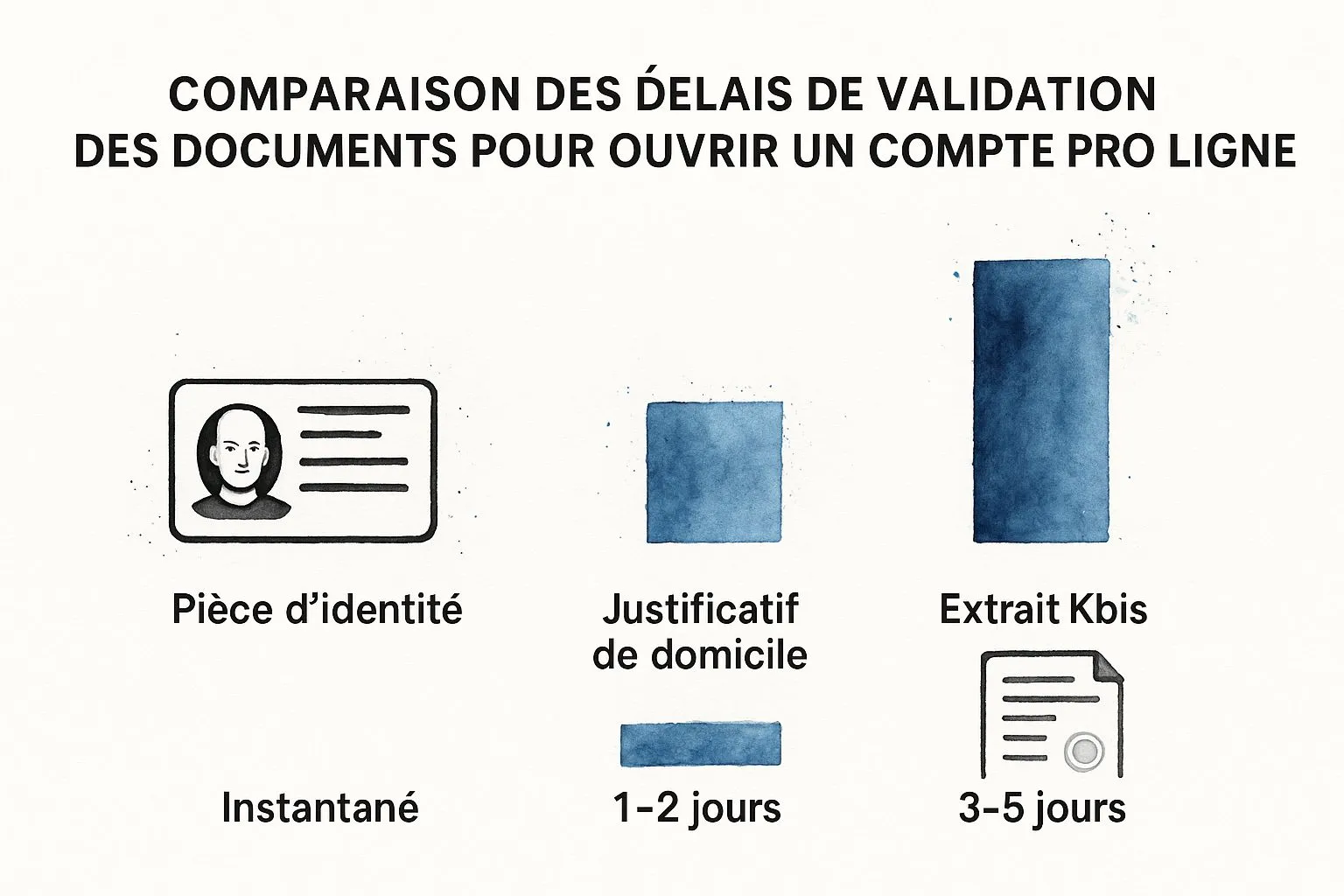
As you can see, while an ID document is often validated in the blink of an eye, business-related proof documents may require a few days of patience.
Comparison of online business account offers for sole traders
To help you see things more clearly, this table summarises the main market trends. It compares the key features of the main types of providers offering online business accounts to sole traders.
| Feature | Neobanks (e.g. Shine, Qonto) | Online banks (e.g. Boursorama Pro, Monabanq) | Business accounts without a bank (e.g. Blank, Finom) |
|---|---|---|---|
| Philosophy | Business account + integrated management tools (invoicing, expense reports). 100% mobile experience. | Full banking offer, often backed by a major bank. More traditional services. | Focused on management and admin tools, with a payment account for transactions. |
| Banking services | Essentials: transfers, direct debits, card. No authorised overdraft or credit products. | Wider range: overdraft possibility, savings solutions, sometimes business credit. | Essential payment features. No complex banking services (credit, savings). |
| Cheque/cash deposit | Often limited or impossible. | Generally possible via partner networks (group branches). | Very rare, if not impossible. |
| Management tools | Highly developed and integrated (invoicing, receipt scanning, help with URSSAF declarations). | Less integrated, often basic. Focus is on pure banking management. | Main strength. Advanced tools, often connected to other software (accounting). |
| Pricing | Clear monthly subscription, few hidden fees. Very accessible entry-level offers. | Often competitive, with free offers under conditions. Watch out for extra fees. | Subscription-based model, focused on the value of management tools. |
| Ideal for… | The sole trader looking for an administrative co-pilot to save time day to day. | The sole trader who needs more classic banking services (deposits, overdraft). | The tech-savvy sole trader who wants to centralise their admin and financial management. |
This table is a good starting point. The final choice will really depend on your profile: do you need a simple account to separate your flows, or a genuine assistant to run your micro-entreprise?
Testing the management tools that save time
The real strength of a good online business account for sole traders lies in its management tools. These features turn your banking app into a genuine administrative Swiss Army knife, and the time you save is precious.
Before deciding, check whether the offer includes:
- An invoicing module: Can you create and send professional quotes and invoices, and track their status (sent, viewed, paid) in real time?
- Simplified expense tracking: Is a simple photo of a receipt enough to link it to an expense on your account?
- Automatic categorisation: Are expenses sorted intelligently to do the legwork for you when it’s time for your URSSAF declarations?
- Bridges to other tools: Does the account sync easily with your accounting software or your accountant’s access?
Never underestimate the quality of customer support
We don’t always think about it, but it’s a crucial point. The day you have an emergency – a card blocked abroad, an important transfer that doesn’t arrive – you’ll be glad to have responsive, competent customer support.
Take the time to find out about:
- Contact channels: Can you reach them easily by phone, chat, email?
- Their hours: Is support available in the evening or on weekends, when you often have time to deal with your accounting?
- Their reputation: A quick look at customer review sites will give you a good idea of how effective the support is.
By following these few steps, you’ll make an informed choice, not only for your current needs but also to support the growth of your business. To go further, feel free to check out our complete guide to choosing the best bank for sole traders.
Common mistakes to absolutely avoid
Choosing your online business account as a sole trader is a key decision, but the journey is often littered with pitfalls. To help you see things more clearly, I’ve compiled the most common mistakes I see in the field — the ones that can turn a good idea into a real administrative and financial headache.
Mistake number one, and by far the most common, is being seduced by a very enticing headline price, or even total freeness. It’s a formidable marketing technique, but it often hides costs that quickly drive up the bill.
An account advertised at €0 per month can, for example, charge you high fees on operations you thought were routine, like an instant transfer or a withdrawal from another bank’s ATM. The best offer isn’t the cheapest on paper, but the one whose overall cost is lowest for your way of working.
Uncovering hidden fees and restrictive caps
To avoid unpleasant surprises, you need to take the time to break down the pricing grid. Don’t stop at the homepage — go dig up the PDF document, often in small print, that lists all the fees.
Here are the points I always recommend checking:
- Fees on international transactions: Essential if you have clients or suppliers outside France.
- Cost of additional cards: If you need a virtual card for your online subscriptions, is it included in the offer?
- Movement commissions: Some banks charge a small percentage on every transaction that goes through your account. It can add up quickly!
Another classic pitfall is not paying attention to payment and transfer caps. Imagine for a moment: you need to buy equipment for an important job and your card is blocked because you’ve hit the €1,500 per month cap. This is the kind of situation that can literally paralyse your business.
Before signing anything, make sure the caps suit your needs, even during activity spikes. Also check that they can be easily raised if needed. A good business account should support your growth, not hold it back.
Planning ahead and not neglecting the human factor
The perfect account for starting out can quickly become a constraint once your revenue takes off. Try to think ahead. Will the solution you choose today still be relevant in two or three years? Does it offer upgraded plans to support you when you need more services?
Along the same lines, never underestimate the importance of customer support. Unreachable or ineffective support turns into a nightmare the day you have an urgent problem to solve. Take the time to read other entrepreneurs’ reviews on this specific point — it’s often very telling.
Finally, the ultimate mistake: mixing, even occasionally, your personal and business expenses. This opens the door to trouble with the tax authorities and total fog over your micro-entreprise’s financial health. Your dedicated account is a sanctuary. Every euro that goes in or out must be 100% business-related. It’s non-negotiable.
Frequently asked questions about business accounts for sole traders
When you’re starting out, questions about banking obligations pile up. That’s completely normal! To help you navigate all of this with more peace of mind, we’ve gathered the most frequent questions. Here are clear, straightforward answers, no jargon.
Is a business account really mandatory for everyone?
No, and it’s a nuance that changes everything! The PACTE law requires having a dedicated bank account for your business, but only if your revenue exceeds €10,000 for two consecutive years.
If you’re below this threshold, nothing forces you to. That said, even with a small revenue, separating your business and personal transactions is an excellent habit. It simplifies life at declaration time and protects you in case of a tax audit. Worth thinking about!
What’s the real difference between a business account and a simple dedicated account?
Technically, a simple current account you open in addition to your personal account can legally do the job. This is what’s called a “dedicated account”.
The catch? Traditional banks don’t always appreciate a personal account being used for business activity. They may insist on moving you to a business offer, often much more expensive.
An online business account for sole traders is much more than just a line on a statement. It’s designed for you, with services that really make a difference: built-in invoicing tools, useful insurance (like RC Pro), the option of a payment terminal, and administrative management that saves you precious time.
Can I open an online business account if I’m banned from banking (interdit bancaire)?
Yes, and it’s a huge advantage of new online solutions. Most neobanks and non-bank business accounts are much more flexible and accessible than traditional banks.
Their verification procedures are different and generally don’t rely on Banque de France registers (such as the FICP or FCC). You can therefore obtain a French IBAN and a payment card without any trouble to collect payments from clients and run your business, without being blocked.
How long will it take for my account to be opened?
This is one of the strong points of these offers: speed. Everything is done online, from your computer or phone, and sign-up rarely takes more than 10 minutes.
Once you’ve sent your supporting documents (ID, proof of address), it generally takes between 24 and 48 hours for your account to be validated and for you to receive your final IBAN. You can therefore start invoicing your clients almost instantly, avoiding the endless delays of traditional banks. A real plus for getting started without wasting a minute!
Ready to simplify your management and focus on your core business? Bizyness is the all-in-one tool designed for sole traders. From invoicing to bank synchronisation, everything is automated to save you time and give you peace of mind. Discover how Bizyness can transform your daily routine at bizyness.fr.
