

 Français
 Accounting software for sole traders: A quick guide
Discover how accounting software for sole traders (micro-entrepreneurs) simplifies invoicing, tax filings and financial management.
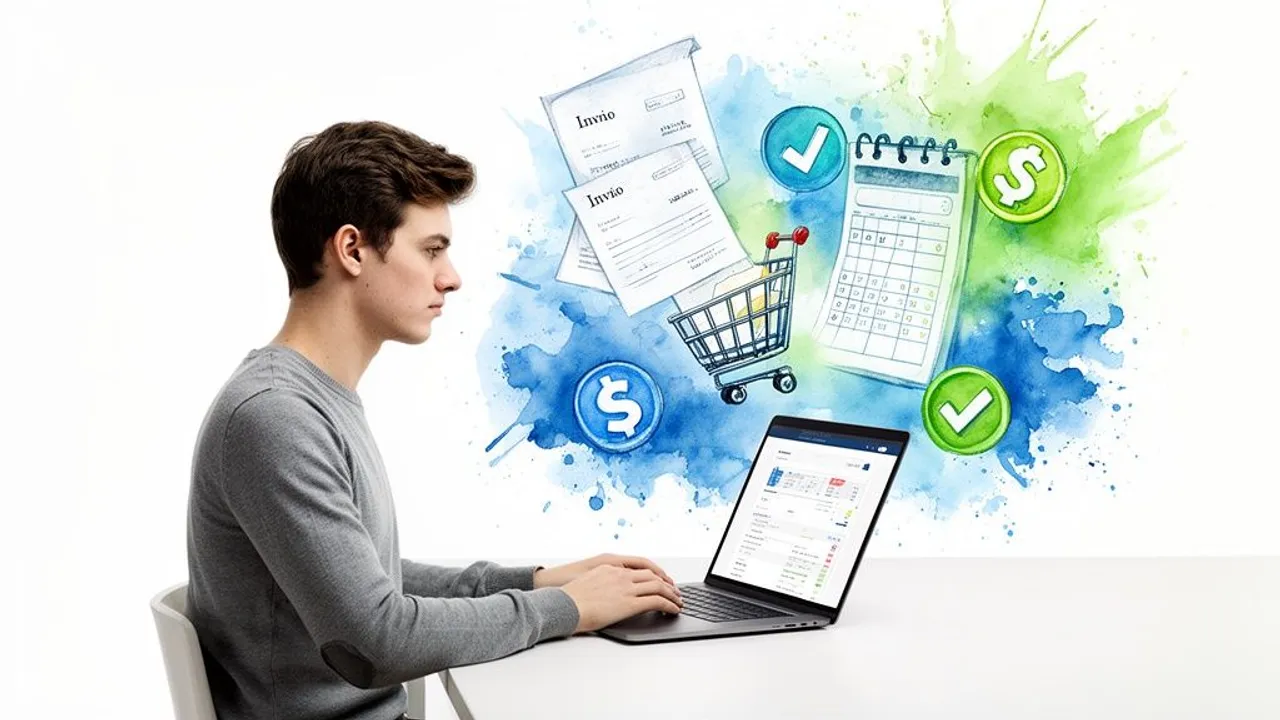
Put simply, accounting software for sole traders is your personal assistant for handling all the paperwork. It helps you create spotless invoices, track what’s coming in, and prepare your filings without pulling your hair out. No more spreadsheets and their potential errors.
Why your sole trader accounting became a real headache
Let’s be honest: when you first launch your micro-business, a simple spreadsheet seems to do the job. A few clients, a few rows… everything’s under control. One column for income, another for expenses, and that’s it.
But as soon as your business takes off, what was once a simple solution quickly becomes a source of stress and a monumental waste of time.

Many entrepreneurs know this evolution all too well. The famous spreadsheet, once so handy, turns into a maze of fragile formulas and figures you have to double-check constantly. And if you sell online, with orders coming in from everywhere, that’s a whole other story.
The paradox of the simplified regime
We’re sold the sole trader (micro-entrepreneur) regime for its simplicity, but that’s exactly where the trouble starts. Behind that facade lie obligations that pile up as your revenue grows. Every sale, every new client, every regulatory change adds another layer of complexity.
You’ll probably recognize yourself in these situations:
- Fear of making a mistake: A miscalculated VAT amount or a missing detail on an invoice, and you’re already in trouble with the tax authorities.
- Hours slipping away: Time spent updating your files, preparing filings, and checking everything is time you’re not spending growing your business.
- Anxiety before every filing: URSSAF filing periods become a stressful time, when you keep wondering whether you’ve done everything by the book.
Think of good accounting software for sole traders not as an expense, but as a strategic investment. It’s what secures your growth and lets you face new obligations with peace of mind.
An investment in your peace of mind
Faced with this growing complexity, you quickly realize that homemade tools aren’t enough anymore. Dedicated accounting software for sole traders is precisely designed to take over. It automates repetitive tasks, ensures your documents are compliant, and gives you a clear, real-time view of your business’s health.
This guide is your roadmap. We’ll show you how to turn this administrative chore into a genuine asset, so you can finally focus on what really matters: growing your business.
Let’s break down your accounting and tax obligations together
For many sole traders, the word “accounting” is scary. You immediately picture a mountain of paperwork and endless rules. Rest assured, reality is much simpler. Your obligations revolve around a few very clear pillars, and understanding them is the first step toward running your business with peace of mind, without that knot in your stomach at the thought of an audit.
Beyond the administrative jargon, your duties can be summed up in three main missions. Each has a specific purpose for the tax authorities: tracking your income, validating your business transactions, and making sure VAT is properly managed when required.
The income ledger and the purchase register
Think of your income ledger (livre de recettes) as your micro-business’s financial logbook. It’s a document where you record, day by day, every amount you receive, without exception. Each line must show the date, the amount, the source of the money (your client), and how they paid you. It’s simply proof of what you’ve earned.
Alongside it, there’s the purchase register. As its name suggests, it lists all your business expenses. Even though, as a micro-entrepreneur, you can’t deduct your expenses from your revenue, this register remains mandatory for certain activities (such as selling goods or providing accommodation services) and is frankly more than advisable for all the others. It gives you a clear view of your outgoing money.
Of course, you can manage all this in a spreadsheet. But that’s a risk. A small formula error, a missed entry, a file that disappears… and your accounts are thrown off, your filings become a headache. This is where accounting software for sole traders changes the game: it automates this work, recording every sale and every expense safely and in an orderly fashion.
The art of issuing compliant invoices
An invoice isn’t just a piece of paper to claim what’s owed to you. It’s a legal document that must contain a whole list of mandatory details: your client’s identity and yours, a unique invoice number following a logical sequence, the date, the service details, the amounts, and so on.
It only takes forgetting a single one of these details for your invoice to become invalid. The consequences? Potential penalties and complications with your business clients.
Invoice compliance isn’t negotiable — it’s a legal obligation, plain and simple. Doing it by hand multiplies the risk of errors, whereas software ensures every invoice you send strictly follows the latest regulations.
Good software includes ready-made, up-to-date templates, which eliminates the risk of forgetting something. It handles numbering for you, with no gaps or duplicates, and archives everything securely. That means you can sleep soundly if you’re ever audited.
Managing VAT: anticipate rather than endure
When starting out, most sole traders benefit from what’s called the VAT exemption scheme (franchise en base de TVA). In practice, this means you don’t charge VAT to your clients. You simply need to add the mention “VAT not applicable, art. 293 B of the French Tax Code” on your invoices.
This simplicity comes with a trade-off: you also can’t reclaim VAT on your own business purchases.
The real challenge arrives when your revenue crosses certain thresholds. At that point, everything changes: you move to the standard VAT regime. You then have to collect VAT on behalf of the state, declare it, and remit it. This is often a stressful moment, since it adds a significant amount of management work and changes your selling prices.
Good accounting software is your best ally for this transition. It monitors your thresholds in real time, warns you as you approach them, and once you cross the line, updates your invoices to apply the correct VAT rates. It can even prepare your filings, turning a complex task into a simple formality.
The sole trader status is booming. As of the end of June 2025, URSSAF counted 3.186 million active sole traders. Yet only 32% of them use invoicing software. A large majority are therefore exposed to the risks of manual management. To go further, you can check detailed statistics on the growth of independent workers to see the scale of the phenomenon.
The impact of mandatory e-invoicing on your daily business
A small administrative revolution is on the way, and it’s best to get ahead of it. The days when a simple PDF invoice sent by email was enough for your business clients are coming to an end. Very soon, the law will require going through certified platforms to issue and receive all your invoices.
This isn’t just a technical change. The goal is to modernize exchanges between businesses, simplify filings with the authorities, and, above all, fight VAT fraud more effectively. In practice, this means adopting new habits and new tools.
To help you visualize how far things have come, the infographic below shows how sole traders’ accounting obligations have gradually expanded.
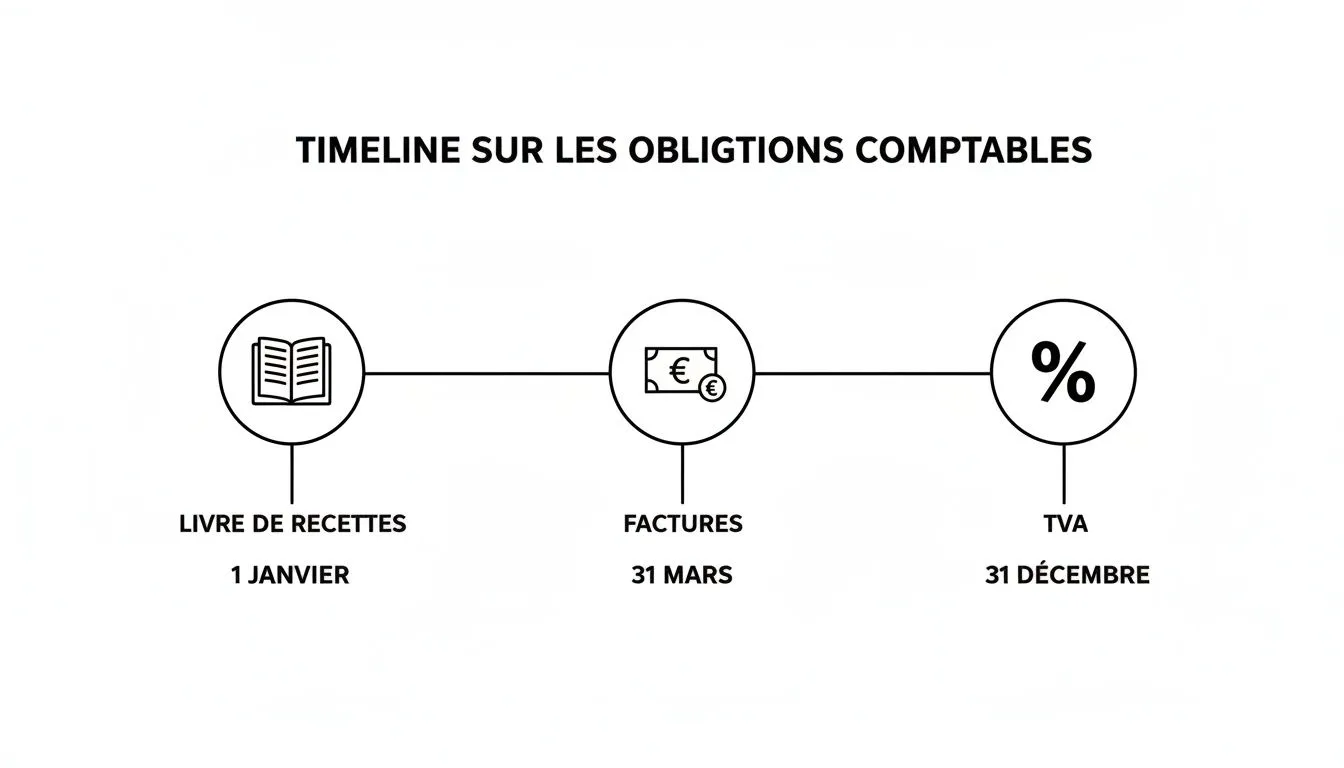
It’s clear that e-invoicing is simply the next logical step in an increasingly structured approach to management, from the basic income ledger all the way to VAT management.
The dates to remember
The government has planned a gradual rollout so everyone has time to adapt. Two dates are absolutely crucial to remember.
- From September 1, 2026: All businesses, without exception (you included!), must be able to receive electronic invoices. If one of your suppliers sends you an invoice through the new system, you won’t have a choice — you’ll need to process it via a certified platform.
- From September 1, 2027: The obligation flips. It will be your turn to issue all your invoices to your business clients (B2B transactions) using this same system.
Careful — an electronic invoice, in the legal sense, isn’t just a PDF. It’s a file containing structured data (such as the Factur-X format) that must circulate through approved platforms capable of communicating with each other and with the tax authorities.
This reform, which will affect more than 4 million businesses in France, is a major change. It’s therefore essential to understand how it works.
The table below illustrates the shift from manual to automated management thanks to software.
Comparison: Before/after the e-invoicing reform
| Task | Manual management (today) | Management with software (tomorrow) |
|---|---|---|
| Creating an invoice | Manual entry in Word/Excel, risk of errors, missing mandatory details. | Pre-filled templates, automatic calculations, up-to-date legal wording. |
| Sending to the client | Manual sending by email, no delivery tracking. | Automatic, secure transmission via the platform, real-time status. |
| Archiving | Manual filing in folders, risk of loss, hard to find. | Digital archiving with evidentiary value, centralized and searchable at any time. |
| Bookkeeping entry | Manual transfer of data into an income ledger (Excel or paper). | Automatic sync with your income ledger, no manual entry needed. |
| Receiving invoices | Received by email, printed, information entered manually. | Direct integration into the software, ready for accounting and payment. |
This comparison makes it clear: what today is a series of manual, repetitive tasks will tomorrow become a smooth, secure workflow.
Turning this constraint into an advantage with the right tool
Faced with these deadlines, the real question is no longer whether you need to get equipped, but how. This is where accounting software for sole traders becomes your best asset. Instead of seeing this reform as a headache, you can turn it into a simple formality.
Good software has already anticipated these changes. It’s designed to be natively compatible with the future platforms (called PDPs, or Partner Dematerialization Platforms) and the mandatory invoice formats. Here’s exactly what that changes for you:
- You’re always compliant: The software creates invoices in the right format (Factur-X, for example) with the right data, without you having to dive into the technical details.
- Sending is automated: It connects to the secure network to send your invoices. You’re guaranteed they reach their destination and that the information is transmitted to the authorities, as required by law.
- Everything is centralized: No more supplier invoices getting lost in your inbox. You’ll receive them directly in your tool, ready to be filed.
By choosing the right software now, you get peace of mind and a smooth transition, with no stress or risk of fines. To go further, our complete guide on e-invoicing for sole traders covers everything you need to know to be ready well ahead of time.
What features are essential for an online seller?
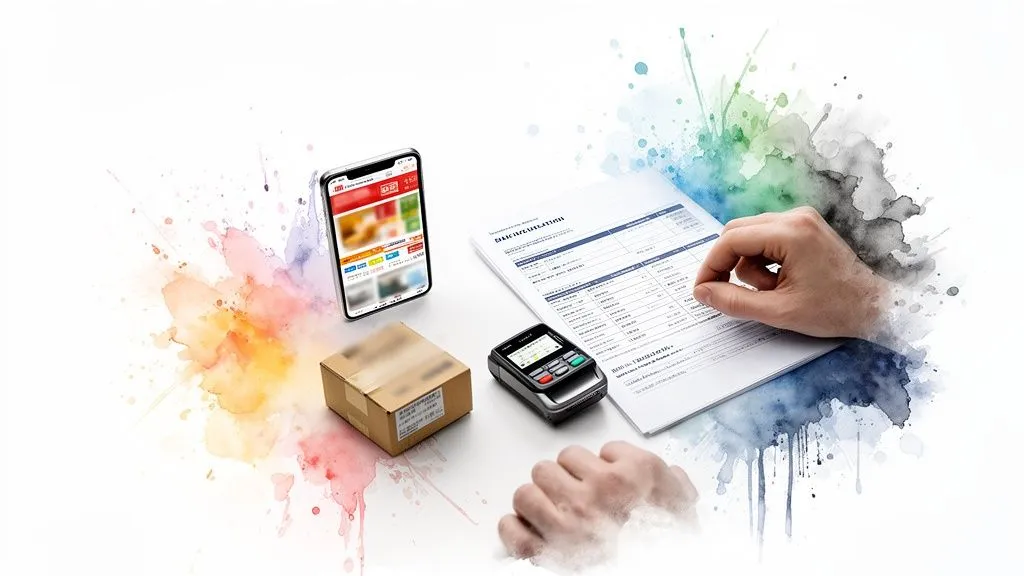
When you sell online, accounting isn’t just about numbers — it’s above all a question of flows. Every order, every payment, every customer coming from a different channel… everything has to be tracked, invoiced, and declared without a hitch. Generic accounting software simply won’t cut it. You need a tool that speaks the same language as your e-commerce business.
Think of this software as the true cockpit of your business. It needs to integrate seamlessly with your sales tools to automate everything that can be automated and free up your mind. Without that, you risk spending more time copying and pasting than growing your store.
Sales synchronization: an absolute priority
The core problem for an online seller is scattered information. You sell on Shopify, maybe also on Amazon, while collecting payments via Stripe and PayPal. Without accounting software for sole traders capable of connecting all of that, every sale turns into one more manual task on your list.
The benefit of automatic synchronization is twofold, and it’s huge:
- Immediate time savings: No more tedious manual entry of every order into your income ledger. The software imports the data for you, in real time.
- Reliable data: Automation eliminates nearly 100% of human errors (typos, omissions, duplicates). Your accounting finally reflects the reality of your business, down to the last cent.
This synchronization must cover both your sales platforms (Shopify, WooCommerce, etc.) and your payment gateways. This is what bridges the gap between the order placed by the customer and the money that actually lands in your account.
Good integration isn’t a nice-to-have — it’s THE feature that turns a simple data-entry tool into a true automation engine for your e-commerce business.
Smart international VAT management
Selling across Europe is a fantastic opportunity, but let’s be honest, it’s also a real tax headache when it comes to VAT. Every country has its own rules, its own rates. Trying to manage this by hand is not only complex, but also very risky.
This is where the famous OSS/IOSS one-stop shop (One-Stop Shop / Import One-Stop Shop) comes in. Good e-commerce accounting software must absolutely include this management:
- Automatic identification: The software detects the destination country of each sale.
- Applying the right rate: It instantly applies the VAT rate in effect in the client’s country.
- Preparing filings: It consolidates all this data into a ready-to-use report for your OSS/IOSS filing. No more need to register for VAT in every country where you sell!
Without this automation, the risk of making costly mistakes on your filings is very real.
Bank reconciliation finally made simple
Bank reconciliation is simple in principle: you check that what’s on your bank statement matches what’s in your accounts. Simple in theory, but a real nightmare for an online seller, especially with the fees taken by Stripe or marketplaces.
Powerful software connects to your bank and does the heavy lifting. It identifies incoming payments, matches them to the right invoices, and highlights discrepancies, such as transaction fees. You go from several hours of manual checking each month to just a few minutes of validation.
To make things clearer, this table sums up the features that truly change life for a sole trader in e-commerce.
Essential features of software for online sellers
This table summarizes the key features and the direct benefit for sole traders, helping them prioritize their needs.
| Feature | Problem solved | Main benefit |
|---|---|---|
| Sales synchronization | Manual entry of orders from Shopify, Amazon, etc. | Reliable data and massive time savings. |
| OSS / IOSS management | Complexity of VAT filings on sales across Europe. | International tax compliance and peace of mind. |
| Bank reconciliation | Difficulty matching payments and fees. | Clear view of cash flow and fast account closing. |
| Compliant invoicing | Risk of errors and missing legal details. | Legal security and readiness for e-invoicing. |
In short, when choosing software, don’t stop at a simple list of features. Think in terms of “benefits”: how will this tool solve the specific challenges of your online sales business? To go further, our guide on e-commerce accounting will give you more pointers for structuring your management well.
How to choose and set up your accounting software
Choosing a dedicated tool can seem a bit intimidating at first. Yet, done right, it’s a step that will save you a huge amount of time. The secret isn’t to look for the “perfect” software on paper, but the one that truly fits your business today, while anticipating your needs for tomorrow.
The process unfolds in two key steps. First, you take a moment to honestly assess your own needs. Then, you evaluate the different solutions against concrete criteria. This isn’t a mere formality: this choice will directly shape how effectively you manage your business for years to come.
Assessing your real needs before you start
Before you even start comparing offers, take a moment to list the specifics of your business. This step is absolutely fundamental. It will let you define your own requirements and avoid paying for features you’ll never use.
Ask yourself the right questions:
- Transaction volume: How many invoices go out each month? A dozen, or several hundred? A high volume makes automation almost mandatory.
- Sales channels: Does everything go through Shopify, or are you also juggling Amazon, Etsy, or direct sales? The ability to centralize everything in one place is a decisive criterion.
- International sales: Do you have clients in the European Union? If so, integrated management of the VAT one-stop shop (OSS/IOSS) is no longer optional — it’s an absolute necessity.
- Your client profile: Do you mostly invoice individuals (B2C) or other businesses (B2B)? Your answer will determine whether compatibility with the upcoming e-invoicing reform is a priority for you.
This little bit of introspection will give you a very precise idea of what you should expect from accounting software for sole traders.
The key criteria for making the right choice
Once your needs are clear, you can move on to comparing options. Don’t let yourself be dazzled by endless feature lists. Focus on four pillars that guarantee simple, stress-free day-to-day management.
Good software isn’t the one with the most bells and whistles. It’s the one that fits so naturally into your routine that you end up forgetting about it. It should work for you behind the scenes, not create more work for you.
- Simplicity above all: Is the interface clear and intuitive? Can you create an invoice in just a few clicks? A free trial period is perfect for forming your own opinion on usability.
- Quality of integrations: Make sure the software connects natively to YOUR tools (Shopify, Stripe, PayPal, etc.). Good integration guarantees automatic, seamless synchronization.
- Responsive customer support: If something goes wrong, is it easy to reach someone competent? Good support can save you hours of frustration and searching.
- Legal compliance: Is the tool already ready for e-invoicing? Is it certified to guarantee your data is tamper-proof? This is an essential guarantee of peace of mind.
Checklist for a quick setup
Setup is often much simpler than you’d think. Most modern solutions are designed to guide you step by step. To dive deeper into the topic, feel free to read our complete article on choosing accounting software for sole traders, which walks through all these steps in detail.
Here’s a short checklist to get started stress-free:
- Connect your platforms: The first thing to do is link your online store and your payment systems. This is what allows your sales data to be automatically pulled in.
- Set up your information: Enter your micro-business details (business registration number, address…) that will appear on all your official documents.
- Customize your invoices: Add your logo and adjust the design to match your brand image.
- Import your existing data: If you already have a history, most tools let you import your client and product lists via a simple CSV file. Ideal for a smooth transition.
Turn your accounting into a real growth lever
What if we completely changed how we view administrative management? Too often, it’s seen as a chore, a heavy obligation. Yet a good accounting solution for sole traders is much more than that: it’s a strategic partner, discreet but tremendously effective.
Its role goes far beyond simple compliance with the authorities. By taking on the most repetitive and time-consuming tasks — recording sales, creating invoices, tracking payments — good software gives you back your most valuable resource: your time.
Turn hours of paperwork into opportunities
The time you get back isn’t just a bonus. It’s real capital you can reinvest where it truly matters. Every hour you don’t spend on a spreadsheet is an hour you can spend improving your product, talking with a client, or testing a new sales channel.
By automating your financial flows, your software effectively becomes your business’s dashboard. It gives you a clear, real-time view of your performance. No more flying blind! You can finally make decisions based on concrete numbers.
Stop putting up with your accounting. Turn it into a tool to steer your business and support your success. Healthy, automated management is the foundation on which to build sustainable, peaceful growth.
Ultimately, choosing the right accounting software for sole traders means deciding to move from an overwhelmed craftsperson to the pilot of your own growth. You give yourself the means to focus on what you do best, with the peace of mind of knowing your business finances are solid, compliant, and ready to support your ambitions.
Frequently asked questions about sole trader accounting
Let’s wrap up with the questions that come up most often. The goal is to give you clear, concrete answers so you can move forward with confidence.
Am I required to have accounting software?
No, on paper, nothing legally requires it at the moment. But let’s be clear: with the rollout of mandatory e-invoicing fast approaching, it’s becoming an almost essential tool for working with business clients.
Also think of it as insurance: good software ensures your invoices are compliant and helps you avoid calculation errors that can be costly when it’s time to declare your revenue.
Isn’t a simple Excel spreadsheet enough?
At the very beginning, when you’re just starting out, it can get you by. But this solution very quickly shows its limits. A spreadsheet doesn’t protect you from typos or broken formulas, and above all, it will never be able to create the electronic invoices validated by the authorities for your business clients. It’s a risk that’s simply not worth taking.
How can software help me if I sell on multiple sites?
This is where the magic happens! Good software connects directly to your sales tools like Shopify, Stripe, or even marketplaces like Amazon. In practice, every sale is automatically pulled in and recorded in your accounting, without you having to do a thing. No more manual entry — everything is centralized.
Will my accountant be able to work with it?
Yes, and they’ll thank you for it! These tools are designed to make collaboration easier. You can generally export all your data in a standardized format, such as the well-known FEC (Fichier des Écritures Comptables, or accounting entries file). Your accountant then receives a clean, well-structured file, ready to be processed. It’s a huge time saver for everyone.
Ready to take your management to the next level? Bizyness is the accounting and automation platform built for online entrepreneurs.
Discover how Bizyness can simplify your accounting starting today.