

 Français
Understanding the different VAT rates and how they apply
Everything you need to know about the different VAT rates in France and when to apply them, with clear, practical examples.
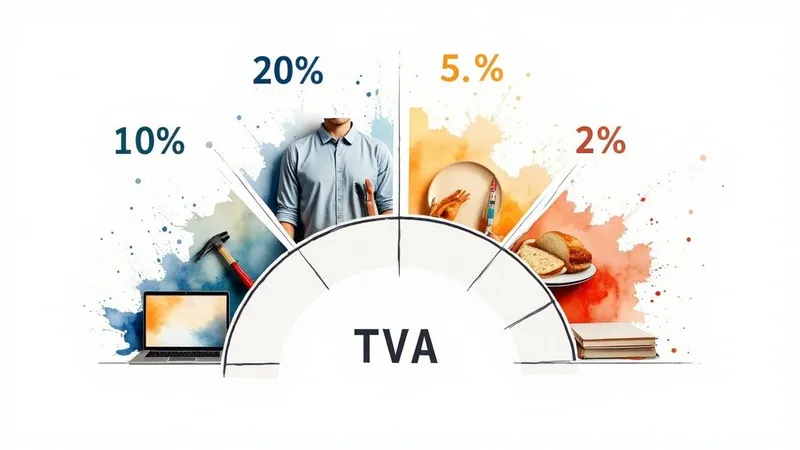
In France, businesses mainly juggle four VAT rates: the standard rate at 20%, the intermediate rate at 10%, the reduced rate at 5.5%, and finally the super-reduced rate at 2.1%. Each rate targets very specific categories of goods and services, which has a direct impact on the price you, the consumer, pay at checkout.
Understanding the different VAT rates in France
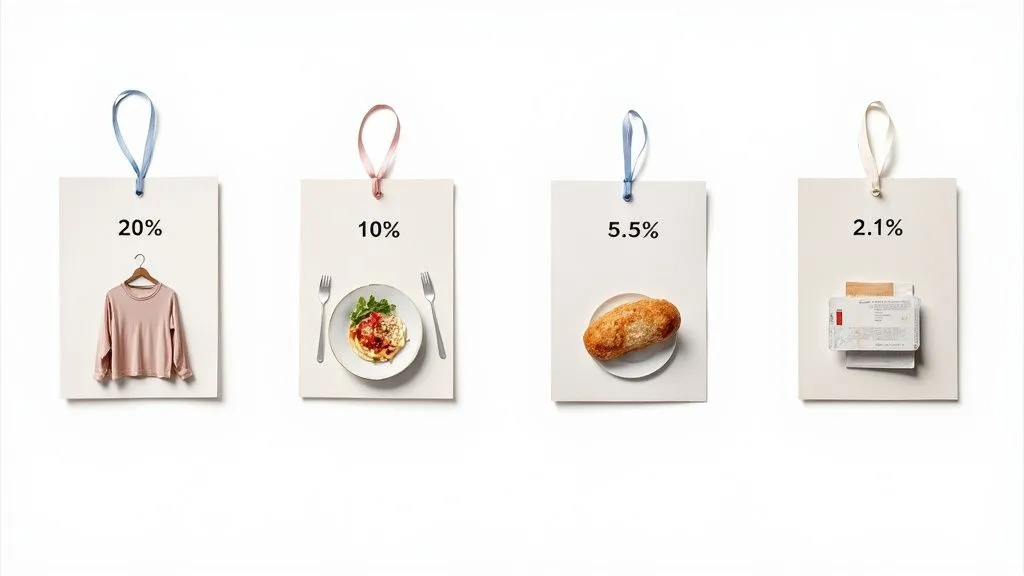
Value Added Tax, or VAT, can seem like a puzzle reserved for accountants. In reality, the principle is fairly simple: it’s an indirect tax levied on consumption. In practical terms, it’s not the business that bears the cost of VAT, but the end customer.
The business acts as a mere intermediary, a collector on behalf of the State. It charges VAT on its sales (this is “collected VAT”), then remits it to the public treasury. Along the way, it naturally deducts the VAT it has itself paid on its business purchases (the well-known “deductible VAT”).
The role of VAT rates in the economy
The different VAT rates don’t come out of nowhere. They are the result of political decisions, both economic and social, aimed at adjusting the cost of certain products or services. The idea behind this is twofold:
- Protect purchasing power by applying lower rates to essential goods.
- Give a boost to certain sectors considered important to the economy (culture, dining, construction, etc.).
The impact of these rates is far from trivial. Their variations directly affect state revenue and household budgets. An INSEE study even showed that a three-point increase in the standard rate could erode the French standard of living over the following three years.
One of the key principles of VAT is its neutrality for the businesses subject to it. The actual payer is always the end consumer, who sees the tax included in the sale price.
To navigate this without stress, it’s crucial to correctly identify the rate that applies to your business. This is the foundation for staying compliant, but also for properly understanding your pricing policy and that of your competitors. To go further, feel free to check out our full guide on calculating the VAT rate and its formulas.
A quick overview of the four rates
To give you the big picture, here’s a table summarizing the four VAT rates currently in force in mainland France. Think of it as your cheat sheet for quickly knowing which rate to use.
Summary of the different VAT rates in France
This table offers a quick overview of the four VAT rates, their value, and the main categories of goods and services to which they apply.
| Rate Type | Percentage | Examples of application |
|---|---|---|
| Standard Rate | 20% | The vast majority of goods and services (clothing, electronics, services, alcohol) |
| Intermediate Rate | 10% | Dine-in restaurant meals, renovation work, passenger transport, fairs and trade shows |
| Reduced Rate | 5.5% | Food products, books (print and digital), cinema tickets, gas/electricity subscriptions |
| Super-Reduced Rate | 2.1% | Medicines reimbursed by Social Security, press (newspapers and periodicals) |
With this summary in mind, let’s now break down each rate one by one, with concrete examples so everything becomes perfectly clear.
Understanding the 20% standard VAT rate

Think of VAT as a multi-tiered system. The standard rate of 20% is its foundation, the base on which everything else rests. It’s the “default” rate of the French tax system, applied to the vast majority of sales of goods and services.
The rule of the game is simple: if a product or service isn’t specifically listed by law to benefit from a reduced rate, then the 20% rate automatically applies. This logic greatly simplifies things for businesses on a day-to-day basis.
When in doubt, always consider the 20% rate to be the norm. The other rates are exceptions. Knowing them well is the key to avoiding unpleasant surprises with the tax authorities.
This “standard” approach makes it all the more important to master the special cases, which we’ll cover next. For now, let’s see where this 20% rate hides in our everyday lives.
Where do we encounter the 20% rate day to day?
The standard rate is everywhere, to the point that we barely notice it anymore. It applies to most consumer goods and services that aren’t classified as “essential.”
Here are a few concrete examples to help you visualize it:
- Shopping and clothing: That new pair of jeans or sneakers you just bought? A 20% VAT is included in the price.
- Electronics and tech: Your latest smartphone, laptop, or living-room TV are all subject to this rate.
- Furniture and decor: A new sofa, coffee table, or a simple lamp also include 20% VAT.
- Vehicles: Buying a new car or motorbike is a significant expense, and the 20% VAT portion represents a substantial amount.
Obviously, the list goes on much further, but this illustrates just how much this rate is woven into our economy.
The 20% rate for services
This rate isn’t limited to physical goods, far from it. It also covers a huge variety of services, which is crucial to know for any entrepreneur or freelancer.
Here are a few sectors where this rate is the near-absolute rule:
- Consulting and expertise: A strategy consultant, a business coach, or a marketing expert bills their services with 20% VAT.
- Regulated professions: Fees charged by a lawyer, an architect, or an accountant are, for the most part, subject to this rate.
- Trades and personal services: Your hairdresser, beautician, or wedding photographer apply this rate on their invoices.
- Various repairs: Getting your car or a home appliance repaired involves 20% VAT on labor and parts, except in very specific cases.
For a business owner, applying the right rate isn’t optional — it’s a requirement. A simple mistake, even made in good faith, can lead to a tax audit and reassessment. That’s why thoroughly understanding this basic principle is the essential first step before tackling the nuances of the other VAT rates.
When to apply the 10% intermediate rate?
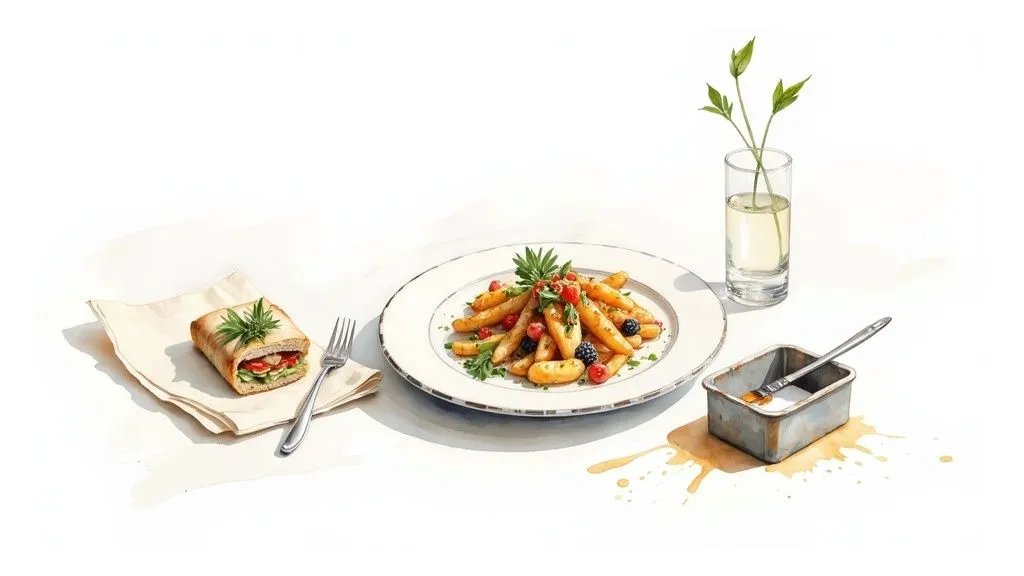
If the 20% standard rate is the rule, the 10% intermediate rate is a major exception that’s absolutely essential to know. It doesn’t come out of nowhere! The State introduced it to support sectors deemed essential to our economy and daily life.
It mainly applies to dining, passenger transport, hospitality, and certain home renovation work. But be careful, its application is far more subtle than it appears. Applying it correctly requires understanding how it actually works.
Dining out, a real VAT puzzle
The restaurant industry is the perfect example to illustrate the complexity of the different VAT rates. The golden rule? It all depends on when the item is consumed.
Put simply, a product is considered to be “for immediate consumption” if it’s meant to be eaten or drunk right away. This simple criterion is what shifts VAT from 10% to 5.5%.
The real question to ask is: will my customer consume this product right away, on the spot? If yes, it’s 10%. If it’s to take away and consume later, the reduced rate of 5.5% usually applies instead.
To make this clearer, let’s imagine a few scenarios:
-
The dish of the day you enjoy at a restaurant table.
-
A sandwich you eat standing at a counter in a bakery.
-
A coffee or soda served at the bar. Note that alcoholic beverages remain taxed at 20%.
-
That same sandwich, but ordered “to go” for lunch at the office.
-
The bottle of water or can of soda you slip into your bag.
-
The baguette or croissant, which are by nature products meant to be consumed later.
For a restaurant owner, this distinction is critical. The point-of-sale software must be precisely configured to apply the correct rate depending on the context, or risk drawing the ire of the tax authorities.
Renovation work, a well-regulated boost
The 10% rate is also a powerful lever to encourage French people to maintain and improve their homes. It applies to renovation, transformation, and upkeep work.
Naturally, there are rules of the game to prevent abuse. Two main conditions must be met to qualify.
- The age of the property: Your house or apartment must have been completed more than two years ago. Whether you’re an owner, tenant, or occupying it free of charge, the rule is the same.
- The type of work: We’re talking about renovation here, not new construction or extensions. The 10% rate covers both labor and materials supplied by the professional, whether it’s for redoing a bathroom, replacing windows, repainting a wall, or bringing the electrical wiring up to code.
To keep everything above board, you’ll need to sign a certificate confirming that the property is indeed more than two years old and that the work qualifies. This is an essential document for the tradesperson.
What about other cases?
Beyond these two major areas of dining and construction, the 10% rate also applies in other fields, always with the aim of supporting activity or facilitating access.
Here are some common examples:
- Passenger transport: train tickets, bus and metro fares, or taxi rides.
- Hospitality: the price of your hotel room or other classified accommodation.
- Culture and leisure: entry tickets for museums, zoos, fairs, and trade shows.
Knowing these special cases will save you from applying the default 20% rate and billing your clients an incorrect amount. A small mistake that can prove costly.
The 5.5% and 2.1% reduced VAT rates: exceptions that make sense
In addition to the standard and intermediate rates, the French tax landscape includes two very specific reduced rates: 5.5% and 2.1%. Far from being anecdotal, they reflect a clear political intent: to make products and services deemed essential to everyday life, health, and culture more accessible.
Their application is highly targeted and serves precise objectives. Once you understand the logic behind them, you’ll instinctively know when to apply them, whether for your own purchases or for invoicing within your business.
The 5.5% reduced rate: a boost for essential needs
The 5.5% VAT rate is arguably the best known of the reduced rates. Its scope is broad, but it follows a very clear guiding principle: ease the burden on essential goods and encourage access to culture. It’s the rate that has the most direct impact on household budgets.
It’s worth knowing that this rate is the result of a long history. VAT rates in France have shifted a great deal since their creation in 1954! They started with rates of 20% and even 33⅓% for luxury goods, then were adjusted over the decades to fit economic conditions. The rates we know today, including the 5.5% one, have been in place since 2014, which offers a degree of stability for businesses and consumers alike. For the curious, the history of VAT on Hellomonnaie.fr retraces this fascinating evolution.
So, where do we find it in practice?
- Food products: The vast majority of what you put in your shopping cart is covered. Fresh produce, canned goods, frozen items… but also water and non-alcoholic beverages.
- Books: Whether print or digital, books benefit from this rate to facilitate access to reading and knowledge.
- Energy: Gas and electricity subscriptions, as well as heat supplied from renewable energy sources, are subject to this reduced rate.
- Culture and entertainment: Your cinema, theater, or concert tickets also benefit from this tax break.
The 5.5% rate plays a genuine role as a social regulator. By reducing the tax burden on unavoidable expenses like food or energy, it helps preserve purchasing power, especially for lower-income households.
This rate is also widespread in the construction sector. For a tradesperson, mastering it is absolutely essential. If this topic concerns you, our dedicated article on VAT for construction trades will explain all the nuances you need to know to issue compliant quotes and invoices.
The 2.1% super-reduced rate: a special case
Even more specific, the 2.1% super-reduced rate is the lowest of all the different VAT rates in France. Its scope is very narrow and focuses almost exclusively on sectors deemed vital for public health and the right to information.
Its very existence shows how much importance the State places on these areas. By keeping it at a near-symbolic level, the tax system aims to guarantee universal access to these goods.
When does the 2.1% rate apply?
You’ll encounter it far less often, but its role is essential. It mainly applies to two major categories of products:
- Reimbursable medicines: All medicines covered by Social Security benefit from this very low rate. The goal is simple: minimize out-of-pocket costs for patients and guarantee access to treatment for everyone.
- The press: Newspapers and periodicals, whether bought at a newsstand or via subscription, are also covered. This is a historic measure aimed at supporting freedom of the press and facilitating the spread of information.
For a business, billing at 2.1% is therefore fairly rare, unless you work in healthcare or publishing. As a citizen, however, you benefit from it every time you go to the pharmacy with a prescription or buy your newspaper. It’s a perfect example of tax policy used as a tool for public policy, well beyond its role of simply collecting taxes.
How to manage VAT rates in your business
Knowing the different VAT rates is one thing. Applying them smoothly in the day-to-day management of your business is another matter entirely. For any entrepreneur, rigorous VAT management isn’t just an administrative formality: it’s a legal obligation that protects your business.
An application error can quickly lead to complications with the tax authorities. Fortunately, by following a clear method and relying on the right tools, this process can become surprisingly simple and secure.
Identify the right rate for each transaction
The very first step, the one everything else depends on, is matching the correct VAT rate to each product or service you sell. This may seem obvious if you only offer one type of good, but things get complicated as soon as your activities diversify.
Take the example of an artisan baker. He’ll sell his traditional baguette at the reduced rate of 5.5%. If he offers a sandwich to be eaten on-site in his small dining area, the intermediate rate of 10% applies. And if he sells a bottle of wine, he’ll need to charge the standard rate of 20%. Every sale must be categorized precisely.
To better visualize how reduced rates apply to essential goods, the infographic below shows the process for food products, culture, and health.
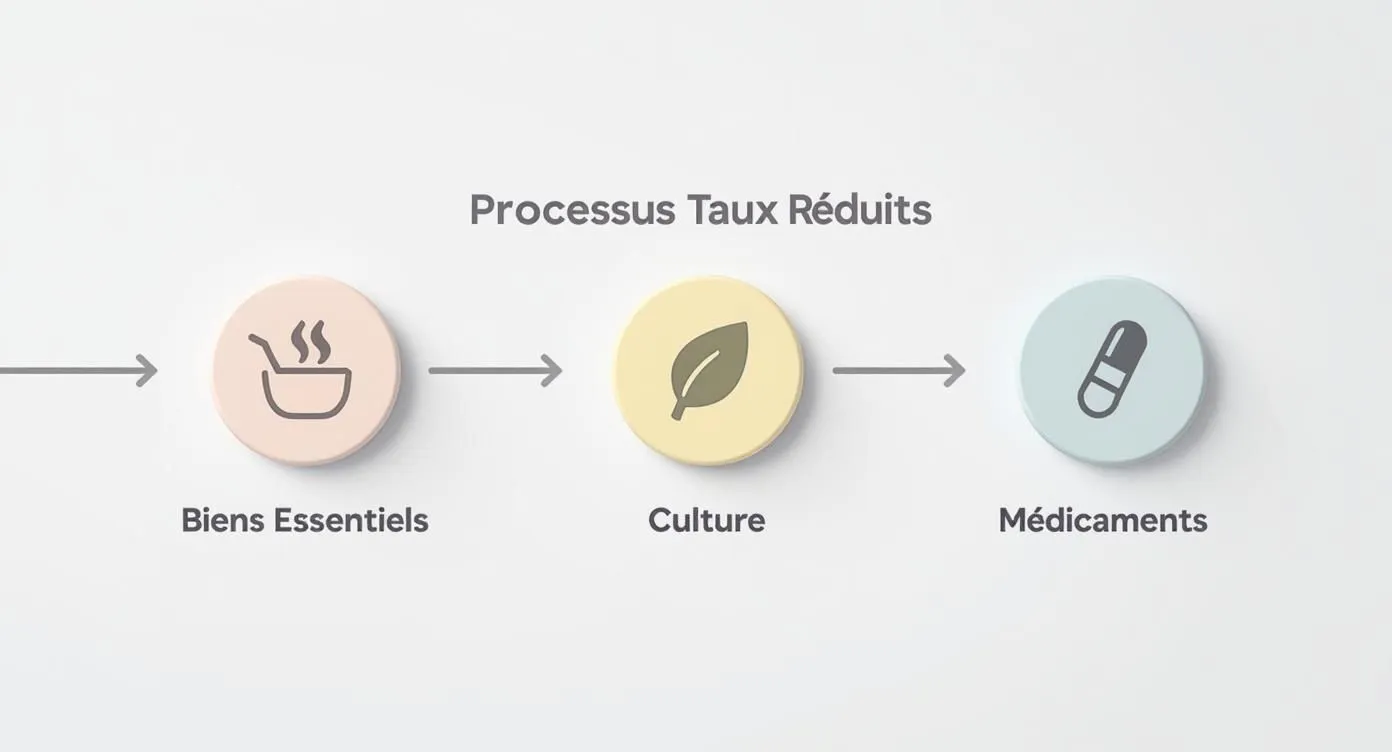
This clearly shows that tax policy seeks to ease the burden on what is considered a priority for society, such as eating, engaging with culture, and staying healthy.
Showing VAT on your invoices
Once the rate has been identified, it must be clearly displayed on your invoices. The law is very strict on this point, to ensure transparency and allow your clients (especially business clients) to deduct the VAT in turn.
Your invoices must absolutely mention:
- The applicable VAT rate for each line item of product or service.
- The total amount of VAT due.
- The price before tax (excl. VAT) and the price including all taxes (incl. VAT).
If you invoice products subject to different rates on the same document, each rate must be detailed separately. Clear, transparent invoicing reflects your professionalism and is your best protection against disputes.
Well-managed VAT goes beyond simple compliance. It has a direct impact on your cash flow, since it determines the amounts you collect on behalf of the State and those you can recover on your own business expenses.
To simplify these calculations, discover how automatic VAT calculation can save you precious time and drastically reduce the risk of error.
The special case of the VAT exemption threshold for sole traders
Many sole traders (micro-entrepreneurs) benefit from a simplified regime: the VAT exemption threshold (franchise en base). In practical terms, this means they don’t charge VAT to their clients. As a result, they don’t need to declare or remit it to the State either. In exchange, they also can’t recover the VAT paid on their business purchases.
This regime depends on annual revenue thresholds, which vary by activity:
- €91,900 for the sale of goods and accommodation.
- €36,800 for services and regulated professions.
As long as your revenue stays below these thresholds, you must include the following statement on your invoices: “VAT not applicable, art. 293 B of the French Tax Code (CGI)”. Be careful: if you exceed these thresholds, you become liable for VAT and must start charging it from the first day of the month in which the threshold is exceeded.
Using software to automate VAT management
Manually juggling the different VAT rates quickly becomes a source of errors, especially as your business grows. This is where invoicing and accounting software like Bizyness become true allies.
A good tool lets you set up the VAT rates associated with each of your products or services once and for all. From then on, everything is automated: the software applies the correct rate on each invoice, calculates the totals before and including tax, and even generates ready-to-use VAT reports for your tax filings.
Adopting this kind of approach means peace of mind: in just a few clicks, you can be confident your entire invoicing process is compliant. You can finally free your mind to focus on what really matters: your business.
Frequently asked questions about VAT rates
Juggling the different VAT rates often raises very practical questions. No need to worry, this section is here to answer them simply and directly. The goal: to give you clear solutions you can apply right away in your day-to-day life as an entrepreneur.
Each answer has been designed to demystify the points that tend to cause doubt and help you act with confidence.
How do I know which VAT rate to apply?
To see things clearly, start from a simple principle: the standard rate of 20% is the general rule. It applies to everything, unless a legal provision states otherwise and authorizes a reduced rate. That’s your starting point.
Need to check? The definitive reference is the Bulletin Officiel des Finances Publiques (BOFIP). A quick search using your business sector or the type of product you sell will give you the official confirmation of the rate to use.
If you’re still unsure, especially in somewhat complex cases (imagine a bakery selling bread at 5.5% but also sandwiches for on-site consumption at 10%), the best move is to consult an accountant. This small upfront investment can save you a lot of hassle and a tax reassessment, which would cost far more.
The tax authorities consider that ignorance of the law is no excuse. A mistake, even made in good faith, can be penalized. Taking the time to check isn’t optional, it’s a necessity for the health of your business.
This small precaution ensures you stay compliant and build your business on solid, lasting foundations.
What should I do if I applied the wrong rate on an invoice?
To err is human, that’s a fact. But when it comes to VAT, you need to correct it as quickly as possible. The consequences differ depending on whether you charged a rate that was too high or, conversely, too low.
- Rate charged too high: In this case, your client paid more than they should have, and you collected too much VAT on behalf of the State. The correct approach is to refund your client and correct your VAT return.
- Rate charged too low: Here, the situation is trickier. The tax authorities can claim the difference from you, often with late-payment penalties.
The official procedure for correcting the mistake is to issue a corrective invoice. This new document must explicitly reference the original invoice to cancel it, then present the corrected amounts with the correct VAT rate. Remember to also adjust the amount of VAT collected on your next return.
Does a sole trader need to charge VAT?
In principle, the answer is no. Sole traders (micro-entrepreneurs) benefit from a special regime, the “VAT exemption threshold” (franchise en base). In practical terms, this means they don’t charge VAT to their clients. In exchange, they also can’t recover VAT on their own business purchases.
To stay compliant, a specific statement is mandatory on every invoice: “VAT not applicable, art. 293 B of the French Tax Code (CGI)”. This is the statement that justifies the absence of VAT to both clients and the tax authorities.
Be careful though, this favorable regime isn’t unlimited. It’s conditioned by annual revenue thresholds. If a sole trader exceeds these thresholds, they leave the exemption regime and become liable for VAT. They must then start applying the different VAT rates, just like any other business, starting from the first day of the month in which the threshold was exceeded. Careful monitoring of revenue throughout the year is therefore essential!
Don’t let VAT management slow down your momentum any longer. With Bizyness, automate your invoicing, apply the right rates in one click, and prepare your tax filings with peace of mind. Discover how to simplify your day-to-day.
